

Daily Dose Of Jazz…
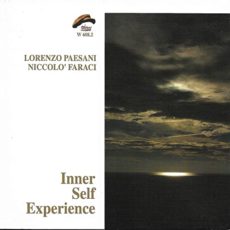
Lorenzo Paesani was born on August 9, 1977 in Teramo, Abruzzo, Italy and studied piano since childhood. He graduated Summa Cum Laude at 21 from the Niccolò Piccinni Conservatory of Bari. He studied improvisational music all over Europe and the U.S. with John Taylor, Fabrizio Puglisi, Franco D’Andrea, Ralph Alessi, Tim Berne, Marc Ducret, among others.
He collaborated with Norma Winston, Massimo Manzi, Claudio Fasoli, Sound Sketches Orchestra, Sidma Jazz Orchestra, and the Turin Philharmonic Orchestra among others.
Since 2014 he has performed at a variety of jazz festivals across Europe, recorded with different ensembles but all projects have a particular blend of jazz, original compositions and open improvisation, spanning from modern jazz to contemporary music. In his role as a composer, he collaborates with Kairostudio, a cultural association that produces documentaries and movies about the safeguard of the environment. Pianist and bandleader Lorenzo Paesani continues to perform, record and explore the realm of music

More Posts: bandleader,composer,history,instrumental,jazz,music,piano
The Quarantined Jazz Voyager
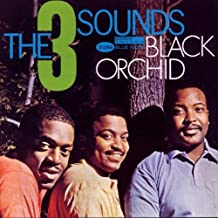
The Quarantined Jazz Voyager is pulling off the shelf for your listening pleasure comes from Black Orchid. It’s an album by jazz group The Three Sounds featuring performances recorded on March 7, 1962 (1-4, 6) and March 8, 1962 (5, 7-8) at Rudy Van Gelder Studios in Englewood Cliffs, New Jersey. It was released on the Blue Note label in 1964. The session was produced by Alfred Lion.
A 1998 reissue on compact disc added seven additional songs and as you listen to the below recording you will hear all fifteen compositions.
Track Listing | 42:37
- Black Orchid (Cal Tjader) – Erroneously credited to (Neal Hefti) – 5:25
- A Foggy Day (Gershwin, Gershwin) – 6:46
- For All We Know (Coots, Lewis) – 5:31
- Oh Well, Oh Well – 3:45
- At Last (Gordon, Warren) – 5:37
- Secret Love (Sammy Fain, Paul Francis Webster) – 5:44
- Don’t Go, Don’t Go – 5:08
- Saucer Eyes (Randy Weston) – 4:41
Personnel
- Gene Harris – piano
- Andrew Simpkins – bass
- Bill Dowdy – drums
Remain diligent my fellow voyagers in staying healthy, continue practicing social distancing, and don’t be so anxious to rush back to the new normal. It has been said that music soothes the savage beast, so listen to great music. I share that music to give you a little insight into the choices this voyager has made over the years during this sabbatical from jet setting investigations of jazz around the globe.

More Posts: adventure,bass,club,genius,jazz,museum,music,piano,preserving,restaurant,travel,voyager
Three Wishes
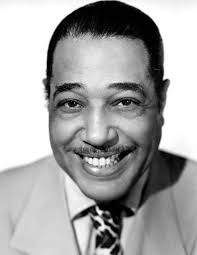
Duke Ellington easily and succinctly responded to the inquiry of three wishes by the Baroness with one answer:
-
-
“My wishes are simple. I want nothing but the best.”
-
*Excerpt from Three Wishes: An Intimate Look at Jazz Greats ~ Compiled and Photographed by Pannonica de Koenigswarter
More Posts: baroness,history,instrumental,jazz,music,pannonica,piano,three,wishes
Requisites
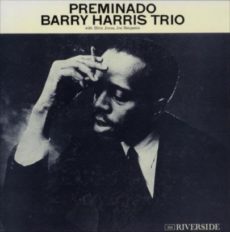
I begin this morning’s discussion with a 1961 album by The Barry Harris Trio titled Preminado (Riverside RLP 354/RLP 9354). I’ve been a fan of the pianist since hearing Barry Harris at The Jazz Workshop (1960), Listen To Barry Harris (1961), Live In Tokyo (1976), The Sidewinder (1964), and Two Trumpets (1957). My copy used in this report is the 1974 Riverside Original Recording Series Japanese Stereo reissue (Milestone SMJ-6047). Harris is joined on this date by Joe Benjamin on bass and Elvin Jones on drums.
My Heart Stood Still by Richard Rodgers and Lorenz Hart first appeared in the 1927 Broadway musical, A Connecticut Yankee. It opens the album with the trio showing tender emotions on the sentimentally nostalgic theme. Barry steps up first for a straightforward performance of poise and glamour that’s laid out beautifully. Joe strolls into the next interpretation at a relaxed tempo, then Elvin exchanges a few carefree thoughts on the song’s final reading with Barry.
The title tune is a Harris original with a march-like introduction by the pianist before the ensemble kicks up the tempo into a vibrantly spirited theme. Barry starts the soloing with a nimble statement that’s worth the price of admission. Elvin shows why he was a master timekeeper and a significant part of The John Coltrane Quartet next with infectious enthusiasm. I Should Care by Alex Stordahl, Paul Weston, and Sammy Cahn was composed in 1944 and featured in the 1945 musical, Thrill of a Romance.
Barry weaves the warmth and feeling of the lyrics into an alluring performance that’s a moment of perfect bliss. Side One ends with There’s No One But You by Austen Croom-Johnson and Redd Evans. This 1946 song was rumored to be written for the film-noir drama, Gilda, but did not appear in the film. The trio moves in a medium groove for the melody’s amorous atmosphere. Harris and Benjamin are the featured soloists dispensing affectionate love and desire on two readings.
The pianist’s One Down is an easy flowing blues that begins with an airy introduction and opening chorus. Barry turns in a charming performance on the lead solo, and Joe adds a brief comment that’s cheerfully carefree. It’s The Talk of The Town is a 1933 pop standard by Jerry Livingston, Allen J. Neiburg, and Marty Symes. The lyrics recount the breakup of a couple before their wedding and the ensuing gossip spread throughout the town in the aftermath. On the song’s only solo, Barry examines the subtlest nuances of this ballad with a quiet lament and tender lyricism that’s poignantly beautiful. Play, Carol, Play is named after Barry’s young daughter and brings the trio back to an uptempo beat. This tune opens with an effervescent introduction and melody, then Barry moves briskly on the first reading. Jones blends beautifully with Harris and Benjamin on the closing statement sharing an exuberant exchange ahead of the reprise and climax.
The finale is a popular jazz standard from The Cole Porter Songbook, What Is This Thing Called Love? It premiered in the 1929 London and Broadway musicals, Wake Up and Dream, and was also featured in the 1946 Porter biographical film, Night and Day. The trio starts the enthusiastic opening chorus briskly. Harris takes off first on this musical speedway with unbounded drive and vitality. Benjamin’s bass comes out breathing fire next, then Jones brings the solos to a rapid resolution in a brief exchange with the pianist.
Preminado was originally recorded by Ray Fowler with the mastering done by Jack Matthews. The sound quality by Victor Musical Industries is a demonstration class with a breathtaking soundstage. Every so often the jazz public is treated to a musician who’s in some way, very special. Pianist Barry Harris is just such a musician as he illustrates on this date. If you’re a fan of piano jazz, I invite you to check out Preminado by The Barry Harris Trio. It’s an album of music that’s skillfully crafted, superb musicianship that’s exemplary in every sense and one you shouldn’t miss on your next vinyl hunt!
~ Barry Harris at The Jazz Workshop (Riverside RLP 326/RLP 1177); Listen To Barry Harris (Riverside RLP 392/RLP 9392); Live In Tokyo (Xanadu 130); The Sidewinder (Blue Note BLP 4157/BST 84157); Two Trumpets (Prestige PRLP 7062) – Source: Discogs.com ~ I Should Care, It’s The Talk of The Town, My Heart Stood Still, There’s No One But You, What Is This Thing Called Love? – Source: Wikipedia.org © 2020 by Edward Thomas Carter

More Posts: bandleader,composer,history,instrumental,jazz,music,piano
Daily Dose Of Jazz…
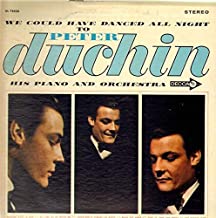
Peter Oelrichs Duchin was born in New York City on July 28, 1937, the son of pianist and bandleader Eddy Duchin and Newport, Rhode Island, and New York City socialite Marjorie Oelrichs, who died unexpectedly when he was just five days old. After the death of both of his parents, he was raised by close family friends, statesman W. Averell Harriman and his wife, Marie Norton Harriman.
Educated at Eaglebrook School, he studied piano with Carrie Barbour Swift and The Hotchkiss School prep schools in New England. He spent time in Paris, France, studied at the Sorbonne, then returned home and graduated from Yale University.
Duchin formed his first professional band, played the St. Regis Hotel in New York City in 1962 thanks in part to his family name and the networking it had made possible. His music was heard on the radio in the late 1960s and early ’70s from albums and singles released on the Decca, Bell, and Capitol labels.
From 1985 to 1989, Peter had a professional partnership with Jimmy Maxwell, leader of the traditional society jazz band in New Orleans, Louisiana. By 2009, his band had played at an estimated 6,000 performances. Duchin has served on a variety of arts boards not limited to Carnegie Hall, Spoleto Festival and the National Jazz Service Organization, the World Policy Institute, and The Center for Arts Education.
In 1996 he published his memoir, Ghost of a Chance. Pianist and bandleader Peter Duchin continues to perform and record at 82.

More Posts: bandleader,history,instrumental,jazz,piano