


Daily Dose Of Jazz…
Joe Albany was born Joseph Albani on January 24, 1924 in Atlantic City, New Jersey, Albany studied piano as a child and by 1943 he was working on the West Coast in Benny Carter’s orchestra. In 1946 he played with Charlie Parker and then 20-year-old Miles Davis.
Continuing to play, in 1957 recorded an album for Riverside with an unusual trio line-up with saxophonist Warne Marsh and Bob Whitlock on bass. omitting a drummer. Despite that, most of the 1950s and 1960s saw him battling a heroin addiction, or living in seclusion in Europe. He returned to jazz in the Seventies and played on more than ten albums. Modern and bebop pianist Joe Albany passed away of respiratory failure and cardiac arrest in New York City at the age of 63 on January 12, 1988.
was the focus of a 1980 documentary titled, Joe Albany… A Jazz Life. His daughter Amy-Jo wrote a memoir about her father called Low Down: Junk, Jazz, and Other Fairy Tales from Childhood. The book was adapted for the screen and released in 2014 as the biopic Low Down.
<ahref=”http: notoriousjazz.com=”” wp-content=”” uploads=”” 2017=”” 08=”” bronze-lens.jpg”=””> </ahref=”http:>
More Posts: bandleader,history,instrumental,jazz,music,piano
Daily Dose Of Jazz…
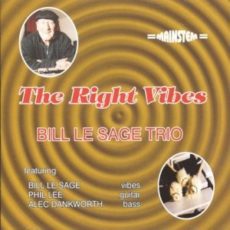
Bill Le Sage was born William A. Le Sage in London, England on January 20, 1927. His father and two uncles were musicians and he started playing the ukulele at the age of eight, drums at fifteen and taught himself to play the piano.
His career began in 1945 when he led his first sextet. He was then a member of army bands while serving with the Royal Signals. He played piano for the Johnny Dankworth Seven in 1950 but decided to switch to the vibraphone. Leaving in 1954 Bill joined the various small groups led by the drummer Tony Kinsey, until 1961 when he started playing with baritone saxophonist Ronnie Ross, with whom he co-led various line-ups until 1966. During this period, he also played with Kenny Baker’s Dozen and wrote music for television and films.
The 1960s gave Le Sage the opportunity to work with the Jack Parnell Orchestra, the Chris Barber Band, and led his group, Directions In Jazz. His composer credits included scores for the films The Tell-Tale Heart, Tarnished Heroes, The Silent Invasion, Strip Tease Murder and The Court Martial of Major Keller.
He accompanied numerous visiting American musicians, including guitarist Tal Farlow on an annual basis. In 1969, he formed the Bebop Preservation Society Quintet, which he continued for more than two decades and also worked with Barbara Thompson’s Jubiaba and others. Vibraphonist Bill Le Sage passed away in London on October 31, 2001.

More Posts: bandleader,composer,history,instrumental,jazz,music,piano,vibraphone
Daily Dose Of Jazz…
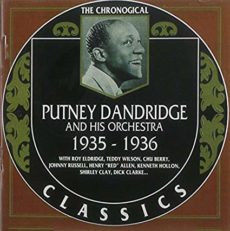
Putney Dandridge was born Louis Dandridge on January 13, 1902 in Richmond, Virginia, and began performing in 1918 as a pianist in a revue titled The Drake and Walker Show. 1930 saw him working as an accompanist for tap dancer Bill “Bojangles” Robinson, including appearances in the musical Brown Buddies. In 1931, he appeared in the cast of the musical revue Heatin’ Up Harlem, starring Adelaide Hall at the Lafayette Theatre in Harlem. In the 1932 American film, Harlem Is Heaven, Dandridge, on the piano and reciting lyrics in a speak set, accompanies Robinson as the dancer sings “Is You Is Or Is You Ain’t“.
After touring in Illinois and the Great Lakes region, Putney settled in Cleveland, Ohio, forming a band with guitarist Lonnie Johnson. This period lasted until 1934 when he attempted to perform as a solo act. He took his show to New York City, beginning a series of long residences at the Hickory House on 52nd Street and other local clubs. From 1935 to 1936, he recorded numerous sides under his own name, many of which highlighted some major jazz talents of the period, including Roy Eldridge, Teddy Wilson, Henry “Red” Allen, Buster Bailey, John Kirby, Chu Berry, Cozy Cole and more.
Appearing to vanish from the music scene in the late thirties, it has been speculated that he may have been forced to retire due to ill health. Pianist Putney Dandridge passed away on February 15, 1946 in Wall Township, New Jersey at the age of 44.
More Posts: piano
Requisites
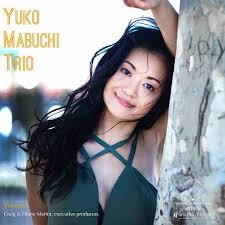
The Yuko Mabuchi Trio, Volume 1 is a 2017 live recording by the trio at The Brain and Creativity Institute’s Cammilleri Hall in Los Angeles, California on March 31, 2017. It was recorded in honor of the 25th Anniversary of The Los Angeles and Orange County Audio Society, and their President, Bob Levi who was celebrating his 70th Birthday and released on the Yarlung Records label. The executive producer was Randy Bellous.
Track List |- What Is This Thing Called Love?
- Valse Noire
- On Green Dolphin Street
- Seriously
- Yuko Mabuchi ~ piano
- Del Atkins ~ bass
- Bobby Breton ~ drums
Review by Eddie Carter
On the stage, a beautiful young woman sits at a baby grand piano unleashing an aggressive flood of sound into the audience. Behind her are two elegantly dressed gentlemen, Del Atkins on bass and Bobby Breton on drums, who match her creativity, precise timing, and articulation with their own musical artistry note-for-note. Her name is Yuko Mabuchi.
The four-song album opens with one of Cole Porter’s most recorded compositions, the 1929 classic, What Is This Thing Called Love?, composed for the Broadway musical, Wake Up and Dream. It is followed by the very pretty ballad Valse Noire by Cincinnati, Ohio composer Mark Lehman who originally wrote the tune for solo piano. The pace slows down as the second side begins with the 1947 popular song On Green Dolphin Street by Bronislaw Kaper and Ned Washington. It was composed for the film Green Dolphin Street released that year and became a jazz standard after Miles Davis recorded it on his 1958 Columbia album, Jazz Track. The album closes with Seriously by singer-songwriter Sara Bareilles who wrote it for fellow singer Leslie Odom, Jr., who appeared on the weekly public radio program and podcast, This American Life.
Source: Jazztracks by Eddie Carter | Excerpt: 12/2018 | atlantaaudioclub.org

More Posts: choice,classic,collectible,collector,history,instrumental,jazz,music,piano
Daily Dose Of Jazz…
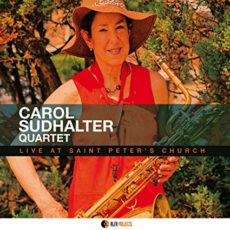
Carol Stearns Sudhalter was born on January 5, 1943 in Newton, Massachusetts and grew up in a musical family. Her father Albert played the alto saxophone in the New England area, a brother played baritone saxophone and one brother who played trumpet, cornet and wrote award-winning books on jazz.
In the early Sixties, Sudhalter began to play the flute while majoring in biology at Smith College. She continued to study flute with private teachers in Washington DC, New York, Boston, Israel, and Italy until 1978. She studied theory and Third Stream music with Ran Blake and Phil Wilson at the New England Conservatory of Music. From the 1970s on she has been teaching piano, saxophone, and flute privately, at Mannes College, and for the New York Pops Salute to Music Program.
1975 saw Carol deciding to take up the saxophone, and by 1978 relocated from Boston to New York City to join the first all-women Latin band, Latin Fever, produced by Larry Harlow. In 1986 she founded the Astoria Big Band, and she has performed with Sarah McLawler, Etta Jones, Chico Freeman, Jimmy McGriff, Duffy Jackson, and others around the New York jazz clubs, as well as domestic, Italian and British jazz festivals.
She initiated the Jazz Monday concerts at Athens Square Park between 1989 and 2001, along with several other local festivals in Queens where she resides.
A member of the Jazz Journalists Association, Sudhalter also has a chapter in Leslie Gourse’s Madame Jazz and in W. Royal Stokes’ Growing Up With Jazz. In 2012 she was nominated for the 2012 International Down Beat Readers’ Jazz Poll, and was voted 9th place in the category “Best Jazz Flutist”. She has recorded eight albums as a leader, one as a sideman, and the tenor and baritone saxophonist, flutist and pianist Carol Sudhalter continues to perform and educate.
More Posts: bandleader,composer,flute,history,instrumental,jazz,music,piano,saxophone