

Daily Dose Of Jazz…
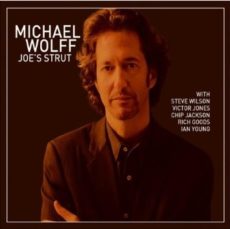
Michael Blieden Wolff was born July 31, 1952 in Victorville, California and raised in New Orleans, Louisiana. At age nine, his family moved to Berkeley, California where he continued his study of classical piano that began at age eight, before playing drums at age 12. While attending Berkeley High School he began playing piano with the University of California Jazz Ensembles. After graduating from high school, Wolff attended the University of California, Berkeley before enrolling at the University of California, Los Angeles.
Leaving college in 1972 Michael started his music career by joining Cal Tjader’s band, followed by Cannonball Adderley’s band three years later. By 1977, he formed the band Answering Service with saxophonist Alex Foster.
Wolff has worked with among others Warren Zevon, The Thad Jones/ Mel Lewis Orchestra, Sonny Rollins, Wayne Shorter, Jean-Luc Ponty, Children On The Corner and Terri Lyne Carrington. He has composed and played original music, and served as host for the Riverside Shakespeare Company production of The Mandrake in New York City. In 1978, singer Nancy Wilson chose Michael as her musical director, and in 1989, after being Wilson’s opening act, when Arsenio Hall was given his own talk show, he was chosen to serve as its bandleader and musical director.
In 1995, he released Jumpstart featuring Christian McBride and Tony Williams and in 1997 the trio released 2AM. Wolff was the leader of the jazz band Impure Thoughts which features Indian tabla player Badal Roy, drummer Mike Clark, percussionist Frank Colón and electric bassist John B. Williams.
He has written music for the films Who’s The Man?, The Tic Code and Made Up, as well as writing for and performing in other films. Michael has co-starred in The Naked Brothers Band on Nickelodeon, and was the co-executive producer and music supervisor, along with his wife, Polly Draper.
As an educator he is on the faculty at The New School For Jazz And Contemporary Music. He has been honored as a Steinway Artist and obtained a Broadcast Music, Inc. award. In between his teaching duties pianist, composer, producer Michael Wolff continues to compose, record and perform with his jazz-funk band Wolff & Clark Expedition, consisting of Wolff and Clark as band leaders, Steve Wilson and Lenny Pickett as saxophonists, and James Genus as the bassist.

Jazz Is Global – Share

Daily Dose Of Jazz…
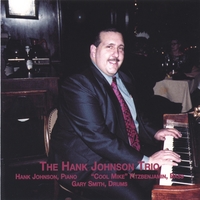
Hank Johnson was born Stuart H. Tresser in the Bushwick section of Brooklyn, New York on July 14, 1949. He began playing the piano at three years old with his first piano teacher Mrs. Henryetta Klein. He continued his private lessons with classical teacher Ms. Malady at the Brooklyn Conservatory of Music, Morty Reed, Teddy Wilson and Horace Parlan. Studying with Machito’s copyist and arranger Ray Cox, he learned to write music.
Graduating from George W. Wingate High School in Brooklyn in 1967, Hank won 1st prize at the high school talent show with the first interracial jazz trio and vocalist. Not satisfied with just becoming a great pianist he went on to matriculate through New York City Technical College with a degree in graphic arts and advertising technology, and New York Institute of Technology in Communication Arts.
In 1977 Hank had replaced Jimmy Nottingham’s trio at the Village Door Restaurant and Supper Club in Jamaica, Queens, NY. It was there at the Village Door that Hank got the hands on experience that would spark and ignite his goal to share his talent with the world.
He founded the independent record label Jazzbone Records where he composes and produces. Presently he continues to perform around his native New York, is the director of Tresser Printing Office, a security printer and a division of Tresser Music, music publishers.
Take A Dose On The Road
More Posts: piano
Daily Dose Of Jazz…
Jorge Dalto was born on July 7, 1948 in Roque Pérez, Argentina. During the mid-80s Jorge led the InterAmerican Band featuring his wife, Adela, on vocals. He continued to build his internationally-flavored sound, and collaborations with his wife blended their Latin and Brazilian backgrounds. He served as arranger for the Percussion Jazz Ensemble with Tito Puente, Carlos “Patato” Valdes and Alfredo De La Fe.
As a leader he recorded six albums since his debut recording Chevere in 1976 and another dozen as a sideman performing and recording with Tito Puente, Grover Washington, Fuse One, Spyro Gyra, George Benson, Dizzy Gillespie and Machito, Grant Green, Heaven and Earth, Willie Colón, Gato Barbieri, Bernard Purdie, Ronnie Foster, Tom Malone, Jerry Dodgion, Ernie Royal, Victor Paz, Rubén Blades, David Sanborn, Eric Gale, Steve Gadd, Bob Mintzer, Alan Rubin, Dave Valentin, Jay Beckenstein, Carlos Valdes, Buddy Williams, Stanley Banks, Phil Upchurch, Hubert Laws, Michael Brecker, Randy Brecker, Anthony Jackson, Harvey Mason and Frank Malabé.
Pop, jazz and Afro-Cuban pianist and former George Benson musical director Jorge Dalto passed away of cancer at the age of 39 on October 27, 1987.
Give A Gift Of Jazz – Share
More Posts: piano

Daily Dose Of Jazz…
Seger Ellis was born on July 4, 1904 in Houston, Texas. He began his career as pianist playing live for a local Houston radio station KPRC in the early 1920s. In 1925 he was added to the orchestra of Lloyd Finlay for a “field trip” recording session for Victor Records and was also allowed to cut two piano solos.
The recordings led to Ellis being invited to Victor’s regular recording studio in Camden, New Jersey to cut a number of piano solos, all or most of them compositions of his own. These were among the earliest records Victor made using the new electric microphone and recording equipment, a technique that was yet not perfected which probably explains why only four of the titles were eventually issued. Of these the coupling Prairie Blues and Sentimental Blues became a minor hit.
After his first recording experiences Seger returned to Houston and radio work as well as playing in vaudeville theaters. During this period he started adding singing to his piano playing and was well received by audiences. In 1927 he was invited to New York to make vocal test recordings, his first issued vocal record was Sunday on the Columbia label. This was followed by a string of records for Okeh Records and he chose the best musicians to play with him such as Tommy and Jimmy Dorsey, Joe Venuti, Eddie Lang, Andy Sannella and Louis Armstrong.
His first recording career ended in 1931, however towards the end of the decade he returned with a big band of his own, the Choirs of Brass Orchestra with himself conducting and taking occasional vocals and featuring his wife, Irene Taylor as a vocalist. In 1939 Ellis reorganized and his new band featured the conventional four-man reed section but disbanded in 1941 and enlisted in the Army-Air Force in 1942.
A move back to Texas saw him being less active as a performer and more involved in songwriting. Many of compositions were recorded by Harry James, Gene Krupa, Bing Crosby, Count Basie and the Mills Brothers. Pianist and vocalist Seger Ellis gradually retired and took up residence in Houston where he passed away in a retirement home on September 29, 1995.
Dose A Day-Blues Away
Daily Dose Of Jazz…
Garry Dial was born on July 2, 1954 in Montclair, New Jersey. He began piano lessons at the age of 10 with Elston Husk and his mother, a pianist helped him practice. His 7th grade teacher gave him his first jazz record The Oscar Peterson Trio which instilled in him the love of jazz. Entering high school at St. Benedict’s Prep in Newark, New Jersey where the priests at St. Benedict’s supported his love of jazz. While in church he met Mary Lou Williams who offered him free lessons, took him under her wing and for the next few years went into Harlem to study with her. It was there he learned of Miles, Monk, Bud Powell and Cecil Taylor.
As a junior in high school Garry took the Summer Jazz Workshop at Berklee College Of Music and realized that music and jazz would be his calling. After high school graduation he returned to Berklee where he met his teacher of 37 years, the late Charlie Banacos. After one year at Berklee fellow musician Kenny Werner recommended him for a gig in Bermuda as the pianist at The Princess Hotel from 1975 to 1978.
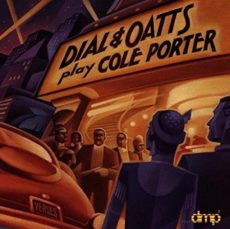
A move to New York saw Dial playing with Charli Persip, performing at Frank Sinatra’s private parties, joining Gerry Mulligan’s Big Band, the Mel Lewis Quartet and Joe Morello Quintet. He was enlisted by Ruth Ellington Boatwright, Duke’s sister, to perform and record on tape each composition in the entire Ellington archive, as many were never recorded or played by the composer and would have been lost to history. Shortly afterward, he met Red Rodney and where he first came to fame as an important modernizing force with the Red Rodney-Ira Sullivan Quintet. After a ten-year association Sullivan departed and was replaced by saxophonist Dick Oatts, and they eventually formed the group Dial & Oatts, recording for the DMP label. Garry has also recorded with his own trio for the Continuum label.
As an educator he has leant his talent and knowledge to the students at the Manhattan School of Music and the New School, has given private lessons with Stefon Harris, Jacob Sacks, Mary J. Blige, Bette Midler, Alexa Joel and Amanda Brecker, to name a few. Hard bop and post bop pianist Garry Dial continues to perform, record, tour and educate.
Sponsored By


More Posts: piano