

Daily Dose Of Jazz…
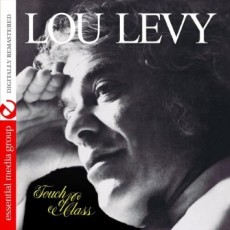
Louis A. Levy, generally known as Lou Levy, was born on March 5, 1928 in Chicago, Illinois and started playing piano when he was twelve. His chief influences were Art Tatum and Bud Powell. A professional at age nineteen, he played with George Auld, Sarah Vaughan, Chubby Jackson, Boyd Raeburn and Woody Herman’s Second Herd during the late Forties. Still with Woody Herman by 1950, he moved on to play with Tommy Dorsey, Flip Phillips before leaving music for a few years.
Lou returned to music and gained a strong reputation as an accompanist to singers, working with Peggy Lee, Ella Fitzgerald, June Christy, tony Bennett, Anita O’Day and Pinky Winters. He would also go on to play with Shorty Rogers, Stan Getz, Sonny Stitt, Coleman Hawkins, Bob Cooper, Bennie Wallace, Terry Gibbs, Benny Goodman, Quincy Jones, Supersax, and most of the major West Coast players.
Over the course of his career he recorded as a leader for Nocturne, RCA, Jubilee, Philips, Interplay and Verve leaving behind a catalogue of fourteen albums as a leader and another eighty-one as a sideman.
Bebop and cool jazz pianist Lou Levy died of a heart attack in Dana Point, California at the age of 72 on January 23, 2001.

Dose A Day – Blues Away
More Posts: piano
Daily Dose Of jazz…
Ralph Towner was born on March 1, 1940 in Chehalis, Washington. Born into a musical family, his mother a piano teacher and his father a trumpet player, Towner learned to improvise on the piano at the age of three. He started trumpet lessons at the age of five, but did not take up guitar until attending the University of Oregon.
Ralph first played jazz in New York City in the late 1960s as a pianist and was strongly influenced by the renowned jazz pianist Bill Evans. He began improvising on classical and 12-string guitars in the late 1960s and early 1970s; and formed alliances with musicians who had worked with Evans, including flautist Jeremy Steig, Eddie Gomez, Marc Johnson, Gary Peacock ad Jack DeJohnette.
He began his career as a conservatory-trained classical pianist, who picked up guitar in his senior year in college, then joined world music pioneer Paul Winter’s Consort ensemble in the late 1960s. Leaving Winter along with band mates Paul McCandless, Glen Moore and Colin Walcott, they formed the group Oregon, mixing folk, Indian classical, avant-garde jazz and frr improvisation.
Around the same time, Towner began a longstanding relationship with ECM Records, releasing virtually all of his non-Oregon recordings since his 1972 debut as a leader Trios / Solos. As a sideman he has ventured int jazz fsion with Weather Report on the 1972 album I Sing The Body Electric.
Unlike most jazz guitarists, Ralph only uses 6-string nylon-string and 12-string steel-string guitars. He tends to avoid high-volume musical environments, preferring small groups of mostly acoustic instruments that emphasize dynamics and group interplay. He make significant use of overdubbing, allowing him to play piano or synthesizer and guitar on the same track. During the Eighties he used more synthesizer but has returned to the guitar in recent years.
Composer, arranger, bandleader and multi-instrumentalist Ralph Towner, who plays 12 string guitar, classical guitar, piano, synthesizer, percussion and trumpet, has an impressive catalogue of some five-dozen recordings spread between his role as a leader, with Oregon, and as a sideman with Paul Winter and Weather Report among others. He continues to perform, record and tour.
Put A Dose In Your Pocket
More Posts: guitar,percussion,piano,synthesizer,trumpet
Daily Dose Of Jazz…
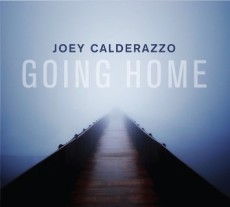
Joey Calderazzo was born on February 27, 1965 in New Rochelle, New York and was inspired by a friend who lived next door, to began his piano studies at age seven. Progressing rapidly in a house where other family members were also playing drums and singing, by the time he turned 14 he was the youngest member of his brother Gene’s rock band. When the other, significantly older band members enrolled at Boston’s Berklee College of Music and switched their allegiance to jazz, he set aside his passions for the Beatles and Led Zeppelin for that of Oscar Peterson, Chick Corea, Herbie Hancock and McCoy Tyner.
He met Michael Brecker at a clinic, and in 1987 the saxophonist was introducing him to the jazz world as part of the touring quintet. After playing on two tracks of Brecker’s1988 album Don’t Try This At Home, Brecker produced Calderazzo’s first disc, In the Door for Blue Note. Not only did Brecker record on the project, he brought along saxophonists Jerry Bergonzi and Branford Marsalis.
Joey has maintained a strong relationship over the years with Brecker and Marsalis having taken the piano chair post Kenny Kirkland in the later’s Buckshot LeFonque. He has played with Dave Holland, Jack DeJohnette, Bruce Gertz, John Patitucci and Jeff “Tain” Watts to name a few. He has released
Calderazzo assumed his role as sideman and composer on a number of Marsalis recordings contributing to Contemporary Jazz, Footsteps Of Our Fathers,Romare Bearden Revealed, Eternal and the DVD A Love Supreme, Live In Amsterdam. As a leader he has released more than a dozen compact discs such as his Secrets, Amanecer, Trio Live and his latest release Going Home, as well as several co-leader projects.
Pianist and composer Joey Calderazzo continues to perform as a solo pianist, as leader of his trio, and as a member of the Branford Marsalis Quartet.
Take A Dose On The Road
More Posts: piano
Daily Dose Of Jazz…
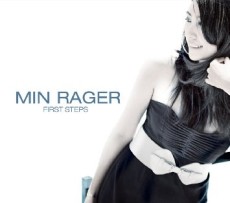
Min Rager was born on February 4, 1975 in Seoul, Korea and began her music career playing in local jazz clubs and her reputation rapidly grew. In 1997, she moved to Montreal to attend McGill University and while there she continued to evolve as a pianist and composer. She graduated in 2003 with an Award of Excellence in Jazz Piano and formed a quintet as support for her original compositions and arrangements.
The following year her quintet recorded a studio recording for CBC Radio Beat Jazz II program. The show aired nationally in 2004 and was released as Min debut album Bright Road on Effendi in October 2005. She has composed a jazz suite for two pianos in 2008, performed at the International Jazz Festival of Montreal, had her quintet was named for General Motors Grand Jazz Award and played the Montreal Off Jazz Festival where she received “Best New Artist” honors.
Min Rager is currently on staff both at McGill University as a faculty member part-time where she teaches at the jazz department at the Conservatory of McGill University where she teaches jazz piano when not performing.
Dose A Day – Blues Away
More Posts: piano
Daily Dose Of Jazz…
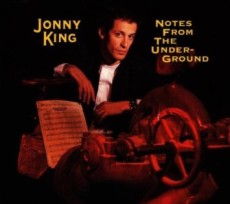
Jonny King was born Jonathan Z. King on February 2, 1965 in New York City, New York. Raised in New York City, he graduated from Princeton and Harvard Law School. A jazz pianist primarily self-taught, he has neither received any formal music education nor attended any jazz schools. His school of music was life – obsessively listening to records, going to jam sessions and soaking up as much live and recorded music as possible from traditional to avant-garde.
He credits pianist Mulgrew Miller and Tony Aless as his important influences, mentors and personal teachers. As well as recording under his own name, he has performed with, among others Roy Hargrove, Kenny Garrett, Bobby Watson, Christian McBride, Joe Lovano, Ira Coleman, Billy Drummond, Mark Turner, Vincent Herring, Steve Nelson, Peter Washington, Joshua Redman, Steve Davis, David Sanchez, Milton Cardona and Larry Grenadier.
He has released three albums in the 90s on the Criss Cross and Enja labels – In From the Cold, Notes From The Underground and Meltdown. In between his duties as an attorney at a copyright practice, he continues to approach music the way he learned, both as a performer and composer.
Give A Gift Of Jazz – Share
More Posts: piano