


Daily Dose Of Jazz…
Cleo Brown was born in Meridian, Mississippi on December 8, 1905. As a child she sang in church until 1919 when her family moved to Chicago and she began studying piano. In the 1920s she began taking gigs in clubs and broadcasting on radio.
From the 1930s to the 1950s she toured the United States regularly, recording for Decca Records among other labels and recorded many humorous, ironic titles such as “Breakin’ in a Pair of Shoes”, “Mama Don’t Want No Peas and Rice and Coconut Oil” and “The Stuff Is Here and It’s Mellow”.
Cleo’s stride piano playing was often compared to Fats Waller. In the 1940s she started moving away from singing bawdy jazz and blues songs because of her deepening religious beliefs, and in 1953 she retired and became a nurse.
Rediscovered in the 1980s after being tracked down by Marian McPartland, she returned to record again and performed on National Public Radio.
Cleo Brown, jazz and blues vocalist and pianist died on April 15, 1995 in Denver, Colorado at age 85.

Take A Dose On The Road

Daily Dose Of Jazz…
Amina Figarova was born on December 2, 1966 in Baku, Azerbaijan and began studying music as a child. She started learning piano and expanded into composition and arrangement. Attending the Baku Conservatory as a youth, her immediate plans were to become a classical concert pianist.
A course in jazz performance at the Rotterdam Conservatory, however, led to Amina matriculating through Berklee College of Music. She recorded the first of her ten CDs in 1995 titled Attraction on the Media Music label then signed with Munich Records and has had a prolific and collaborative relationship releasing nine albums for the label.
Pianist Amina Figarova has toured extensively, developing a tight-knit ensemble that, despite inevitable personnel changes, has attained a distinctive and inimitable voice by concentrating on all-original repertoire for almost 18 years.
With a dozen albums under her belt the pianist continues to perform, record and tour with her husband, flautist Bart Platteau, who is a member of her international sextet.
Give The Gift Of Knowledge
More Posts: piano
Daily Dose Of Jazz…
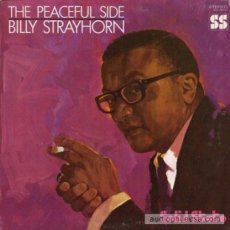
Billy Strayhorn was born William Thomas Strayhorn on November 29, 1915 in Dayton, Ohio but the family moved to Pittsburgh, Pennsylvania shortly after his birth. Protecting him from his father’s drunken sprees his mother sent him to live with his grandparents in North Carolina, which is here he first became interested in music. He learned to play hymns on the piano and listening to records on her Victrola.
By high school he was back in Pittsburgh and began his music career studying classical music, writing a school musical, forming a trio that played daily on the radio and composing Life Is Lonely (renamed Lush Life), My little Brown Book and Something To Live For while still in his teens.
When the harsh reality of a black man making it in the white classical world shattered his 19-year-old ambitions, Strayhorn turned to the music of Art Tatum and Teddy Wilson and was guided into jazz. In 1938 he met Ellington, impressed him with an arrangement of a Duke piece, went to New York and collaborated with Ellington for the next quarter century. He composed Take The “A” Train, Chelsea Bridge, Day Dream, Such Sweet Thunder and A Drum I A Woman among others and the landmark score to the film Anatomy Of A Murder.
Billy was openly gay, participated in many civil rights causes, was a committed friend to Dr. Martin Luther King, influenced and help propel the singing career of Lena Horne, embarked on a solo career and continued to compose and arrange for Ellington.
Billy Strayhorn, composer, pianist and arranger whose compositions are known for the bittersweet sentiment and classically infused designs that set him apart from Duke succumbed to esophageal cancer on May 31, 1967. His final song “Blood Count”, composed while in the hospital, was the first track on Ellington’s memorial album for Strayhorn, …And His Mother Called Him Bill. The final track is a solo version of Lotus Blossom performed by Duke for his friend while the band was packing up.
Inspire A Young Mind
Daily Dose Of Jazz…
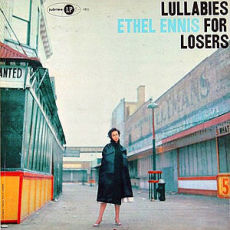
Ethel Llewellyn Ennis was born November 28, 1932 in Baltimore, Maryland and began performing on the piano in high school, but her natural vocal abilities soon eclipsed those as a pianist.
Embarking on a solo career Ethel recorded a number of songs for Atlantic Records before her 1955 debut of “Lullabies for Losers” on Jubilee Records. Two years later she moved to Capitol Records releasing “A Change of Scenery” followed by “Have You Forgotten”.
Ennis took a six-year hiatus from recording while she toured Europe with Benny Goodman. By the early Sixties she was back in the studio recording another four albums for RCA Records but unfortunately was dissatisfied with the creative direction and artist management left for a second recording hiatus of eight years. During this time she recorded the title song for the 1967 film Mad Monster Party and in 1973 the “10 Sides of Ethel Ennis” emerged on record store shelves.
That same year Ennis was invited to sing at the re-inauguration of Richard Nixon and her unusual a cappella rendition of the national anthem shocked some, but inspired many others. Ethel returned to Baltimore, rarely performing outside the area over the next several decades. 1980 saw her return to the studio releasing a live album, but it would be fourteen years later before her self-titled album came out, followed by the 1998 release of “If Women Ruled The World” was released on Savoy Jazz and a 2005 live recording of her performance at Montpelier was released to critical acclaim. Jazz vocalist Ethel Ennis passed away from a stroke on February 17, 2019, in her hometown. She was 86.
Give A Gift Of Jazz – Share
Daily Dose Of Jazz…
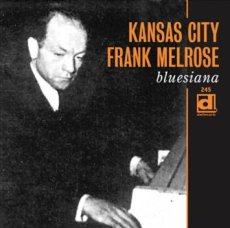
Frank Melrose was born Franklyn Taft Melrose on November 26, 1907 in Sumner, Illinois, the younger brother of Walter and Lester who set up the Melrose Brothers Music Company in Chicago in 1918. His first instrument was the violin, but he later took up the piano, strongly influenced by his brothers’ business partner, Jelly Roll Morton.
In 1924 Frank left home and began drifting around, playing and settling for short periods in St. Louis, Kansas City, Detroit and playing occasionally in Chicago with Jelly Roll. In 1929 his brother Lester recorded him performing piano solos that were released under the pseudonym of “Broadway Rastus”.
1930 saw Melrose recording “Jelly Roll Blues” and other tunes that were released on the Brunswick Record label’s “race” series under the pseudonym of “Kansas City Frank”, and for some years were wrongly assumed to be the work of Morton. Throughout the decade he continued to play piano in small clubs and bars, either solo or as part of a band, recorded sporadically with Johnny Dodds and others while occasionally working in a factory to support his family.
Pianist Frank Melrose, one of the leading figures in the Midwest blues and jazz scene during the 1920s and 30s played his last recording session with Bud Jacobson’s Jungle Kings. On Labor Day, September 1, 1941 he was found dead in the road after apparently being killed in a fracas in a club in Hammond, Indiana.
Put A Dose In Your Pocket
More Posts: piano