

Daily Dose Of Jazz…
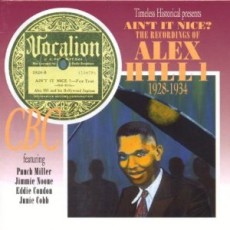
Alex Hill was born on April 19, 1906 in Little Rock, Arkansas to a minister father and pianist mother who taught her child prodigy to play. Defying his father’s wishes the young pianist delved into secular music and while studying at Shorter College met Alphonse Trent and began arranging for him. After graduating in 1922 he worked with several territory bands including Fats Waller and Terence Holder.
From 1924 to 1926 Alex led his own ensemble, then played with Speed Webb, and in 1927 he spent time with Mutt Carey’s Jeffersonians and Paul Howard’s Quality Serenaders. Later that same year Hill relocated to Chicago and held a job as an arranger for the Melrose Music Publishing Company, while simultaneously arranging for the Carroll Dickerson Orchestra. He began recording as a leader and a sideman in 1928 and continued through 1934.
By 1930, prior to a move to New York City, Alex had played with Jimmy Wade, Jimmie Noone and Sammy Stewart. During his time in New York he arranged for Paul Whiteman, Benny Carter, Claude Hopkins, Andy Kirk, Eddie Condon and Duke Ellington among others. Additionally, he became staff arranger for the Mills Music Company. Reuniting with Fats Waller the two did a show together in New York called “Hello 1931”, and accompanied Adelaide Hall.
Hill again put together his own group in 1935, but after playing the Savoy Ballroom he disbanded the ensemble due to his battle with tuberculosis. Moving back to Little Rock, pianist and arranger Alex Hill passed away in February 1937 at the age of 30.

Give A Gift Of Jazz – Share
Daily Dose Of Jazz…
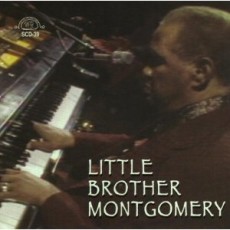
Eurreal Wilford “Little Brother” Montgomery was born on April 18, 1906 in the sawmill town of Kentwood, Louisiana across Lake Pontchartrain from New Orleans where he spent much of his childhood. As a child he looked like his father, Harper Montgomery, and was called Little Brother Harper. The name evolved into Little Brother Montgomery, a nickname that stuck. He started playing piano at the age of 4, and by age 11 he was playing at various barrelhouses in Louisiana.
Montgomery, largely self-taught, was an important blues pianist with an original style; however, he was also quite versatile working in jazz bands including larger ensembles that used written arrangements. Although he did not read music, he learned band routines by ear and once through an arrangement he had it memorized. He was a singer with an immediately recognizable, rather affecting wobble: an oral historian as full of musical anecdotes as his musical influence and frequent visitor, Jelly Roll Morton.
Early on he played the Black lumber and turpentine camps in Louisiana and Mississippi, then with the bands of Clarence Desdunes and Buddy Petit. He first went to Chicago from 1928 to 1931, making his first recordings and from 1931 through 1938 he led a band in Jackson, Mississippi. By 1942 Montgomery moved back to Chicago, toured other cities and Europe with a repertoire alternating between blues and traditional jazz. During the ‘60s his fame grew and he continued to make many recordings, including on his own record label, FM Records.
Never straying too far from the blues Montgomery appeared at many blues and folk festivals during the following decade and was considered a living legend, a link to the early days of blues and New Orleans. Little Brother Montgomery passed away on September 6, 1985 in Champaign, Illinois.
Jazz Is Global – Share
Daily Dose Of Jazz…
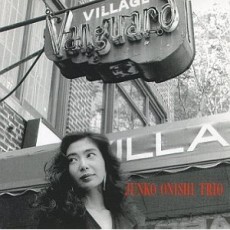
Junko Onishi was born April 16, 1967 in Kyoto, Japan and studied piano at Berklee College of Music. She then moved to New York City where she played with Joe Henderson, Betty Carter, Kenny Garrett and the Mingus Dynasty but has also worked with Jackie McLean, Holly Cole, Billy Higgins and many others.
Primarily playing in the post-bop genre, Junko cites her influences as Duke Ellington, Thelonious Monk and Ornette Coleman but one can hear McCoy Tyner, Kenny Kirkland and Mulgrew Miller’s influences in her playing. As a leader she has recorded nine albums on Blue Note Records label Somethin’ Else.
Choosing to study and practice she stopped performing in the late Nineties and when her mentor, Jaki Byard passed away she stopped playing completely for two years. Redeveloping her technique Onishi returned to playing and started a gym regimen to help her cope with the physical rigors of playing.
She appears in the 1997 documentary “Blue Note: A Story Of Modern Jazz playing the song “Trinity” and “Quick” from her album Play, Piano, Play: Junko Onishi Trio in Europe. In 2009 she released her Blue Note album “Musical Moments” followed by her Verve large band project “Baroque”. She continues to perform, record and tour worldwide.
Give The Gift Of Knowledge
More Posts: bandleader,composer,piano
Daily Dose Of Jazz…
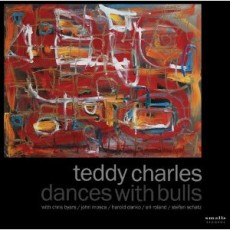
Teddy Charles was born Theodore Charles Cohen on April 13, 1928 in Chicopee Falls, Massachusetts. He began his musical career studying at Julliard School of Music as a percussionist. Later he started recording and making personal appearances as Teddy Cohen with various bands as a vibraphonist, writing, arranging and producing records and in 1951 he changed his last name to Charles.
He was one of many jazz musicians who hung out at an apartment building at 821 Sixth Avenue in New York City known as the Jazz Loft rented by photographer and artist David X. Young who in turn sublet an apartment to Charles’ mentor, Hall Overton. Teddy developed into a skillful musician not only on vibraphone but piano and drums as well and was known for his open-minded approach to more advanced sounds as well as his playing.
Known as an innovator, his main body of work was recorded in the 1950s. Teddy also did session work with musicians and singers as varied as Miles Davis, Oscar Pettiford, Roy Eldridge, Slim Gaillard, Artie Shaw, Benny Goodman, Buddy De Franco and Dion. From 1953-55 he was a member of the Jazz Composer’s Workshop along with Charles Mingus and Teo Macero. This collaboration opened his style to the influences of classical music and freer improvising.
An avid seaman, Charles is the Captain of the Skipjack Pilgrim out of Greenport, Long Island, New York where he performs music locally. After spending years at sea, vibraphonist Teddy Charles started performing again until his passing on April 16, 2012 in Riverhead, New York.
Inspire A Young Mind
More Posts: percussion,piano,vibraphone
Daily Dose Of Jazz…
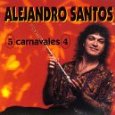
Alejandro Santos was born on April 11, 1956 in Buenos Aires, Argentina. He is widely-recognized both in his home country of Argentina and internationally as an extraordinary flutist and multi-instrumentalist playing the piccolo, bass flute, native wood-flutes, tenor and soprano sax, piano, and synthesizers.
He has developed a career as a composer with a unique style, which fuses modern jazz with traditional Argentinean rhythms like candombe, tango, and folk music. He has collaborated on recording and performing projects with Dino Saluzzi, Gonzalo Rubalcaba, Anthony Jackson, Bob Moses, Claudio Roditi, Toquinho, Maria Creuza, Fito Paez and others. Since 2001 he has steadily worked with Al Di Meola’s World Symphony and has recorded on De Meola’s latest album “Flesh on Flesh”.
Alejandro released three solo albums with RCA and GNA/Invasion Records, one of them: 5 Carnavales 4, released in the States, received excellent reviews and reached into the top 30 jazz playlist of the Gavin Report magazine. Alejandro Santos currently performs with his quartet that includes bandoneon, bass and drums.
Jazz Is Global – Share
More Posts: flute,piano,piccolo,saxophone,synthesizer