

The Jazz Voyager
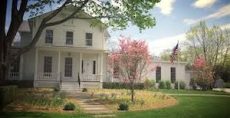
For this Jazz Voyager it’s a relatively short hop in New England terms, an idyllic three and a half hours along the Long Island Sound from the Big Apple to Old Lyme, to be in good company at The Side Door. Not unfamiliar with small town living, as Connecticut used to be this voyager’s stomping ground growing up, this venue has been billed as the only jazz club between Boston and New York City.
Residing in the historic Old Lyme Inn. The club opened in 2013 and is operated by an ambitious, jazz-loving couple in Ken and Chris Kitchings. Already made my reservations for a room and the show, so I’ll be spending the night at the inn.
On stage this week will be a first call drummer, Joe Farnsworth, leading his quintet composed of Sarah Hanahan on alto saxophone, vocalist Georgia Heers, Cameron Campbell playing piano and Peter Washington on bass. I’ve had the pleasure of seeing Joe and Peter on a couple of occasions but not with him leading this configuration. I am also excited to hear Georgia, Sarah and Cameron share their gifts.
The Side Door is located at 85 Lyme Street, 06371. For more information visit thesidedoorjazz.com.

More Posts: adventure,club,drums,genius,jazz,music,piano,preserving,travel
Daily Dose Of Jazz…
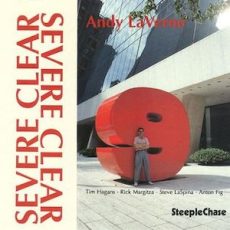
Andy LaVerne was born on December 4, 1947 in New York City, and studied at Juilliard School of Music, Berklee College, and the New England Conservatory. He also took private lessons from jazz pianist Bill Evans.
LaVerne has worked with Frank Sinatra, Stan Getz, Woody Herman, Dizzy Gillespie, Chick Corea, Lionel Hampton, Michael Brecker and Elvin Jones. As a leader he has recorded more than 50 albums including a duo with saxophonist Jerry Bergonzi.
An educator, Andy has released a series of instructional videos, Guide to Modern Jazz Piano, Vols. 1 &, 2, and Jazz Piano Standards, and In Concert with guitarist John Abercrombie.
He has authored several books that has included his own compositions as well as the Handbook of Chord Substitutions, Tons of Runs, Bill Evans Compositions 19 Solo Piano Arrangements, and is the pianist on The Chick Corea Play-Along Collection. He is a frequent contributor to several jazz, music and piano publications.
Besides receiving being a recipient of several fellowships and awards, holding numerous clinics, masterclasses and performances worldwide, pianist Andy LaVerne currently is Professor of Jazz Piano at The Hartt School on the campus of the University of Hartford in Connecticut and on the faculty of the Aebersold Summer Jazz Workshops.

More Posts: author,educator,history,instrumental,jazz,music,piano
ROBERT HURST
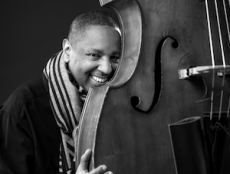
A Detroit Native, Robert Hursts boasts a distinguished 30+ year career as a composer, bassist, educator, and entrepreneur. Renowned for his work with icons like Sir Paul McCartney, Wynton Marsalis, Branford Marsalis, Diana Krall, Terence Blanchard, Nicholas Payton, Ravi Coltrane, Kris Davis, and the legendary Pharaoh Sanders, Hurst’s talent shines on over 250 recordings, earning him seven GRAMMY® Awards and numerous RIAA® certifications. Notably, he was the inaugural bassist for The Tonight Show with Jay Leno, garnering four EMMY® Awards from his performing, directing, acting, arranging, and composing on the NBC program. Hurst’s musical prowess extends to 30+ major motion picture scores for hits like The Wood, Good Night and Good Luck, and Ocean’s Eleven series.
Currently an Associate Professor of Music at the University of Michigan, Hurst received an NEA Grant for groundbreaking programming at The Charles H. Wright Museum of African American History. In 2024, he continues to shape the music landscape through curated performances, acclaimed releases, and global tours. Recognized in Detroit’s jazz legacy film, “The Best of the Best: Jazz from Detroit,” Hurst remains an integral figure in contemporary music and cultural movements.
JEFF “TAIN” WATTS:
Jeff “Tain” Watts is one of the most in demand jazz drummers in the world today. Jeff Watts majored in classical percussion at Pittsburgh’s Duquesne University, where he was primarily a timpanist, followed by enrollment at the Berklee School of Music, where he pursued jazz studies alongside such talented players as Branford Marsalis, Kevin Eubanks, Greg Osby, Aimee Mann, Steve Vai and Marvin “Smitty” Smith. Jeff joined the Wynton Marsalis Quartet in 1981 and proceeded to win three Grammy Awards with the ensemble. Watts left Wynton Marsalis in 1988. After working with George Benson, Harry Connick. Jr. and McCoy Tyner, he joined the Branford Marsalis Quartet in 1989. Jeff has worked in the film and television industry as both a musician on the Tonight Show with Jay Leno and as an actor, Rhythm Jones in Spike Lee’s “Mo Better Blues”. Jeff joined Kenny Garrett’s band after returning to New York in 1995 after three years in LA on the Tonight Show. Watts also continued to record and tour with Branford Marsalis as well as Danilo Perez, Michael Brecker, Betty Carter, Kenny Kirkland, Courtney Pine, Geri Allen, Alice Coltrane, Greg Osby, Steve Coleman, Gonzalo Rubalcaba, and Ravi Coltrane.
ORRIN EVANS:
During his kaleidoscopic quarter-century as a professional jazz musician, pianist Orrin Evans has become the model of a fiercely independent artist who pushes the envelope in all directions. Never supported by a major label, Evans has ascended to top-of-the-pyramid stature on his instrument, as affirmed by his #1-ranking as “Rising Star Pianist” in the 2018 DownBeat Critics Poll. Grammy nominations for the Smoke Sessions albums The Intangible Between and Presence, by Evans’ raucous, risk-friendly Captain Black Big Band, stamp his bona fides as a bandleader and composer. In addition to CBBB, Evans’ multifarious leader and collaborative projects include the Eubanks Evans Experience (a duo with eminent guitarist Kevin Eubanks); the Brazilian unit Terreno Comum; Evans’ working trio with bassist Luques Curtis and drummer Mark Whitfield, Jr.; and Tar Baby (a collective trio of 20 years standing with bassist Eric Revis and drummer Nasheet Waits). One of Tar Baby’s two 2022 releases will be released on Evans’ imprint, Imani Records, which he founded in 2001 and relaunched in 2018.
The Band: Robert Hurst – Bass | Jeff “Tain” Watts – Drums | Orrin Evans – Piano
Tickets: $95.00 Dinner & Show
More Posts: adventure,bandleader,bass,club,drums,genius,instrumental,jazz,music,piano,preserving,travel
STRAIGHT AHEAD
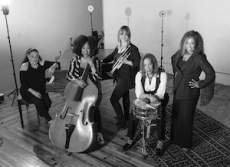
Out of Detroit’s lively jazz scene, which has produced some of the best musicians in the world, comes the ground breaking jazz group Straight Ahead. A group of strong, inventive instrumentalists and vocalists, they have shown themselves to be powerful and imaginative composers and arrangers.
Widely recognized for their eclectic and soulful approach to creating music, the Straight Ahead sound ranges comfortably from mainstream jazz, latin jazz and jazzy neo-soul. Their live performances are a dynamic celebration of power and joy with a wide range of musical textures, moods and tempos.
Straight Ahead was introduced to the world as finalist in the “Sony Innovators” competition. A national competition recognizing exceptional performers in the jazz field. They received international exposure when they were invited to open for the legendary Nina Simone at the Montreux Jazz Festival, Switzerland. They were the first all woman jazz ensemble signed to Atlantic Records. The ensemble has shared the concert stage with a who’s who of the music world including: Kem, Jean Luc Ponty, Nancy Wilson, Roy Ayers, Tony Bennett, George Duke, Stanley Clarke, Max Roach, the Yellowjackets and Dianne Reeves.
Straight Ahead has established itself as an enduring and prolific ensemble. Recognized for its creativity, musicianship and dedication to making great music, the band was inducted into the Detroit Music Awards Hall of Fame.
These Grammy-nominated recording artists have travelled extensively in the United States, the Caribbean and Europe garnering rave reviews. Joy, Power, Love, Wisdom…..Magic! This is the sound of what is to come. This is Straight Ahead!
THE BAND:
Alina Morr- Piano
Marion Hayden – Bass
Gayelynn McKinney- Drums
Kymberli Wright – Vocals
Ingrid Racine – Trumpet
Tickets: $40.00 Prepaid Cocktail Bar | $75.00 Prepaid Dinner & Show
More Posts: adventure,bandleader,bass,club,drums,genius,instrumental,jazz,music,piano,preserving,travel,trumpet,vocal

ROBERT GLASPER
Robert Glasper is the leader of a new sonic paradigm with a career that bridges musical and artistic genres. To date, he boasts 5 Grammy wins and 11 nominations across 11 categories, an Emmy Award for his song for Ava Duvernay’s critically hailed documentary “13th” with Common and Karriem Riggins, and a Peabody Award for his Composition of “Mr. Soul!”. His work and accolades bridge all aspects of the music business, from live touring to film scoring, composing and producing. The ongoing Black Radio series has since become Glasper’s calling card, upholding a place at the heart of a trailblazing community: from long-time sonic brothers Mos Def and Bilal, to legends including Ledisi, Lupe Fiasco, Jill Scott, and Erykah Badu.
In the last two years alone Glasper has seen a staggering diversity of success. He dropped Fuck Yo Feelings; a star-studded mixtape; his first on Loma Vista Records; with features ranging from YBN Cordae to Herbie Hancock to Yebba. The album was nominated for the Grammy for Best Progressive R&B album in the recent 2021 awards. He created an original score for the Emmy Nominated doc The Apollo and the feature film The Photograph starring Issa Rae.
He led a legendary residency at the Blue Note NYC with 56 sold-out shows in 27 days which saw everyone from Dave Chappelle to Tiffany Haddish, Chadwick Boseman, Q-Tip, Anderson.Paak and Angela Davis join him on and off stage. And, alongside long-time collaborator, co-producer, and creative partner Terrace Martin, he formed another dream team supergroup featuring Kamasi Washington and 9th Wonder called Dinner Party, who together wrote and recorded a debut self titled album that was released to rave reviews.
Tickets: $70.10 ~ $84.10
More Posts: adventure,bandleader,club,composer,genius,instrumental,jazz,music,piano,preserving,travel