

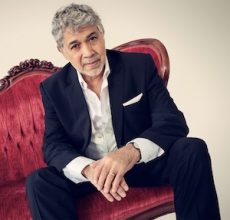
MONTY ALEXANDER
Grammy nominated pianist Monty Alexander was born on June 6, 1944 (D-Day!) in Kingston, Jamaica and is one of today’s most sought-after pianists, touring the world relentlessly with various projects, delighting a global audience drawn to his vibrant personality and soulful message. He began playing the piano at the age of four. Monty is such a virtuoso on his instrument that he can express each of his improvisational ideas at any time. Swinging style, combined with his vitality and subtlety, is defined by his creativity, rhythmic strength and clearly accentuated sounds. Even Frank Sinatra commented “this guy is like dynamite”. In a career spanning seven decades, he has built a reputation exploring the worlds of American jazz, popular song, and the music of his native Jamaica, finding in each a sincere spirit of musical expression.
His musical collaborations span multiple genres and styles. His projects have been as varied as assisting Natalie Cole in her tribute album to her father, Nat “King” Cole in 1991 (that album, “Unforgettable”, won seven Grammy awards), performing George Gershwin’s “Rhapsody in Blue” under the direction of Bobby McFerrin at the Verbier Festival in Switzerland, and recording the piano track for the film score of Clint Eastwood’s “Bird”, a movie about the life of jazz titan Charlie Parker. Monty has performed and recorded with artists from every corner of the musical universe: Frank Sinatra, Ray Brown, Dizzy Gillespie, Sonny Rollins, Clark Terry, Victor Gaskin, Milt Jackson, Ernie Wilkins, Herb Ellis, Jeff Hamilton, Quincy Jones, Ernest Ranglin, Barbara Hendricks, Sly Dunbar, and Robbie Shakespeare, among many others. In 2000 and 2018 Monty Alexander was awarded the title of Commander in the Order of Distinction by the Jamaican government for outstanding services to Jamaica in his capacity as worldwide music ambassador. Alexander maintains a rigorous touring schedule worldwide, from jazz clubs to concert halls and playing at Jazz Festivals from Switzerland to South Africa, Japan and Australia.
To date Monty Alexander has recorded over 75 albums as a leader. Shortly before his 80th birthday this upcoming June, Monty and his trio bring the 49th International Jazzfestival Bern to a close – on a high note!
More Posts: adventure,club,concert,festival,genius,jazz,music,piano,preserving,travel
Daily Dose Of Jazz…
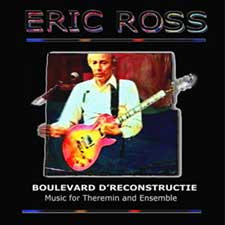
Eric Ross was born on May 14, 1948 in Carbondale, Pennsylvania and began studying piano at the age of seven under Jean Krantz-Thomas. Ten years later he started to write his own compositions and in the late 1960s and early 1970s he studied guitar and attended the electronic music composition course with Charles Dodge at Columbia University.
1972 saw him finishing college and beginning his career as a musician by playing and working in recording studios. Three years later Eric began playing the theremin and the following year he played his music exclusively, allowing him to develop it as a voice in his compositions. In 1982 he released his first album, Songs for Synthesized Soprano, and performed in concert at the Lincoln Center in New York.
He has performed throughout the United States and toured Europe, in addition to performing on radio, television and film. For over twenty years Eric’s ensemble featured John Abercrombie, Larry Coryell, Andrew Cyrille, Oliver Lake, Leroy Jenkins, Youseff Yancy, Lydia Kavina, and Robert Dick, among others.
Along with his wife Mary, the couple created memorable multimedia performances that intertwined music with images, video projections, and dance. As an educator he has lectured on the theremin, piano, guitar, and electronic music at colleges, universities and schools in the USA and Europe.
Pianist and guitarist Eric Ross, who also plays synthesizers and is a master of the theremin, continues to blend classical, jazz, serial and avant-garde in his performances.

More Posts: bandleader,guitar,history,instrumental,jazz,music,piano,synthesizer,theremin
Daily Dose Of Jazz…
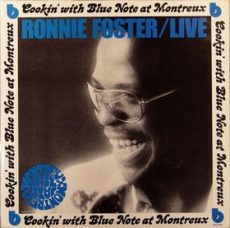
Ronnie Foster was born May 12, 1950 in Buffalo, New York and was attracted to music at the age of four. Attending Public School 8, then Woodlawn Jr. High for a year, he took music more seriously from his early teens while at McKinley Vocational High School for two years, and having his first professional gig aged fifteen, playing in a strip club. He spent his final year at Lafayette High School. The only formal musical instruction he received was a month of accordion lessons.
Foster initially performed with other local musicians before moving to New York City with his own band, and acquired a publishing company. He has performed as a sideman with a wide range of musicians, frequently working with guitarist George Benson and playing on the guitarist’s album Breezin’.
He has played organ with Grant Green, Grover Washington, Jr., Stanley Turrentine, Roberta Flack, Earl Klugh, Harvey Mason, Jimmy Smith, and Stevie Wonder. His music Mystic Brew has been sampled by A Tribe Called Quest and J. Cole.
Organist Ronnie Foster, who is also a record producer, continues to perform, record.
More Posts: bandleader,history,instrumental,jazz,music,organ,piano
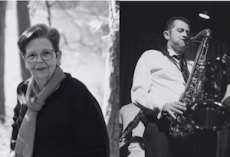
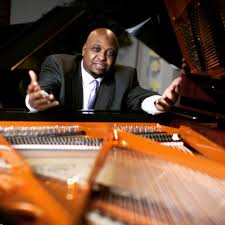
LOUIS HERIVEAUX
Heriveaux plays Mood Indigo, classic sounds inspired by the 1920s.
After graduating from Griffin High School in 1992, Louis settled in Atlanta, Georgia. Louis began playing Jazz on Atlanta’s Jazz scene, at age 17. Heads began to turn and fellow musicians and club owners began to take notice of his early signs of professionalism and confidence at the piano.
At age 19, a prominent Jazz guitarist began frequenting jam sessions in Atlanta, where Louis often sat in. After several visits to the jam session, it was Russell Malone that hand-picked Louis to join his world-class quartet. Louis graciously accepted the invitation and became an international Jazz musician, performing with Russell Malone for two years, on some of the most famous stages Jazz music has ever known.
Louis’ time spent with Russell Malone was a pivotal move in his budding career as a Jazz musician. That gig opened doors for other opportunities for this young, gifted musician. Jazz vocalists began to seek Louis out for his ability to accompany them with an innate ability to assess their needs during a performance and at rehearsals. Vocalist Jeanie Bryson invited Louis to do a Southeast tour with her and he once again hit the road! His finesse on the piano also caught the attention of Nnenna Freelon, who sought him out as an accompanist for one of her engagements as well.
More Posts: adventure,club,genius,jazz,music,piano,preserving,restaurant,travel