


Daily Dose Of Jazz…
Alan Branscombe was born on June 4, 1936 in Wallasey, Cheshire, England into a family of musicians. His father and grandfather were professional musicians and began on alto sax at age six. As a child he played drums with Victor Feldman in a talent show as a child.
During his time in the Army he played with Jeff Clyne in 1954–56. He toured and recorded with Vic Ash in 1958, recorded with Tony Kinsey the following year, and toured Japan with Stanley Black at the turn of the new decade. Alan worked with John Dankworth as pianist and vibraphonist intermittently between 1960 and 1972, including in the 1963 film The Servant.
Joining Harry South’s band at Ronnie Scott’s club in the mid-1960s, Branscombe went on to play as a sideman with Tubby Hayes, Stan Tracey, and Paul Gonsalves through the decade. He played with Ben Webster in 1965 and again in 1970, and in the Seventies he was with Albert Nicholas, toured in Europe with Stan Getz, and played with the Lamb-Premru group around 1971.
As a leader Branscombe recorded with Tony Kinsey and Tony Coe as sidemen on the album The Day I Met the Blues in 1977. As a session musician, he played tenor saxophone on The Beatles song Got To Get You Into My Life.
Pianist, vibraphonist, and alto saxophonist Alan Branscombe died on October 27, 1986.

More Posts: bandleader,history,instrumental,jazz,music,piano,saxophone,vibraphone

Daily Dose Of Jazz…
Neil Richard Ardley was born in Wallington, Surrey, England on May 26, 1937. He attended Wallington County Grammar School and at the age of thirteen started learning the piano and later the saxophone. He studied chemistry at Bristol University, also playing both piano and saxophone in jazz groups, graduating in 1959 with a BSc.
Moving to London, England the next year he studied arranging and composing with Ray Premru and Bill Russo. He joined the John Williams Big Band as pianist, arranger and composer, and from 1964 to 1970 was the director of the New Jazz Orchestra. The band employed some of the best young musicians in London, including Ian Carr, Jon Hiseman, Barbara Thompson, Dave Gelly, Mike Gibbs, Don Rendell, and Trevor Tomkins.
The late 1960s saw Ardley begin composing, combining classical and jazz methods. The New Jazz Orchestra 1969 album Le Déjeuner sur l’Herbe is considered a classic of British jazz. It includes arrangements of Nardis by Miles Davis and Naima by John Coltrane, and compositions by young writers associated with the orchestra – including Ardley, Michael Garrick, Mike Gibbs, Howard Riley and Mike Taylor.
His rich orchestrations were augmented in the 1970s by the addition of synthesisers. He began work on an all-electronic album in 1980 which fell through when his recording contract was suddenly terminated, but continued to play and compose, especially with Zyklus, the electronic jazz group he formed with composer John L. Walters, Warren Greveson and Ian Carr.
Neil went on to sing in local choirs in the later 1990s led him to start composing choral music, and to gig and record again with a slimmed down Zyklus consisting of himself, Warren Greaveson, and Nick Robinson
Composer and pianist Neil Ardley, who was an author of popular books on music, died in Bakewell, Derbyshire, England on February 23, 2004.

More Posts: author,composer,history,instrumental,jazz,music,piano

Daily Dose Of Jazz…
Yuko Okamoto was born in Miyagi, Japan on May 21, 1984 and started playing piano at age 5 but changed to Electone, a synth organ, at age 7. When she was in junior high school she won the Miyagi Prefecture first prize of the Yamaha Junior Electone Festival. She was chosen as a semifinalist of the Interntational Yamaha Electone Competition at Akasaka Britz in 2002 and Shibuya AX in 2004. In 2003 she won first prize of ‘Yamaha Electone Competition Expert Division and she earned a high evaluation on her performance and charm.
At age 18, she started studying jazz piano and composition under Kiminori Atsuta and Masa Matsuda. She also played in various jazz clubs, restaurants and bars with great bands and popular artists. In 2006 she entered Berklee College Of Music in Boston, Massachusetts. She studied composition, arranging, and performance under George Russell Jr, Walter Besely, John Arcaro, and Bill Eliott among others.
In 2008 she played her original music at Carnegie Hall in NewYork City and performed at Boston City Hall with different bands. She co-stared with One Voice Children’s Choir lead by Masa Fukuda. She has composed for film music and short image video music,
Pianist Yoko Okamoto Now she moved to New York City and is fully engaged as a composer, arranger, and performer.
More Posts: arranger,composer,history,instrumental,jazz,music,piano
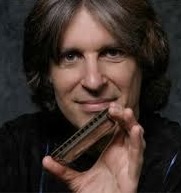
HOWARD LEVY 4
Howard Levy, two- time Grammy Award Winner for Pop Music Performance and Instrumental Composition, is an acknowledged master of the diatonic harmonica, a superb pianist, innovative composer, educator and producer. At the age of 19, he discovered how to play the diatonic harmonica as a fully chromatic instrument by developing techniques on it that had never existed before. This enabled Howard to take the harmonica out of its usual role as a Folk and Blues instrument, and into the worlds of Jazz, Classical, Middle Eastern music, and more. His discovery unlocked infinite possibilities for the harmonica world.
Howard Levy – piano, harmonica
Chris Siebold – guitar
Joshua Ramos – bass
Luis Ewerling – drums
More Posts: adventure,club,genius,harmonica,jazz,music,piano,preserving,travel
Daily Dose Of Jazz…
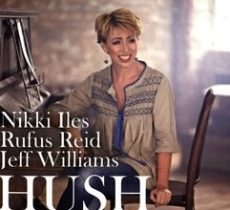
Nikki Anne Iles was born Nikki Anne Burnham on May 16, 1963 in Dunstable, Bedfordshire, England. Her primary school musical education began when she learned to play the harmonica and the clarinet. At eleven she won a junior exhibition at the Royal Academy of Music, where she studied clarinet and piano from 1974 to 1981. She became a member of the Bedfordshire Youth Jazz Orchestra before going to the Leeds College of Music from 1981 to 1984.
Settling in Yorkshire after graduating from the Leeds College of Music, she married trumpeter Richard Iles and took his name. She joined his band Emanon, with which she played some of her compositions. Iles began playing with several London-based bands, led by Steve Argüelles, Mick Hutton and Stan Sulzmann.
Iles won the 1996 John Dankworth Special Award at the BT Jazz Festival, but following a serious car crash after a gig, she opted to settle in London, England. She went on to be a senior lecturer at Middlesex University, and taught at the University of York, Leeds College of Music, the Guildhall School of Music, and in Bulgaria, Holland, France, and Finland.
Composer, pianist and educator Nikki Iles, who was awarded the British Empire Medal (BEM) at the 2022 New Year Honours for services to music, continues her career as a composer, educator and musician.
More Posts: bandleader,composer,educator,history,instrumental,jazz,music,piano