

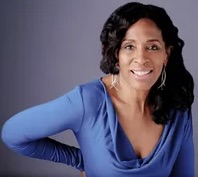
MALA WALDRON QUARTET
Year of ALICE, a Jazz Appreciation Month Special features the quartet performing the music of Alice Coltrane.
Mala Waldron is a native of NYC whose first paid gig was playing keys and singing back-up vocals with a local R&B band, “Liquid Pleasure” at the Elk’s club at age 15. Shortly after joining, the band was signed to RCA Records(Midland International.) She later enrolled at SUNY, Old Westbury study African-American Music with Makanda Ken McIntyre, Richard Harper, Andrei Strobert, Warren Smith and Amina Claudine Myers, earning a Bachelors Degree.
Mala’s music career has taken her all over the world doing performances in such countries as Japan, France, Italy, Belgium, Russia, Belarus & China. She has performed on some of NYC’s most prestigious stages, including the Iridium Jazz Club, the Blue Note, the Jazz Standard, the 55 Bar, Brooklyn’s BAM Cafe, and at the Kennedy Center (Millennium Stage in Washington D.C.
She has done numerous international tours and festivals, including, Hennessy-Moet Asian XOXO Jazz Tour (with shows in China, Taiwan & Malaysia), the Catania Jazz Fest, Corinaldo Jazz Fest and Farfa Voice Fest (Sabina) as well as festivals in the U.S., a highlight of which was the Annual Diet Coke Women in Jazz Festival (JALC) opening for Patrice Rushen.
As an educator, Mala has done vocal and composing workshops in Italy, and participated in the WBGO Kids Jazz Concert Series lat the Newark Museum and Jitterbugs – Jazz for Kids (Jazz Forum Arts.) She was a featured performer on the Chapman Stage at the first annual Coltrane Day Festival. She was featured in the recently published book, Giving Birth to Sound: Women in Creative Music (Renate da Rin and & William Parker editors) and can be seen in the documentary film, ‘The Girls in the Band,” directed by Judy Chaikin.
More Posts: adventure,concert,genius,jazz,music,piano,preserving,travel,vocal

Daily Dose Of Jazz…
Mika Mimura was born in Osaka, Japan on April 18, 1978. She began to play marimba when she was 6 years old. She studied classical music at Osaka College of Music and finished her Master’s degree at the college. Inspired by pianist Makoto Ozone, she began her study of jazz vibraphone after graduation. She entered Berklee College of Music in 2004 and studied with Dave Samuels, Ed Saindon, Tiger Okoshi, and Ed Tomassi , among others.
Mika became a regular member of Phil Wilson’s Rainbow Big Band and Rainbow All Stars. In 2007 she performed with Greg Osby in 2007. She joined The BandA ecLectics, whose leader, Petros Sakelliou, had won the first prize at Thelonious Monk Institute Composition Competition. Together they played the Kodak Theatre in Los Angeles, California. She has performed many times in concert throughout the Boston, Massachusetts and New York City areas.
Vibraphonist Mika Mimura, who is currently a part of the New York City jazz scene, continues to energetically perform, compose and arrange in jazz or classical.
More Posts: bandleader,history,instrumental,jazz,marimba,music,perccussion,piano,vibraphone

SHELLY BERG TRIO
Renowned pianist Shelly Berg, along with bassist Carlos Del Puerto and the talented Max Marsillo on drums, will present their latest album, “Alegria.”
Shelly Berg, a jazz luminary and Dean of the Frost School of Music, has made significant contributions to the genre. Del Puerto, with a remarkable resume including collaborations with Quincy Jones and Herbie Hancock, joins the trio alongside the prodigious Max Marsillo. Don’t miss this magical evening of exceptional music!
More Posts: adventure,concert,genius,jazz,music,piano,preserving,travel
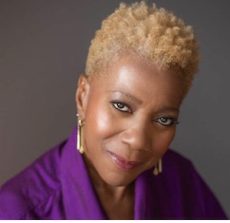
CARMEN LUNDY
“Musicians as diversely gifted as Carmen Lundy, who has excelled as a vocalist, composer, lyricist, arranger, and pianist for more than three decades, remain far and few between.” – Jazz Times
Carmen Lundy: vocals | Julius Rodriguez: piano & keys | Ben Williams: acoustic & electric bass | Terreon Gully [drums | Andrew Renfroe: guitar
Two-time Grammy® Nominated for Best Jazz Vocal Album singer and composer, Carmen Lundy, has been making her mark in New York City’s jazz scene since 1978. Her debut album, “Good Morning Kiss” dominated the Billboard chart for 23 weeks.. Beyond her solo success, Carmen contributed to Grammy®-winning projects, received a Lifetime Achievement Award in Jazz, and is a prolific composer with over 150 published songs. Recognized by the Jazz Times and The New York Times, Carmen Lundy’s legacy is one that transcends genres, spanning music, acting, and mixed media art.
Carmen Lundy began her professional career as a jazz vocalist and composer when there were very few young, gifted and aspiring jazz vocalists on the horizon. Three decades later, Ms. Lundy is celebrated throughout the world for her vocal artistry and is highly regarded for her jazz innovation.
***Fees Apply To All Tickets
More Posts: adventure,club,genius,music,piano,preserving,travel,vocal

CHRISTIAN SANDS
Christian Sands, jazz pianist and composer was mentored by pianist Billy Taylor, who allowed the teenager to close one of the sets that Taylor played at the Kennedy Center. Sands went on to study at the Manhattan School of Music. The school’s Afro-Cuban Jazz Orchestra, led by Bobby Sanabria, recorded the album Kenya Revisited Live in 2009; it was nominated for a Latin Grammy. After graduating, Sands joined Inside Straight, one of bassist Christian McBride’s bands. In 2014, Sands cited as influences McBride, Wynton Marsalis, Kenny Garrett, and Marcus Roberts, because “They’re coming from the tradition of bringing people into the music, but also moving it forward into new directions”. In the same year, Sands became an American Pianists Association Jazz Fellowship Awards Finalist.
His third album for Mack Avenue Records, Be Water, was released in 2020 and received a Grammy Award nomination in the Best Instrumental Composition category for the song “Be Water II.” On his stunning new album, Be Water, pianist Christian Sands takes inspiration from water’s tranquility and power and muses on the possibilities offered by echoing its fluidity and malleability. Just embarking on his 30s, Sands has already enjoyed a remarkable career trajectory, touring and recording with Christian McBride’s Inside Straight and Trio, as well as collaborating with the likes of Gregory Porter and Ulysses Owens.
***Fees Apply To All Tickets
More Posts: adventure,club,genius,jazz,music,piano,preserving,travel