

Daily Dose Of Jazz…
Born Jeannette Schwager on June 15th in the Netherlands, Jeannette Lambert grew up in Sudbury, Ontario, Canada. Her Dutch and Indonesian parents loved jazz, and she started singing at the age of nine. From the age of 12, she performed with her brother, guitarist Reg Schwager, at coffee houses and music festivals. She did not have to venture far to perform regular jam sessions, which were held at her house when she was a teenager.
Particularly inspired by the older jazz musicians who participated, especially Herbie Spanier, he encouraged her to improvise as freely as possible. While she studied film production at Toronto’s York University during 1984-1986, Lambert also attended the Banff Summer Jazz Workshop in 1985, singing with the Cecil Taylor Workshop Big Band and taking lessons from Jay Clayton, Dave Liebman, and Julian Priester.
After periods living in Paris, New York, and Amsterdam, she settled in Montreal, married drummer Michel Lambert, and co-founded the record label Jazz from Rant with her brother and her husband in 1991. Jeannette’s music is inspired and influenced not only by other jazz singers but by flamenco, fado, and jaipongan. In addition to her singing and recording, she writes music to her own poetry and is an internet filmmaker.
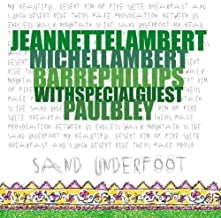
Her several recordings, primarily on the Jazz from Rant label, include free improvisations, collaborations with pianist Paul Bley, and two volumes of Bebop for Babies, jazz versions of children’s melodies. Vocalist, poet, record label owner Jennette Lambert continues to compose, perform and record,
Daily Dose Of Jazz…
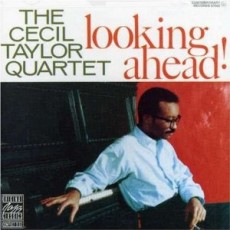
Cecil Percival Taylor was born March 25, 1929 in New York City and began playing piano and classical training at age six. He studied at the New York College of Music and New England Conservatory. After first steps in R&B and swing-styled small groups in the early 1950s, he formed his own band with soprano saxophonist Steve Lacy in 1956, in which he release his first recording Jazz Advance.
Throughout the 1950s and 1960s, Taylor’s music grew more complex and moved away from existing jazz styles. Gigs were often hard to come by, and club owners found Taylor’s approach to performance (long pieces) unhelpful in conducting business. Forming his group The Unit in 1961 with Jimmy Lyons, Sunny Murray and later Andrew Cyrille produced landmark recordings, like “Unit Structures” in 1966, they continued to record although sporadically and many of his recording sessions remained unreleased for sometimes decades.
By the 70s he was performing solo concerts and Taylor’s work began to be released for the next two decades, garnering critical if not popular acclaim. He began lecturing at universities, was awarded the Guggenheim Fellowship, performed a White House lawn concert for President Jimmy Carter, was awarded a MacArthur Fellowship, returned to the trio setting, collaborated with ballet companies and as an accomplished poet often incorporates his poems into his musical performances.
He is the co-founder of the Jazz Composers Guild to enhance the working possibilities of avant-garde musicians. Acknowledged as one of the pioneers of free jazz, his music is characterized by an extremely energetic, physical approach, producing complex improvised sounds, frequently involving tone clusters and intricate polyrhythms. His piano technique has been likened to percussion, described as “eighty-eight tuned drums” referring to the number of keys on a standard piano. He continues to perform, compose and record.
More Posts: bandleader,composer,piano,poet