Daily Dose Of Jazz…
Charles Frederic Ramsey, Jr. was born on January 29, 1915 in Pittsburgh, Pennsylvania. Taking his BA at Princeton University in 1936, then went to work at Harcourt Brace in the late Thirties. The early Forties had him at the United States Department of Agriculture and Voice of America.
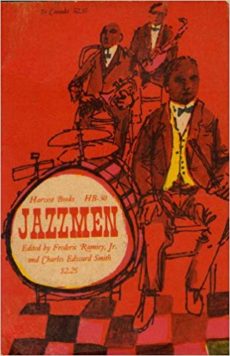
With Charles Edward Smith, Ramsey wrote Jazzmen in 1939, an early landmark of jazz scholarship particularly noted for its treatment of the life of King Oliver. After receiving Guggenheim fellowships, he visited the American South in the middle of the 1950s to make field recordings and do interviews with rural musicians, some of which were used in releases by Folkways Records and in a 1957 documentary, Music of the South.
He curated an anthology of early jazz recordings for Folkways, titled simply Jazz. Ramsey worked with the Institute of Jazz Studies at Rutgers University from 1970. He researched Buddy Bolden’s life with a grant from the National Endowment for the Humanities and continued with a Ford Foundation grant. He presented early jazz interviews on National Public Radio in 1987. The writer of jazz and record producer Charles Ramsey passed away on March 18, 1995 in Paterson, New Jersey.


Daily Dose Of Jazz…
Floyd George Smith was born on January 25, 1917 in St. Louis, Missouri and learned to play the ukulele as a child before taking up guitar. As a teenager he studied music theory and spent his early career in territory bands, playing in groups such as Eddie Johnson’s Crackerjacks, the Jeter-Pillars Orchestra, the Sunset Royal Orchestra, the Brown Skin Models, and Andy Kirk’s 12 Clouds Of Joy. His composition Floyd’s Guitar Blues, recorded with Andy Kirk’s orchestra in 1939, has been claimed as the first hit record to feature a blues solo on electric guitar.
Enlisting during World War II, Floyd was stationed in Britain as a sergeant and he had the fortune to meet and play with Django Reinhardt in Paris. Following the war, he rejoined Andy Kirk’s band before forming his own small ensembles. He went on to play with Wild Bill Davis in the 1950s, recorded occasionally with drummer Chris Columbo’s bands during the late 1950s and early 1960s. He would later settle in Indianapolis, Indiana and formed his own jazz trio.
The 1970s, had Smith moving into writing songs and record production, working with Dakar/Brunswick Records in Chicago, for which he recorded a few singles. He produced two albums with R&B star, Loleatta Holloway for Aware Records of Atlanta, as well as two unreleased with John Edwards, who later became the lead singer of the Detroit Spinners. He produced two Top 10 R&B hits on Aware with Edwards and Holloway.
In the late 1970s, he produced tracks on several albums with Loleatta Holloway for Gold Mine/Salsoul Records, managed and later married her. Guitarist Floyd Smith, sometimes credited as Floyd Guitar Smith passed away in Indianapolis, Indiana on March 29, 1982 at the age of 65.
More Posts: composer,guitar,history,instrumental,jazz,music,producer
Daily Dose Of Jazz…
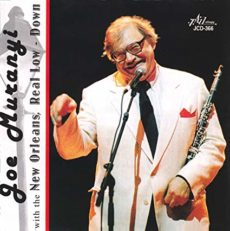
Joseph P. Muranyi was born in Martins Ferry, Ohio on January 14, 1928 and studied with Lennie Tristano, however, he was primarily interested in early jazz styles such as Dixieland and swing. After playing in a United States Army Air Forces band, he moved to New York City in the 1950s and attended the Manhattan School of Music and Columbia University.
During the 1950s he played under Eddie Condon, collaborating with Jimmy McPartland, Max Kaminsky, Yank Lawson, Bobby Hackett, and Red Allen. During that decade he also played with the Red Onion Jazz Band, Danny Barker, and Wingy Manone.
1963 saw him playing with The Village Stompers, a Dixieland band that reached the pop charts with its song Washington Square. From 1967 to 1971 he was the clarinetist with the Louis Armstrong All-Stars. After initially struggling to pronounce Muranyi’s Hungarian family name, Armstrong introduced him on stage as “Joe Ma Rainey”, to Muranyi’s own amusement. Following this stint, he played with Roy Eldridge, World’s Greatest Jazz Band, Cozy Cole, Lionel Hampton, Herman Autrey, Wild Bill Davison, Zutty Singleton, and others.
He worked extensively as a record producer and wrote liner notes for hundreds of albums. Clarinetist, producer, writer and critic Joe Muranyi, who was also an enthusiastic vocalist and played both soprano and tenor saxophone, passed away in Manhattan, New York on April 20, 2012.
Daily Dose Of Jazz…
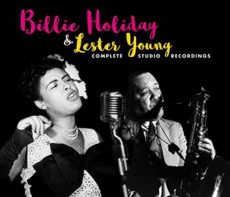
John Hammond Sr. was born into a wealthy family on December 15, 1910 in New York City. Educated at Yale, he had a great love for Black music and as early as 1933, at 22, he was active in the music business, discovering Billie Holiday and getting her into the recording studio, producing Bessie Smith’s final sessions, and becoming a friend of young Benny Goodman. One of swing music’s greatest propagandists, he was responsible for at least partly discovering a remarkable list of musicians through the years making their rise to fame much more swift.
Hammond was a masterful talent scout, producer, promoter, and an early fighter against racism, he produced freewheeling American jazz sessions for the European market, worked with Fletcher Henderson and Benny Carter, and encouraged Goodman to form his first big band. In 1935 he teamed Lady Day with pianist Teddy Wilson for a series of recordings, and the following year he discovered Count Basie’s orchestra while randomly scanning the radio dial. He then flew to Kansas City, encouraged Basie to come East and in 1938 and 1939 he organized the famous “Spirituals to Swing” all-star Carnegie Hall concerts.
After hearing about Charlie Christian in 1939, he flew out to Oklahoma City, Oklahoma to listen to the young guitarist and flew him to Los Angeles, California where he had set up an audition for an initially reluctant Goodman. In addition to his work as a promoter and a record producer, most notably for Columbia during 1937-1943, John was a jazz critic.
After World War II military service felt misplaced in the jazz scene of the mid-’40s, never gaining a taste for bebop. However, by the Fifties he produced a superior series of mainstream dates for Vanguard featuring swing era veterans. Hammond worked through the years for Keynote, Majestic, and Mercury, and during 1959-1975 he was again a major force at Columbia, where he helped the careers of Bob Dylan, Aretha Franklin, George Benson, Bruce Springsteen, and Adam Makowicz, among others.
1967 saw him organizing a new “Spirituals to Swing” concert, and in 1977 his autobiography John Hammond on Record was published. Producer, promoter, critic and talent scout John Hammond Sr. passed away on July 10, 1987 in New York City.

More Posts: critic,producer,promoter,talent scout
Daily Dose Of Jazz…
Dan Morgenstern was born October 24, 1929 in Munich, Germany and was raised in Vienna, Austria and Copenhagen, Netherlands before arriving in the United States in 1947. He wrote for Jazz Journal from 1958–1961, then edited several jazz magazines: Metronome in 1961, Jazz from 1962–1963, and Down Beat from 1967-1973.
In 1976, he was named director of Rutgers–Newark’s Institute of Jazz Studies, where he continued the work of Marshall Stearns and made the Institute the world’s largest collection of jazz documents, recordings, and memorabilia.
Over the course of his career, Morgenstern has arranged concerts including the Jazz in the Garden series at the Museum of Modern Art, produced and hosted television and radio programs, taught jazz history at universities and conservatories, and served as a panelist for jazz festivals and awards across the U.S. and Europe.
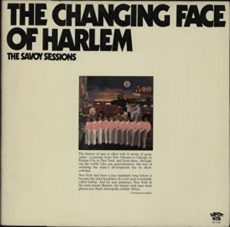
Widely known as a prolific writer of comprehensive, authoritative liner notes, he has received eight Grammy Awards for Best Album Notes since 1973 for Art Tatum’s God Is in the House, Coleman Hawkins’ The Hawk Flies, Savoy Records Collection The Changing Face of Harlem, Erroll Garner: Master of the Keyboard, Clifford Brown, Brownie: The Complete Emarcy Recordings of Clifford Brown, Louis Armstrong, Portrait of the Artist as a Young Man, Fats Waller, If You Got to Ask, You Ain’t Got It!, and The Complete Louis Armstrong Decca Sessions.
He has authored two books that have won ASCAP’s Deems Taylor Award: Jazz People in 1976 and Living with Jazz in 2004. In 2007, he received the A.B. Spellman Jazz Masters Award for Jazz Advocacy from the National Endowment for the Arts. Writer, editor, archivist and producer Dan Morgenstern continues his career at 87 years of age.