

Daily Dose Of Jazz…
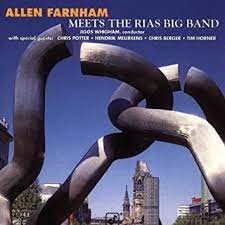
Allen Nicholas Farnham was born May 19, 1961 in Boston, Massachusetts and first played piano when he was 12. In 1983 he graduated from the Oberlin Conservatory of Music in Ohio.
Moving to New York City in the following year Allen freelanced before signing with Concord Records in 1986. Between 1986 and 1990 he led his own quartet, with either Joe Lovano or Dick Oatts on saxophone and Drew Gress and Jamey Haddad filling out the rhythm section and from 1990 he was pianist and music director for Susannah McCorkle.
He has produced more than fifty albums, is on the faculty of New Jersey City University and has recorded several albums under his own name. Pianist, record producer, educator, composer and arranger Allen Farnham continues to pursue all his musical endeavors.

More Posts: arranger,bandleader,composer,history,instrumental,jazz,music,piano,record producer

Daily Dose Of Jazz…
Tommy Stewart was born November 19, 1939 in Gadsden, Alabama. He attended Industrial High in Birmingham, Alabama where John T. “Fess” Whatley trained him along with Erskine Hawkins, Dud Bascomb, Paul Bascomb, and Sun Ra. Alvin “Stumpy” Robinson, the band director at Washington Jr High School, was also influential in his development.
Enrolling at Alabama State College and having no way to pay tuition, the problem solved itself when he joined the Bama State Collegians, a dance band that made enough money to fund Stewart’s way through four years of college. He attended Alabama State University, where he directed the Bama State Collegians. Later, he studied jazz arranging at the Eastman School of Music and studied arranging under John Duncan, a classical composer and teacher at Alabama State University.
As an educator he began his teaching career at Fayette High School in St. Clair County Alabama, 1961 to 1963. Moving to Atlanta, Georgia in 1969 he taught in Fayetteville, Georgia, worked for Morris Brown College doing band arrangements and taught jazz and arranged for the Morehouse College band. He also taught band classes at West End High School in Birmingham, Alabama from, and taught A Survey of Popular Music at Georgia State University.
During the 1970s, he worked with Gladys Knight & the Pips, The Tams, Johnnie Taylor, Jackie Moore, King Floyd, Z. Z. Hill, and The Stylistics. He toured as musical director for Johnnie Taylor and for Ted Taylor and went on to record disco in the Seventies with Final Approach, Cream De CoCo, Tamiko Jones, Moses Davis, and his own album.
In 1990, he co-founded the African American Philharmonic Orchestra with founder and conductor John Peek. He moved from Atlanta to Birmingham in 1992. He was a member of the Magic City Jazz Orchestra, Cleveland Eaton, the Alabama All-Stars, the Alabama Jazz Hall of Fame All-Stars, and Ray Reach and Friends, continues to be involved in music. In 1988, he was inducted into the Alabama Jazz Hall of Fame. At 81, trumpeter, arranger, composer, and record producer Tommy Stewart remains involved in the music industry.

More Posts: arranger,bandleader,history,instrumental,jazz,music,record producer,trumpet

Daily Dose Of Jazz…
Fred Ramsey was born Charles Frederic Ramsey, Jr. on January 29, 1915 in Pittsburgh, Pennsylvania and received his BA at Princeton University in 1936. After graduation he took jobs at Harcourt Brace until 1939, the United States Department of Agriculture from 1941 to 1942, and then with Voice of America.
In 1939 with Charles Edward Smith, he wrote Jazzmen, an early landmark of jazz scholarship particularly noted for its treatment of the life of King Oliver. After receiving Guggenheim fellowships, Fred visited the American South in the middle of the 1950s to make field recordings and do interviews with rural musicians, some of which were used in releases by Folkways Records and in a 1957 documentary, Music of the South.
He curated an anthology of early jazz recordings for Folkways, titled simply Jazz. Ramsey worked with the Institute of Jazz Studies at Rutgers University from 1970. He researched Buddy Bolden’s life with a grant from the National Endowment for the Humanities in 1974–75 and continued with a Ford Foundation grant in 1975–76. He presented early jazz interviews on National Public Radio in 1987.
Writer and record producer Fred Ramsey, who authored six books on jazz, passed away on March 18, 1995 in Paterson, New Jersey.

More Posts: author,history,intrumental,jazz,music,record producer

Daily Dose Of Jazz…
Malcolm Cecil was born on January 9, 1937 in London, England. By the time he came of age he was a founding member of the UK’s leading jazz quintet of the late 1950s, The Jazz Couriers, before going on to join a number of British jazz combos led by Dick Morrissey, Tony Crombie and Ronnie Scott into the early 1960s.
Malcolm later joined Cyril Davies and Alexis Korner to form the original line-up of Blues Incorporated. With Robert Margouleff he formed the duo TONTO’s Expanding Head Band, a project based on a unique combination of synthesizers. This led to them collaborating on and co-producing several of Stevie Wonder’s Grammy-winning albums Talking Book, Music of My Mind, Innervisions and Fulfillingness’ First Finale of the early 1970s. They are also credited as engineers for the Stevie Wonder produced 1974 album Perfect Angel by Minnie Riperton.
Their unique sound made them highly sought-after and they went on to venture in not only jazz, but rock and r&b to collaborate with, amongst others, Quincy Jones, Gil Scott-Heron, Weather Report, Bobby Womack, The Isley Brothers, Billy Preston, Stephen Stills, The Doobie Brothers, Dave Mason, Little Feat, Joan Baez and Steve Hillage. Bassist, engineer and record producer Malcolm Cecil continues to perform and produce.
More Posts: bandleader,bass,history,instrumental,jazz,music,record producer
Daily Dose Of Jazz…
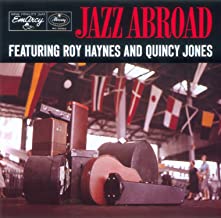
Simon Brehm was born on December 31, 1921 in Sweden and learned to play the double~bass. He recorded three albums with Quincy Jones. Later in life, he became a record producer and owner of Karusell Records.
Very little is known or written about this musician, but he managed singer Lill-Babs and was the leader of the orchestra that played in the TV show Hylands hörna from 1962.
Double~bassist, composer, and record producer Simon Brehm passed away on February 11, 1967 at the age of 45
More Posts: bandleader,bass,composer,history,instrumental,jazz,music,record producer