

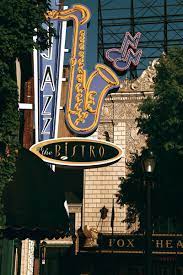
The Jazz Voyager
Taking to the friendly skies to once again masked and safely flying into Lambert International to catch some jazz in The Lou. Looking forward to catching up with a friend, meet new ones and enjoying an incredible evening of music at Jazz St. Louis. Three amazing musicians, Tia Fuller, Mimi Jones and Matt Wilson top off their residency of workshops, clinics, masterclasses and jam sessions with students to give the public a taste of their talent. Two nights, two sets each evening at 7:30 and 9:30 pm
Of course while I’m in this city I’ll take in the Gateway Arch, sit by the mighty Mississippi River, visit the Griot Museum, walk through the Botanical Gardens, and spend an afternoon at the George B. Vashon Museum that was built in 1879 on the city’s historic Millionaire’s Row. This museum hosts 250 years of 10,000 artifacts and treasures chronicling Black history in St. Louis.
There is no mention of a cover or reservations required. I guess I’ll be dropping in a little before showtime. The address for Jazz St. Louis is 3536 Washington Avenue, St. Louis, Missouri 63103. For more information, the number is 314-571-6000 or jazzstl.org.

More Posts: adventure,album,bass,club,drums,festival,genius,jazz,museum,music,preserving,restaurant,saxophone,travel
Requisites
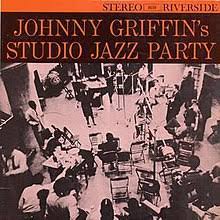
Johnny Griffin’s Studio Jazz Party ~ Johnny Griffin | Eddie Carter
This title from the library brings renown jazzman Johnny Griffin into the spotlight for his only live album as a leader on Riverside Records. Submitted now for your approval is the 1961 LP, Johnny Griffin’s Studio Jazz Party (RLP-9338), recorded before a live audience that was invited to the recording session inside Plaza Sounds Studios. Joining the saxophonist are Dave Burns on trumpet; Norman Simmons on piano; Victor Sproles on bass and Ben Riley on drums. My copy is The Riverside Original Recording Series Japanese Stereo reissue (SMJ-6145), released in 1976 by Victor Musical Industries, Inc.
The performance is hosted by Babs Gonzales who welcomes the crowd to the session on the opening track, Party Time and introduces the first song, Good Bait by Count Basie and Tadd Dameron. This standard was written in 1944, becoming a feature in Basie’s and Dizzy Gillespie’s Orchestra. Griffin and the trio introduce the song slowly, picking up immensely when the melody moves to a medium-fast tempo. Dave sets the pattern for the song on the opening statement with punchy rhythms, crisp lines, and a crackling tone. Simmons strolls into the next reading for an impressive interpretation which shows no strain as each phrase unfolds. Both horns share a few more statements before the ensemble returns for a march-like closing chorus and amusing ending.
The first side ends on an uptempo note with the 1942 popular song, There Will Never Be Another You, written by Harry Warren and Mack Gordon for the musical film Iceland, which premiered that same year. The first recording outside the film was a 78-rpm single (B-11574) by vocalist Joan Merrill recorded for the RCA subsidiary, Bluebird. The trio opens with an abridged introduction, stepping aside as Burns begins the opening chorus and the lead solo ambitiously with a drive which generates its own excitement. Simmons is dazzling on the next reading with choruses which illustrate a mature sound that swings freely. Griffin romps through the next statement of this cheery bouncer with long, flowing lines that are rewarding in every respect to the delight of one fan who urges him on as his solo progresses. Sproles is up next to give a brief statement with an agility that shows he is much more than a solid foundation and sets up the front line to share a few final thoughts before the ensemble brings the song to a close to the delight of the crowd.
Babs opens the second side with a message to the crowd, then the group tears into Dave Burns’ Toe-Tappin” which possesses great speed from the start and the interaction between the front line during the main theme is marvelous. Dave kicks off the lead solo with a passionate presentation which launches its own fireworks in perfect harmony on each note to the equally incandescent foundation by the rhythm section. Norman sustains the ferocious pace with a knockout performance on the next statement, then Johnny charges ahead with enthusiastic phrases on the tune’s longest interpretation which are constructed marvelously. Victor fuels the final reading with pure adrenalin for an exclamation point that will have your fingers popping and your toes tapping to the contagious beat until the quintet’s soft fade finale and audience’s fervent expression of approval.
The LP’s only standard is a classic from The Great American Songbook which Babs introduces in French. You’ve Changed was written in 1942 by Carl Fischer and Bill Carey and has been covered by many vocalists in the jazz and pop genres. The definitive vocal of this popular song, in my opinion, was sung by Billie Holiday on the 1958 Columbia album, Lady In Satin (CL 1157/CS 8048). After a brief introduction by the trio, Burns plays the first half of the opening chorus with Johnny playing the second half to ng, amiable final presentation that leads back to the closing chorus and a gentle ending as the applause fades to mark the end of this very enjoyable Studio Jazz Party.
The original recording was engineered by Ray Fowler, the man behind some of the greatest jazz albums on Riverside and Jazzland with the mastering done by Jack Matthews of Components Corporation for this Japanese LP. Both men have done their job well because the sound is vivid with each instrument providing a realistic soundstage that surrounds your sweet spot, placing you in the best seat to enjoy the performance along with the crowd. The music which makes up the program is equally enjoyable, and I even found Gonzales’ comments throughout the album colorful and its crystal-clear Babs was in a party mood as the set progressed. In short, Johnny Griffin’s Studio Jazz Party is a pleasurable program of music which still stands up well nearly six decades later and at nearly forty-six minutes, offers a benefit to the novice or knowledgeable listener that he or she will get their money’s worth from a performance they can revisit anytime.
~ Good Bait, There Will Never Be Another You, You’ve Changed – Source: JazzStandards.com, Wikipedia.org © 2020 by Edward Thomas Carter

More Posts: choice,classic,collectible,collector,history,instrumental,jazz,music,saxophone
JAVON JACKSON | THE GOSPEL ACCORDING TO NIKKI GIOVANNI
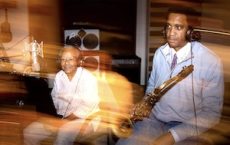
Saxophonist and former Jazz Messenger Javon Jackson, world-renowned poet laureate Nikki Giovanni, and celebrated jazz vocalist Nnenna Freelon stand on the shoulders of their ancestors in The Gospel According to Nikki Giovanni, a meaningful meditation on struggle, sacrifice, resilience, liberation, and victory.
Giovanni, one of today’s finest poets and thinkers, makes a rare vocal appearance at this inspired evening of her favorite poetry, hymns, and Negro spirituals reimagined by Jackson as jazzy new compositions. “These songs are so important,” says Giovanni of the historic collaboration. “I’m out here putting water on the flowers, because they need a drink” (Broadway World).
More Posts: adventure,album,club,festival,genius,jazz,museum,music,preserving,restaurant,saxophone,travel
CHARLES LLOYD
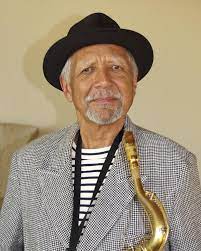
NEA Jazz Master & GRAMMY® Award Nominated Saxophonist, Composer & Bandleader CHARLES LLOYD, now in his eighth decade, has never sounded better. The depth of his sound reflects a lifetime of experience. Charles Lloyd concerts and recordings are events of pristine beauty and elegance, full of intensely felt emotion and passion that touches deep inside the heart. Lloyd was one of the first jazz artists to sell a million copies of a recording: ‘Forest Flower’ (1966) & his quartet was the first jazz group to perform at the legendary Fillmore Auditorium in San Francisco. He was invited to guest on recordings with the Doors, the Birds, The Grateful Dead, and the Beach Boys. Lloyd is the 2021 Downbeat Critic’s Poll “Saxophonist of the Year” and his group, Charles Lloyd & The Marvels were the 2021 Downbeat Critic’s Poll “Jazz Group of the Year.”
More Posts: adventure,album,club,festival,genius,jazz,museum,music,preserving,restaurant,saxophone,travel
CHARLES LLOYD
We wind things up at that same venue on November 6 with NEA Jazz Master Charles Lloyd, the giant old-growth sequoia of jazz. Charles Lloyd’s Ocean Trio includes the brilliant pianist Gerald Clayton and guitarist Anthony Wilson, both of whom grew in the rich environment provided by their famous fathers; bassist/educator John Clayton and big-band leader Gerald Wilson.
Performance At: Great Hall of Town Hall Seattle | 1119 8th Ave, Seattle, WA 98101 | 206-652-4255
More Posts: adventure,album,club,festival,genius,jazz,museum,music,preserving,restaurant,saxophone,travel