

Requisites
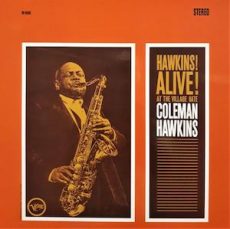
Hawkins! Alive! At The Village Gate ~ Coleman Hawkins | By Eddie Carter
This morning’s choice from the library takes us to The Village Gate for two performances on August 13 and 15, 1962 by The Coleman Hawkins Quartet. Hawkins! Alive! At The Village Gate (Verve Records V-8509/V6-8509) hit the stores in 1963 and is the companion to Hawkins! Eldridge! Hodges! Alive! At The Village Gate. It was also recorded on August 15 with special guests Roy Eldridge and Johnny Hodges. Hawk was one of the greatest musicians during the Swing Era and a commanding presence on the tenor sax throughout his career. Hawk’s joined on stage by Tommy Flanagan on piano, Major Holley on bass, and Ed Locke on drums. My copy used in this report is the 1995 Classic Records US Stereo Audiophile reissue sharing the original catalog number.
Side One opens with All The Things You Are by Jerome Kern and Oscar Hammerstein II. Tommy lays the foundation on a concise introduction leading to Coleman’s melody and lively lead solo possessing one imaginative idea after another. Tommy matches him in agility on a spirited reading. Major follows with a splendid statement leading to Coleman’s return for the theme’s reprise. Hawkins introduces the next tune to the audience, the African American spiritual, Joshua Fit The Battle of Jericho. Hawk takes the lead on the theme, stepping aside for Flanagan who gives a marvelous first solo. Holley makes his presence felt on a strong, personal interpretation vocally accompanying his bass playing. Hawkins puts an exclamation point on the finale preceding the group’s climax.
The quartet starts Side Two with the old favorite, Mack The Knife by Kurt Weill, Bertolt Brecht, and Marc Blitzstein. After the ensemble’s melody presentation, Coleman lets us know we’re in for a treat with a joyful opening solo. Tommy delivers a cheerful interpretation next, then Major gets a chance to shine on a charming reading ahead of the closing chorus. The album ends with a lovely ballad, It’s The Talk of The Town by Jerry Livingston, Al J. Neiburg, and Marty Symes. Hawk opens this standard with a warm, moving melody that continues in the poignant beauty of his opening statement. Flanagan follows with a touching interpretation of his own, and Holley manages the next reading with great delicacy. Hawk reappears and gently takes the group home to appreciative applause from the crowd.
Hawkins! Alive! At The Village Gate was produced by Creed Taylor. Frank Greenwald and Tom Hidley were the men behind the dials of the original recording. This Classic Records reissue was mastered by Bernie Grundman and pressed on 180 grams of audiophile vinyl that’s dead silent until the music starts. The sound quality is breathtaking with a stunning soundstage placing the listener in the Village Gate crowd while the musicians are performing. Coleman Hawkins recorded forty albums as a leader for various labels and appeared as a sideman with some of the elite musicians in jazz. He passed away at age sixty-four from liver disease on May 19, 1969. If you’re a fan of his LPs, the tenor sax, or just love good jazz, I invite you to check out Hawkins! Alive! At The Village Gate the next time you’re out searching for vinyl treasure. Like its companion, it’s a great album that’s perfect to enjoy with your favorite beverage after a long day or week, and a record any jazz aficionado or novice fan can enjoy!
~ Hawkins! Eldridge! Hodges! Alive! At The Village Gate (Verve Records V-8504/V6-8504) – Source: Discogs.com ~ All The Things You Are, It’s The Talk of The Town, Mack The Knife – Source: JazzStandards.com © 2022 by Edward Thomas Carter

More Posts: choice,classic,collectible,collector,history,instrumental,jazz,music,saxophone
Daily Dose Of Jazz…
Samuel D. Margolis was born on November 1, 1923 in Boston, Massachusetts. Early in his career he played locally with Shad Collins, Vic Dickenson, Bobby Hackett, Nat Pierce, and Rex Stewart.
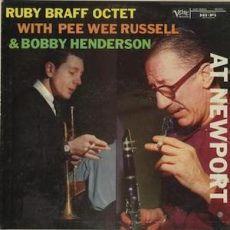
Between 1954 and 1958 Sam worked extensively with Ruby Braff and as sidemen for other musicians, including Pee Wee Russell. He would continue working intermittently with Braff for several decades.
In 1970 Margolis appeared briefly in the parade scene in the Dick Van Dyke movie Some Kind of a Nut. Throughout the 1970s and 1980s, he played often in the New York area, with Ed Polcer, Buzzy Drootin, Max Kaminsky, Roy Eldridge, Tony Bennet, Claude Hopkins, Dill Jones, Vic Dickenson, and Red Balaban.
Clarinetist and saxophonist Sam Margolis, who near the end of his life moved to Deerfield Beach, Florida, transitioned from prostate cancer on March 27, 1996.
More Posts: clarinet,history,instrumental,jazz,music,saxophone
Daily Dose Of Jazz…
Edgar Melvin Sampson was born on October 31, 1907 in New York City, New York. He began playing violin aged six and picked up the saxophone in high school, then started his professional career in 1924 in a violin piano duo with Joe Colman. Through the rest of the 1920s and early 1930s, he played with many big bands, including those of Charlie “Fess” Johnson, Duke Ellington, Rex Stewart and Fletcher Henderson.
In 1934, Sampson joined the Chick Webb outfit and during his period he created his most enduring work as a composer, writing Stompin’ at the Savoy and Don’t Be That Way. Leaving Webb in 1936, his reputation as a composer and arranger led to freelance work with Benny Goodman, Artie Shaw, Red Norvo, Teddy Hill, Teddy Wilson and Webb.
Becoming a student of the Schillinger System in the early 1940s, Edgar continued to play saxophone through the late 1940s and started his own band at the end of the decade. He worked with Latin performers such as Marcelino Guerra, Tito Rodríguez and Tito Puente as an arranger.
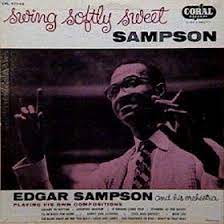
He recorded one album under his own name, Swing Softly Sweet Sampson, in 1956. Due to illness, he stopped working in the late Sixties. Composer, arranger, saxophonist, and violinist Edgar Sampson, nicknamed The Lamb, transitioned on January 16, 1973.

More Posts: arranger,bandleader,composer,history,instrumental,jazz,music,saxophone,violin

CHARLES MCPHERSON & SEAN JONES
Charles McPherson with Sean Jones featuring Jeb Patton, Russell Hall & Billy Drummond
Thursday-Sunday, November 10-13th
Thursday: 7:30pm
Friday & Saturday: 7pm & 9:30pm
Sunday: 5pm & 7:30pm
Four incredible nights with these five grand masters!
“Charles is the very definition of excellence in our music. He is the definitive master on this instrument. He plays with exceptional harmonic accuracy and sophistication. He performs free-flowing, melodic and thematically developed solos with unbelievable fire and an unparalleled depth of soul.” – Wynton Marsalis
More Posts: adventure,album,bass,club,drums,festival,genius,jazz,museum,music,piano,preserving,restaurant,saxophone,travel,trumpet
Daily Dose Of Jazz…
Charles Burchell was born in London, England on October 30, 1925 and began learning the ukulele, then guitar. Then he heard an Artie Shaw record that inspired him to take up the clarinet and play jazz. Switching to alto saxophone, he started his own quintet in 1943, then tried tenor saxophone before he was drafted into the Royal Air Force. Transferred to the army in 1944, he played in Greece with the British Divisional Band.
Following his discharge in 1947 Charles worked in London with the Toni Antone Big Band. By 1949 he had given up full-time musicianship for work in a factory in order to not perform music he did not like in order to make a living.
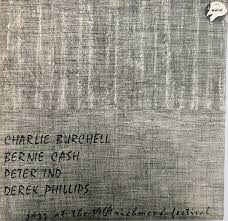
A disciple of Lennie Tristano and a devoted admirer of Warne Marsh, he continued to play part-time, leading his own quintet for more than 20 years. Burchell has guested with Clark Terry, Emily Remler and Nathan Davis, and recording for Peter Ind’s Wave label. He played with Ind in the group that supported Tristano on his only UK concert, at Harrogate in 1968.
Saxophonist Charles Burchell, who went by Chas and has been touted as one of the great unsung heroes of British jazz, transitioned from a heart attack on June 3, 1986.
More Posts: bandleader,history,instrumental,jazz,music,saxophone