

Daily Dose Of Jazz…
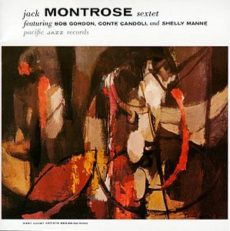
Jack Montrose was born December 30, 1928 in Detroit, Michigan. After attending university in Los Angeles, California he worked with Jerry Gray, then Art Pepper and did arrangements for Clifford Brown. He became known for cool jazz and/or West coast jazz.
Beginning in the mid-1950s Montrose’s heroin addiction became a liability and by the time he had kicked his habit, his style of jazz was no longer popular. For a while he played in strip joints until relocating to Las Vegas, Nevada where he worked in the casinos. He returned to recording in 1977 and in 1986 found some success collaborating with Pete Jolly.
He recorded with Clifford Brown, Bob Gordon, Red Norvo, Ron Stout, Ross Tompkins, Richard Simon, Paul Kreibich, Chet Baker, Elmer Bernstein, Frank Butler, Shelly Manne, Shorty Rogers and Mel Torme. Tenor saxophonist and arranger Jack Montrose aka West Coast Jack, passed away on February 7, 2006 in Las Vegas, Nevada.
Sponsored By

www.whatissuitetabu.com

More Posts: saxophone
Daily Dose Of Jazz…
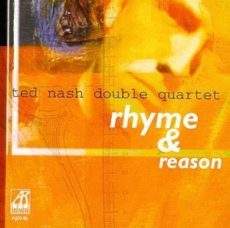
Ted Nash was born December 28, 1960 in Los Angeles, California. His trombonist father, Dick, and reedman uncle Ted, were both well-known jazz and studio musicians and both exposed and encouraged the young man. He started playing the piano at seven, by 12 the clarinet, and a year later he picked up the alto saxophone. In high school he studied jazz improvisation with vibraphonist Charlie Shoemake and had his first gig when he was This was followed by a week with Lionel Hampton in Hawaii.
Ted went on to win an audition to play lead alto with the Quincy Jones band, and by the time he turned 17 he had toured Europe, appeared on three records, and was performing regularly with the likes of Don Ellis, Louie Bellson and Toshiko Akiyoshi, as well as leading his own quintet. The following year he moved to New York City, recorded Conception, his debut album as a leader for the Concord label and became a regular member of a variety of ensembles. He worked with the Gerry Mulligan Big Band, the National Jazz Ensemble and for ten years would be a part of the Mel Lewis Jazz Orchestra.
An accomplished composer his first composition, Tristemente, was recorded by Louie Bellson, he has been commissioned by the Davos Musik Festival in Switzerland to compose works featuring a string quartet in a jazz setting, and commissioned by the Jazz at Lincoln Center Orchestra to compose the well-received Portrait in Seven Shades. It is dedicated to the representation of seven different artists, each in their own movement and was nominated for a Grammy in 2010. The artists were Claude Monet, Salvador Dalí, Henri Matisse, Pablo Picasso, Vincent van Gogh, Marc Chagall, and Jackson Pollock.
Composer and alto saxophonist Ted Nash leads an eclectic group called Odeon, and is a member of the Jazz Composers Collective along with Ben Allison, Frank Kimbrough, and Michael Blake.
Sponsored By

More Posts: saxophone
Daily Dose Of Jazz…
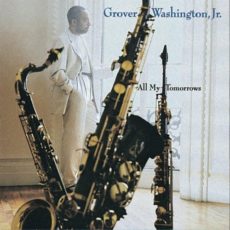
Grover Washington Jr. was born on December 12, 1943 in Buffalo, New York. His mother was a church chorister and his father was a saxophonist and collected old Jazz gramophone records, which put music everywhere in the home. Growing up he listened to Benny Goodman, Fletcher Henderson, and others like them. At the age of eight his father gave him a saxophone and he practiced and would sneak into clubs to see famous Buffalo blues musicians.
Leaving Buffalo he played with a Midwest group called the Four Clefs and then the Mark III Trio from Mansfield, Ohio. Then drafted into the U.S. Army he met drummer Billy Cobham, who as a mainstay in New York City, he introduced Washington to musicians around the city. After leaving the Army, he freelanced around New York City, but eventually landed in Philadelphia in 1967. The first two years of the Seventies decade provided his first recording sessions on Leon Spencer’s debut and sophomore albums on Prestige Records, together with Idris Muhammad and Melvin Sparks.
His big break came when alto saxophonist Hank Crawford couldn’t make a recording date with Creed Taylor’s Kudu Records and Grover took his place. This led to his first solo album, Inner City Blues in which he displayed his talent on the soprano, alto, tenor, and baritone saxophones.
His rise to fame with his first three albums established him as a force in jazz and soul music, but it was his fourth album in 1974, Mister Magic, that became his major commercial success. The album crossed over all the charts and with guitarist Eric Gale in tow again for the 1975 follow-up album Feels So Good proved both could reach #10. A string of acclaimed records brought Washington through the 1970s, culminating in the signature piece Winelight in 1980, in which he collaborated on Just The Two Of Us with Bill Withers and dedicated Let It Flow to Dr. J of the Philadelphia 76ers. The album went platinum, won two Grammy awards for Just the Two Of Us and Winelight and was nominated for both Record and Song Of The Year.
During the late 1980s and early 1990s Washington gave rise to Kenny G, Walter Beasley, Steve Cole, Pamela Williams, Najee, Boney James and George Howard. Over the course of his career he performed and recorded with Kathleen Battle, Kenny Burrell, Charles Earland, Dexter Gordon, Urbie Green, Eddie Henderson, Masaru Imada, Boogaloo Joe Jones, Gerry Mulligan, Don Sebesky, Johnny “Hammond” Smith, Mal Waldron and Randy Weston.
On December 17, 1999 while waiting in the green room after performing four songs for The Saturday Early Show, at CBS Studios in New York City, saxophonist Grover Washington Jr. collapsed. He was pronounced dead at about 7:30 pm at St. Luke’s-Roosevelt Hospital and his doctors determined he had suffered a massive heart attack. He was 56. In tribute, a large mural of him, part of the Philadelphia Mural Arts Program, is just south of the intersection of Broad and Diamond streets.

Give The Gift Of Knowledge

Daily Dose Of Jazz…
Alvin Owens “Red” Tyler was born on December 5, 1925 and raised in New Orleans, Louisiana. He was known as “Red” because of his light tanned skin.He grew up listening to the city’s marching bands but didn’t begin playing saxophone until after he joined the US Navy in 1945. After his discharge he joined the Grunewald School of Music and by 1949 he started his career by joining the Dave Bartholomew’s R&B band, whose other members included Ernest McLean, Frank Fields, and Earl Palmer.
Red made his recording debut on Fats Domino’s first session at Cosimo Matassa’s studio, when he recorded The Fat Man. He went on to play on recording sessions for Little Richard, Lloyd Price, Aaron Neville, Lee Dorsey, and numerous other rhythm and blues artists, often helping with the songs’ arrangements. In 1955, he began working for Johnny Vincent’s Ace Records as an A&R man, overseeing sessions by Huey “Piano” Smith, Frankie Ford and others. He also recorded an album, Rockin’ and Rollin’, credited to Alvin ‘Red’ Tyler and the Gyros, with a band that included Fields, Allen Toussaint, and James Booker.
Leaving Ace in 1961, Tyler helped Harold Battiste found his AFO (All For One) record label, which had a hit with Barbara George’s I Know in 1962. He then moved to California where he recorded with Sam Cooke, Larry Williams and others, before returning to New Orleans in the mid-1960s. He co-owned Parlo Records, which found success in 1967 with Aaron Neville’s Tell It Like It Is. He is listed as one of three songwriters of the instrumental, Java, originally recorded by Allen Toussaint. Covered by New Orleans trumpet player Al Hirt, it eventually reached the charts in 1964 and peaked at #4.
Though he primarily played R&B during th early part of his career, during this period Red also played jazz in club jam sessions and regarded himself as primarily a jazz musician. From the mid-1960s Red worked as a liquor salesman and began leading his own jazz band, the Gentlemen Of Jazz, in clubs and hotel residencies in New Orleans, and played with other jazz musicians including Ellis Marsalis.
The baritone saxophone had been his primary instrument during his years as a studio musician, but his jazz playing gradually came to rely on the tenor saxophone. He recorded two jazz albums, Graciously and Heritage In the mid-1980s, with vocals by Johnny Adams and Germaine Bazzle, on the Rounder Records label. In 1994, he recorded the album The Ultimate Session with Toussaint, Earl Palmer, Mac Rebennack, and other New Orleans musicians.
Red Tyler passed away at age 72 in New Orleans on April 3, 1998. After his death, the New Orleans Jazz Festival organised a concert in his honor, featuring many New Orleans leading musicians.
Give A Gift Of Jazz – Share
More Posts: saxophone
Daily Dose Of Jazz…
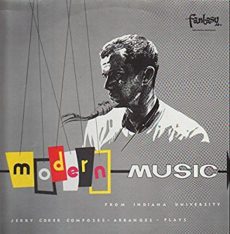
Jerry Coker was born on November 28, 1932 in South Bend, Indiana and picked up the clarinet and tenor saxophone long before going to study at Indiana University.
At the beginning of the 1950s he played tenor saxophone in the Fred Dale Big Band, but in 1953 he interrupted his studies to become a member of the Woody Herman Orchestra. During this time he also played in the Nat Pierce / Dick Collins Nonet and was a part of the formation of The Herdsman with Cy Touff and Ralph Burns in 1954. Jerry followed this musical relationship with joining the septet of Mel Lewis two years later and then with other musicians in the West Coast Jazz movement.
Coker also worked as a freelance musician and led his own bands in the second half of the 1950s. His first recordings made under his own name were recorded in Bloomington, Indiana, San Francisco, California and Paris, France.
The early 1960s saw his return to his studies and by the middle of the decade a return to Indiana University as a lecturer and active in the jazz field. With his educator hat on he headed the Duke Jazz Ensemble at Duke University from 1976 – 77 and later taught at the University of Miami, North Texas State University and the University of Tennessee .
He has written several books on improvisation, jazz keyboard and jazz history. Clarinetist, saxophonist, lecturer and author Jerry Coker continues to perform, record, tour and educate.
Give The Gift Of Knowledge