

Daily Dose Of Jazz…
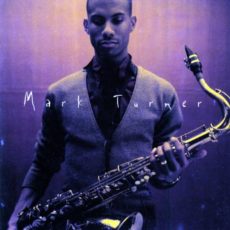
Mark Turner was born November 10, 1965 in Fairborn, Ohio, and raised in the small Southern California town of Palos Verdes Estates. His original intent was to become a commercial artist but in elementary school he played the clarinet, followed by the alto and tenor saxophones in high school. He attended California State University, Long Beach in the 1980s playing in the jazz ensembles, and then transferred to and graduating from Berklee College of Music in 1990.
Moving to New York city, Turner worked at Tower Records for an extended period before working full-time as a jazz musician. His debut release Yam Yam on the Criss Cross label hit the airwaves in 1995 and since he has released seven more for Criss Cross, Waner, Fresh Sound and ECM record labels. He is a member of the trio Fly, with bassist Larry Grenadier, and drummer Jeff Ballard and have released three albums.
Late 2008 Mark was off the jazz scene when a power saw injury injured two fingers on one of his hands sidelined him. Fortunately by late February the next year he was performing again with the Edward Simon Quartet at the Village Vanguard. In 2014 he released his first album as a leader in thirteen years featuring the talents of trumpeter Avishai Cohen, bassist Joe Martin, and drummer Marcus Gilmore.
He has worked with Gilad Hekselman’s Quartet, drummer Billy Hart‘s Quartet, recorded extensively with guitarist Kurt Rosenwinkel, saxophonist David Binney, and pianist Aaron Goldberg, as well as Ryan Kisor, Jonny King, Jimmy Smith, Jon Gordon, George Colligan, Seamus Blake, Lee Konitz, Joshua Redman, Matthias Lupri, Jaleel Shaw, Omer Avital, SF Jazz Collective, Yelena Eckemoff, George Mraz, Joe Locke and Tom Harrell among others. Considered one of the most influential tenor saxophonists of his generation, Mark Turner continues to perform, record and tour.

Uplift Someone’s World

More Posts: saxophone
Daily Dose Of Jazz…
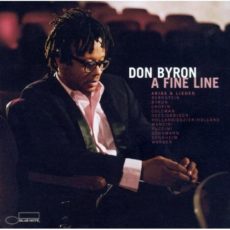
Donald Byron was born November 8, 1958 in The Bronx in New York City. His mother was a pianist and his father played bass in calypso bands. As well as listening to jazz recordings by Dizzy Gillespie, Miles Davis and others, he was exposed to other styles through trips to the ballet and symphony concerts.
He studied clarinet with Joe Allard and studied music at the New England Conservatory in Boston with George Russell. While in Boston, Byron performed and recorded with the Klezmer Conservatory Band, founded by NEC faculty member Hankus Netsky.
A gifted performer on clarinet, bass clarinet and saxophone, but on many of his albums he subordinates his own playing to the exploration of a particular style. Don is representative of a new generation of conservatory-trained jazz musicians who explore and record in a rich array of styles. His debut album in 1992, Tuskegee Experiments, bring classical avant garde and jazz improvisation together, while his albums like Ivey Divey are a more straight-ahead exploration of the traditional jazz, for which he has been nominated for a Grammy Award for his bass clarinet solo on I Want To Be Happy.
A practicing jazz historian and educator Byron recreates in spirit forgotten moments in the history of popular music with albums like Plays the Music of Mickey Katz and Bug Music. He has held professorships at Metropolitan State University of Denver, The University at Albany and MIT teaching composition, improvisation, music history, clarinet, and saxophone.
In 2001, Byron performed for the Red Hot Organization’s compilation album Red Hot + Indigo tribute to Duke Ellington, was named a 2007 USA Prudential Fellow and won a Guggenheim Fellowship. He has won the Rome Prize Fellowship and his Seven Etudes for solo piano made him a finalist for the Pulitzer Prize in Musical Composition.
Byron is a member of the Black Rock Coalition, has recorded with Allen Toussaint, Marc Ribot, Vernon Reid, Bill Frisell, Joe Henry, Hamiet Bluiett, Craig Harris, Mandy Patinkin, Ralph Peterson, Reggie Workman, David Murray, Steve Coleman, Bobby Previs, Anthony Braxton, Marilyn Crispell, Cassandra Wilson, Uri Caine and many others.
Composer and multi-instrumentalist Don Byron, who plays primarily clarinet, bass clarinet and saxophones, continues to perform, tour, record and educate, while venturing outside his jazz roots and into klezmer music, German lieder, cartoon jazz, hard rock/metal and rap.
Sponsored By

Voices From The Community
Daily Dose Of Jazz…
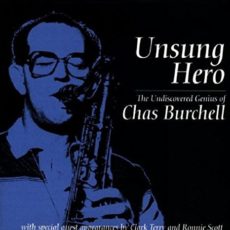
Chas Burchell was born Charles Burchell on October 30, 1925 in London, England. Originally a George Formby fan, he began learning the ukelele and then guitar, before hearing an Artie Shaw record that inspired him to take up the clarinet and play jazz.
Switching to alto saxophone, he started his own quintet in 1943. He tried the tenor saxophone before being drafted into the Royal Air Force, and then was transferred to the army in 1944. During the next three years he played in Greece with the British Divisional Band and following his discharge in 1947, worked in London with the Toni Antone Big Band.
By 1949 he gave up full-time musicianship and worked in a factory so that he would not have to perform music he did not like in order to make a living. A disciple of Lennie Tristano and a devoted admirer of Warne Marsh, Burchell continued to play part-time, leading his own quintet for more than 20 years, guesting with distinguished visitors such as Clark Terry, Emily Remler and Nathan Davis.
He recorded for Peter Ind’s Wave label and played with Ind in the group that backed Lennie Tristano’s only UK concert at Harrogate in 1968. Tenor saxophonist Chas Burchell, a supple, lyrical musician whose unpredictable twists and turns of phrase recall the style of his idol Marsh, died of a heart attack on June 3, 1986.
Put A Dose In Your Pocket
#preserving genius
More Posts: saxophone
Daily Dose Of Jazz…
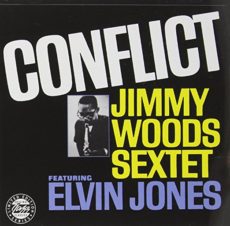
Jimmy Woods was born on October 29, 1934 in St. Louis, Missouri. Woods began playing saxophone with Homer Carter’s R&B band in 1951, then served in the Air Force from 1952 to 1956. After being discharged honorably he played with Roy Milton and was with Horace Tapscott and Joe Gordon in the start of the Sixties. Following this he played and recorded two albums with Gerald Wilson and two with Chico Hamilton to the middle of the decade.
in the early 1960s Woods recorded two albums, Awakening and Conflict, both released on Contemporary Records. The second of these albums, Conflict, featured Elvin Jones, Harold Land, Carmell Jones, Andrew Hill, and George Tucker. During the decade he also performed and recorded with Teddy Edwards and Joe Gordon
Since the end of the Sixties not much has been heard from jazz alto saxophonist Jimmy Woods.
Sponsored By

Double Impact Fitness
More Posts: saxophone
Daily Dose Of Jazz…
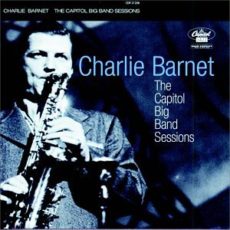
Charlie Barnet was born Charles Daly Barnet on October 26, 1913 in New York City. His parents divorced when he was two and he was raised in well-to-do surroundings by his mother and her grandparents. His grandfather was Charles Frederick Daly, a vice-president for the New York Central Railroad, banker and businessman. He attended various boarding schools, both in the New York and Chicago areas, learning to play piano and saxophone as a child. He was often found leaving school to listen to music and to try to gain work as a musician.
By sixteen, Barnet had done road work with a Jean Goldkette satellite band and was in New York, where he joined Frank Winegar’s Pennsylvania Boys on tenor saxophone. Always restless, by 1931 he had relocated to Hollywood and appeared as a film extra while trying to interest local bandleaders in hot music, which was increasingly unpopular due to the Great Depression. By late 1932 he was 18 and returning east, where he persuaded a contact at CBS’ artist bureau to try him out as an orchestra leader.
Charlie began recording in 1933, during an engagement at New York’s Park Central Hotel, but was not a great success for most of the 1930s. Regularly breaking up his band and changing its style by early 1935 he attempted to premiere swing music at New Orleans’ Hotel Roosevelt. However, Louisiana’s Governor Huey Long, disliking the new sound, had the band run out of town, arranged with Joe Haymes to take several of his now-jobless sidemen, and he went to Havana, Cuba as an escort to well-to-do older women.
1936 saw another swinging Barnet edition featuring the up-and-coming vocal quartet The Modernaires but this too quickly faded from the scene. The height of Barnet’s popularity and his first really permanent band came between 1939 and 1941. It was a period that began with his hit version of the Ray Noble tune Cherokee arranged by Billy May. 1944 saw him with another big hit with Skyliner. During his swing period his orchestra included Buddy DeFranco, Roy Eldridge, Neal Hefti, Lena Horne, Barney Kessel, Dodo Marmorosa, Oscar Pettiford, Art House, Maynard Ferguson, Doc Severinsen, Clark Terry and trumpeter Billy May was his arranger before joining Glenn Miller in 1940.
He was one of the first bandleaders to integrate his band; the year is variously given as 1935 or 1937. He was an outspoken admirer of Count Basie and Duke Ellington. Ellington recorded the Charlie Barnet composition In a Mizz. In 1939, Basie lent Barnet his charts after Barnets’ had been destroyed in a fire at the Palomar Ballroom in Los Angeles, California. Throughout his career he was an opponent of syrupy arrangements, however, in the Billy May song The Wrong Idea, he lampooned the “sweet” big band sound of the era.
Barnet penned an autobiography The Swinging Years where he noted the orchestra was a notorious party band where drinking and vandalism were not uncommon. He had several hits across America and in Europe during the late 1940s, thanks to the U.S. Armed Forces Network powerful twin 100 kW transmitters stationed in Munich, Germany.
By 1947, he started to switch from swing music to bebop and in 1949 he retired, apparently because he had lost interest in music. He was able to retire when he chose because he was one of the few heirs in a very wealthy family. He occasionally returned from retirement for brief tours but never returned to music full-time. Tenor, alto and soprano saxophonist, composer and bandleader Charlie Barnet passed away from complications of Alzheimer’s disease and pneumonia on September 4, 1991 in San Diego, California.
Jazz Is Global – Share
More Posts: saxophone