

Daily Dose Of Jazz…
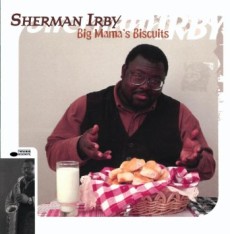
Sherman Irby was born and raised in Tuscaloosa, Alabama on March 24, 1968. He found his calling to music at age 12 and in high school he played saxophone and recorded with gospel immortal James Cleveland. Graduating from Clark Atlanta University with a B. A. in Music Education, in 1991, he joined Johnny O’Neal’s Atlanta-based quintet.
1994 saw Irby moving to New York City and immediately became a part of the jazz scene at Smalls jazz club. Catching the attention of Blue Note Records. He subsequently recorded his first two albums, Full Circle in 1996 and Big Mama’s Biscuits in 1998 on the label. He toured the U.S. and the Caribbean with the Boys Choir of Harlem in 1995, and was a member of the Jazz at Lincoln Center Orchestra from 1995 to 1997. During that tenure, he also recorded and toured with Marcus Roberts, Roy Hargrove and was part of Betty Carter’s Jazz Ahead Program.
After a four-year stint with Roy Hargrove, he focused on his own group, in addition to being a member of Elvin Jones’ ensemble and Papo Vazquez’s Pirates Troubadours. Since 2003, Irby has been the regional director for the Jazz Masters Workshop, mentoring young children, and a board member for the CubaNOLA Collective. Saxophonist and composer Sherman Irby formed Black Warrior Records and has released Black Warrior, Faith, Organ Starter and Live at the Otto Club under the new label. Post-bop alto saxophonist Sherman Irby has re-joined Jazz At Lincoln Center Orchestra with Wynton Marsalis and currently continues to perform with his quartet and his group Organomics.

Put A Dose In Your Pocket

More Posts: bandleader,composer,history,instrumental,jazz,music,saxophone
Daily Dose Of Jazz…
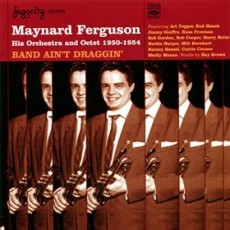
Willie Maiden was born William Ralph “Willie” Maiden in Detroit, Michigan on March 12, 1928. He began on piano at age five and started playing saxophone at 11. He spent most of his career playing in big bands, and while he copiously recorded as a sideman, he never led his own session.
Willie worked with Perez Prado in 1950 and arranged for Maynard Ferguson from 1952 into the 1960s. He played with Charlie Barnet in 1966, and played baritone sax in addition to arranging for Stan Kenton between 1969 and 1973.
As an educator, hard bop tenor saxophonist and arranger Willie Maiden who also played alto and baritone, taught at the University of Maine in Augusta until his passing on May 29,1976.
Inspire A Young Mind
More Posts: saxophone
Daily Dose Of Jazz…
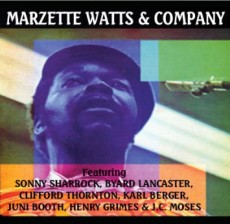
Marzette Watts was born March 9, 1938 in Montgomery, Alabama. Early in his life he played piano but did not play regularly in his teens. While studying at Alabama State College he became a founding member of SNCC, however, this association led to his being forced to leave the state at the behest of the governor.
He moved to New York, where he lived in a loft building on Cooper Square where Leroi Jones aka Amiri Barak lived and with whom he participated in the Organization of Young Men.. Watts returned to college in New York, completing his studies in 1962; and then moved to Paris to study painting at the Sorbonne and began playing saxophone for extra money.
Returning to New York in 1963, Marzette studied under Don Cherry, played in his loft and around the city with Juini Booth, Henry Grimes, J.C. Moses, and others. He also continued painting, producing work strongly influenced by Willem de Kooning. His loft attracted many established and up-and-coming musicians who would hang out there and play at parties, including Ornette Coleman, Cecil Taylor, Don Cherry, Archie Shepp and Pharoah Sanders.
By 1965 he devoted himself to music more fully, moved to Denmark for further study. Moving back and forth between Europe and New York City, while in New York he recorded an album for ESP-Disk and another for Savoy Records, and aught briefly at Wesleyan University.
He wrote film scores and did production work for his own films, eventually abandoning music to work in film and record production. Late in his life he moved to Santa Cruz, California but free jazz tenor and soprano saxophonist, bass clarinetist and sound engineer Marzette Watts passed away in Nashville, Tennessee of heart failure on March 2, 1998.
Dose A Day-Blues Away
Daily Dose Of Jazz…
Louis Albert Cottrell, Jr. was born in New Orleans, Louisiana on March 7, 1911. Raised in an upper class Creole musical family, his father Louis Cottrell Sr. was an influential drummer and cornetist Manny Perez was his godfather. Growing up around John Robichaux, A.J. Piron and Barney Bigard, the latter giving him lessons as well as studying under Lorenzo Tio, Jr.
He began his career in the 1920s with the Golden Rule Orchestra and by 1925 was playing with “Polo” Barnes. Louis would go on to work with Chris Kelly, Kid Rena, on the riverboat SS Island Queen with Lawrence Marrero’s young Tuxedo Brass Band and with Sidney Desvigne.
During this period he became a prominent union organizer, joining Don Albert’s orchestra soon after, recording an album with the orchestra in 1935 under the Vocalion label. Trying his hand at composing, with Lloyd Glenn and Albert wrote You Don’t Love Me (True) that became one of the hits of the R&B New Orleans era for bandleader Paul Gayten.
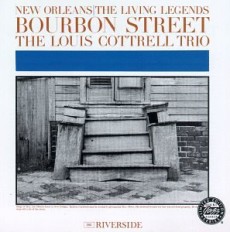
During the 40s he had an enduring collaboration with Paul Barbarin, played with Piron and Desvigne, formed and recorded for the first time as a leader in 1961 with the Louis Cottrell Trio for Riverside Records Living Legends series and with Barbarin revived the Onward Brass Band. His sideman duties led him to perform and record with Peter Bocage, Jim Robinson, Harold Dejan, Thomas Jefferson, Sweet Emma Barrett, Avery Kid Howard, Waldren Joseph, and Polo Barnes.
In 1971 Louis formed the Heritage Hall Jazz Band, leading that ensemble up until his death. Under his leadership the band rivaled Preservation Hall and with Blanche Thomas on vocals played Carnegie Hall in 1974. He went on to make several television appearances on the Perry Como and Mike Douglas shows, had a cameo and recorded Academy Award nominated Big Lip Blues for the soundtrack of 1978 film Pretty Baby.
Clarinetist and saxophonist Louis Cottrell died suddenly at his home after a short illness on March 21, 1978 at the age of 67. Fittingly, he was honored with a jazz funeral, as thousands assembled in a small Gentilly Catholic church to bid him farewell.
Give The Gift Of Knowledge
Daily Dose Of Jazz…
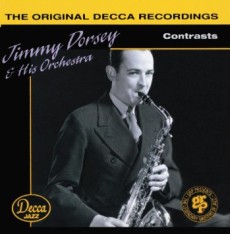
James Dorsey was born on February 29, 1904 in Shenandoah, Pennsylvania. Known as “JD”, he played trumpet in his youth and appeared on stage with J. Carson McGee’s King Trumpeters in 1913 at age nine. He switched to alto saxophone two years later, then learning to double on the clarinet.
With his brother Tommy playing trombone, he formed Dorsey’s Novelty Six, one of the first jazz bands to broadcast. In 1924 he joined the New York City based California Ramblers with Paul Whiteman and Red Nichols, did freelance radio and recording work throughout the 1920s and joined the Ted Lewis band, with whom he toured Europe.
He went on to work with Rudy Vallee and other bandleaders, continued with the Dorsey Brothers Orchestra, appeared on seventy-five radio broadcasts, breaking with his brother changed the band to the Jimmy Dorsey Orchestra with Bobby Byrne, Ray McKinley, Donald Matteson, Skeets Herfurt, and vocalists Bob Eberly and Kay Weber, later hiring Helen O’Connell.
In the fifties he rejoined his brother under the auspices of Tommy Dorsey and His Orchestra featuring Jimmy Dorsey, appeared on Jackie Gleason’s show and got their own weekly variety program Stage Show, produced by Gleason.
Jimmy took over leadership of the orchestra after Tommy’s death but only survived a few months passing away from throat cancer at age 53 in New York City on June 12, 1957.
Jimmy received a gold record for the Herst/Sharpe composition So Rare, made Latin flavored records that topped the charts in 1941, appeared in several movies including their own bio-pic The Fabulous Dorseys, composed the classic tune I’m Glad There Is You, as well as a host of others collaborating with Jimmy Van Heusen, Sonny Burke, Frankie Trumbauer and Babe Russin to name a few.
Saxophonist Jimmy Dorsey is considered one of the most important and influential alto saxophone players of the Big Band and Swing era, had several #1 hits, honored with a U.S. postal stamp, had his recording of Brazil (Aquarela do Brasil) into the Grammy Hall of Fame, and was inducted into the Big Band and Swing Hall of Fame.