

Daily Dose Of Jazz…
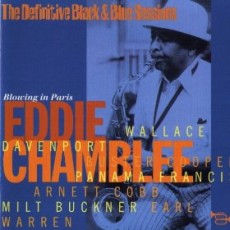
Edwin Leon Chamblee was born in Atlanta, Georgia on February 24, 1920 and grew up in Chicago, Illinois where he began learning the saxophone at the age of 12. After leaving Wendell Phillips High School he studied law at Chicago State University, playing in clubs in the evenings and on weekends.
Chamblee played in U.S. Army bands between 1941 and 1946 and after leaving the service joined Miracle Records. He played on Sonny Thompson’s hit record Long Gone in 1948, and on its follow-up Late Freight credited to the Sonny Thompson Quintet featuring Eddie Chamblee. Both records reached no. 1 on the national Billboard R&B chart and two following records also charted in 1949.
From 1947, Eddie led his own band in Chicago clubs, as well as continuing to record with Thompson, work on other sessions in Chicago, including The Four Blazes hit Mary Jo in 1952. By 1954 he switched gears joining Lionel Hampton’s band for two years, touring in Europe, before returning to lead his own group again in Chicago. He accompanied Amos Milburn, Lowell Fulson and Dinah Washington during the late 50s to early 60s. The two performed vocal duets in a style similar to that later adopted by Washington with Brook Benton.
Known also by his nickname Lone Gone, he recorded for the Mercury and EmArcy labels and with his own group in the early 1960s for Roulette and Prestige Records. In the 1970s he rejoined Hampton for tours of Europe, where he also played with Milt Buckner, recorded for the French Black & Blue label, and performed with the Count Basie Orchestra in 1982. From the 1980s until his passing at age 79 on May 1, 1999, tenor and alto saxophonist Eddie Chamblee performed with the Harlem Blues and Jazz Band.

Inspire A Young Mind
More Posts: saxophone

Daily Dose Of Jazz…
Les Hite was born in DuQuoin, Illinois on February 13, 1903. He attended the University of Illinois and played saxophone with family members in a band in the 1920s. Following this, he played with Detroit Shannon, then with the Helen Dewey Show, but when this group disbanded abruptly, he relocated to Los Angeles, California.
In L.A. he played with The Spike Brothers Orchestra, Mutt Carey, Curtis Mosby and Paul Howard. He became leader of Howard’s band in 1930, and played at the Cotton Club in Los Angeles for several years, accompanying Louis Armstrong and Fats Waller among others. The band also recorded frequently for film soundtracks and occasionally appeared on camera.
Hite’s big band, known as Sebastian’s Cotton Club Orchestra, primarily played in Los Angeles, though they occasionally went on tour. Musicians who played in the band included Lionel Hampton, Marshal Royal, Lawrence Brown, Britt Woodman, Joe Wilder, T-Bone Walker and Dizzy Gillespie.
Rarely recorded, for this reason much of the details of his life and work are poorly documented. The only sessions he did were 14 numbers recorded between 1940 and 1942. Saxophonist and bandleader Les Hite passed away at St. John’s Hospital in Santa Monica, California on February 6, 1962 from complications following a heart attack one week before his 59th birthday.
Put A Dose In Your Pocket
More Posts: saxophone
Daily Dose Of Jazz…
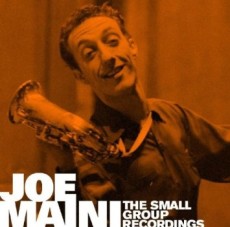
Joe Maini was born on February 8, 1930 in Providence, Rhode Island. Early in his career he played alto saxophone in the big bands of Alvino Rey, Johnny Bothwell and Claude Thornhill. He moved to Los Angeles, California and found work as a session musician and continued working in big bands, usually holding the lead alto chair.
Some of the leaders Joe worked with over the course of his career were Terry Gibbs, Onzy Matthews, Gerald Wilson, Bill Holman, Louis Bellson, Jack Montrose, Dan Terry, Johnny Mandel and Shelly Manne. He recorded in small group settings with Clifford Brown and Max Roach, Zoot Sims, Jack Sheldon, Red Mitchell, Lin Halliday, Kenny Drew and Jimmy Knepper. He also worked with his close friend, comedian Lenny Bruce.
Alto saxophonist Joe Maini passed away at age 34 in Los Angeles on May 7, 1964. History states it was while playing Russian roulette as the cause, but family and witnesses contend it was simply a firearms accident. Forty-four years after his death, Lone Hill Jazz issued a four-CD set with many of his small group recordings.
Take A Dose On The Road
More Posts: saxophone
Daily Dose Of Jazz…
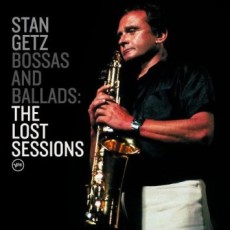
Stanley Getz was born on February 2, 1927 in Philadelphia, Pennsylvania but moved to New York City with his parents during The Depression. In school he was a straight A student finishing 6th grade close to the top of his class but his major interest was in musical instruments, and he felt a need to play every instrument in sight.
He played a number of them before his father bought him his first saxophone at the age of 13 and began practicing eight hours a day. Attending James Monroe High School, got accepted in the All City High School Orchestra of New York City, giving him a chance to receive private, free tutoring from the New York Philharmonic’s bassoonist, Simon Kovar.
By 1943 at age 16, he was accepted into Jack Teagarden’s band, becoming his ward because of his age. Getz also played along with Nat King Cole and Lionel Hampton, and after playing for Stan Kenton, Jimmy Dorsey, and Benny Goodman he became the Woody Herman’s soloist for two years in The Second Herd. Known as The Four Brothers alongside Serge Chaloff, Zoot Sims and Herbie Steward, he gained notoriety. Leaving Herman to strike out on his solo career, he led almost all of his recording sessions after 1950. However, it was during this period that having become involved with drugs and alcohol while a teenager, he was arrested in 1954 while attempting to rob a pharmacy to get a morphine fix.
Stan’s reputation was greatly enhanced by his featured status on Johnny Smith’s album Moonlight In Vermont and the single became a hit, staying on the charts for months. He went on to further popularity playing cool jazz with Horace Silver, Smith, Oscar Peterson and others. In his various bands were Roy Haynes, Al Haig, Tommy Potter, Dizzy Gillespie, Herb Ellis, Ray Brown and Max Roach.
In 1961 Getz became a central figure in introducing bossa nova to the American audience, teaming with guitarist Charlie Byrd who had just returned from Brazil. His album Jazz Samba with Charlie Byrd and Antonio Carlos Jobim became a hit, winning him a Grammy for Best Jazz Performance for Desifinado in 1963 that became his first million-copy seller. He would record Big Band Bossa Nova and Jazz Samba Encore! with Luiz Bonfa and get his second gold disc.
He recorded the album Getz/Gilberto with Jobim, Joao Gilberto and Astrud Gilberto winning two more Grammys for The Girl From Ipanema. What could have been a long partnership with his love affair with Astrud Gilberto, moving him away from bossa nova and back to cool jazz. By 1972, he recorded in the fusion idiom with Chick Corea, Tony Williams and Stanley Clarke.
In the mid-1980s he worked regularly in the San Francisco Bay area and taught at Stanford University as an artist-in-residence at the Stanford Jazz Workshop. In 1986, he was inducted into the Down Beat Jazz Hall of Fame. Tenor saxophonist Stan Getz died of liver cancer on June 6, 1991.
Dose A Day – Blues Away
More Posts: saxophone
Daily Dose Of Jazz…
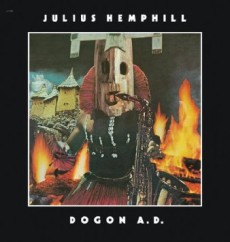
Julius Arthur Hemphill was born on January 24, 1938 in Fort Worth, Texas and attended M. Terrell High School, studied clarinet with John Carter before taking up the saxophone due to the early influence of Gerry Mulligan.
Hemphill joined the Army in 1964, served for several years, and later, for a brief period, performed with Ike Turner. In 1968 he moved to St. Louis, Missouri and co-founded the multidisciplinary arts collective. This brought together saxophonists Oliver Lake and Hamiet Bluiett, trumpeters Baikida Carroll and Floyd LeFlore and writer/director Malinke Robert Elliott.
A move to New York City in the mid-1970s witnessed Julius thriving in the free jazz community. He gave saxophone lessons to David Sanborn, and Tim Berne among others. He founded the World Saxophone Quartet in 1976 after collaboration with Anthony Braxton. He remained a member until the early 1990s and then formed a saxophone quintet.
Hemphill recorded over twenty albums as a leader and another ten records with the World Saxophone Quartet and recorded or performed with Bjork, Bill Frisell, Jean-Pau Bourelly and others. Late in his life his ill-health including diabetes and heart surgery, forced Hemphill to stop playing saxophone, but he continued writing music. His saxophone sextet, led by Marty Ehrlich, also released several albums of Hemphill’s music, but without Hemphill playing. The most recent is entitled The Hard Blues, posthumously recorded live in Lisbon.
Prior to his death on April 2, 1995 in new York City, composer and alto saxophonist and flautist recorded a multi-hour interview on his life and music for the Smithsonian Institute and it is held at the archive center of the National Museum of American History in Washington D.C.
Give The Gift Of Knowledge