

Daily Dose Of Jazz…
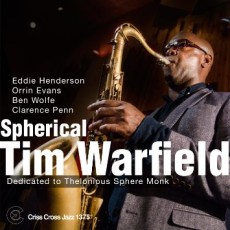
Tim Warfield, Jr. was born in York, Pennsylvania, began studying the alto saxophone at age nine. He switched to tenor saxophone during his first year at William Penn Sr. High School and participated in various musical ensembles. He won many jazz soloist awards including coming in second out of forty competitors at the Montreal Festival of Music in Canada. After high school, Warfield attended Howard University in Washington, D.C. After two years of matriculation he left to lead and co-lead several groups in the Central Pennsylvania, Baltimore and Washington area.
In 1990 he was chosen to be a member of trumpeter Marlon Jordan in his quintet. The following year he was selected to record Tough Young Tenors on the Island/Antilles label, joined George Wein’s Jazz Futures, Also in 1991, Warfield placed third at the Thelonious Monk International Jazz Saxophone Competition. From 1994 to 1999, he was a member of bassist Christian McBride’s group, and then began a six-year collaboration with Nicholas Payton.
Warfield has recorded eight albums on the Criss Cross label as a beginning with his debut release of A Cool Blue, selected as one of the top ten recordings of the year in a 1995New York Times critic’s poll. as was his 1998 recording Gentle Warrior (featuring Cyrus Chestnut, Tarus Mateen, Clarence Penn, Terell Stafford, and Nicholas Payton.
Tenor saxophonist Tim Warfield is currently serving as a board member and Chair of the Music Committee for the Central Pennsylvania Friends of Jazz as well as an artist-in-residence at Messiah College. He continues to record, tour and perform in the hard bop, Neo-Bop,, post bop and straight-ahead jazz genres.

Inspire A Young Mind
More Posts: saxophone
Daily Dose Of Jazz…
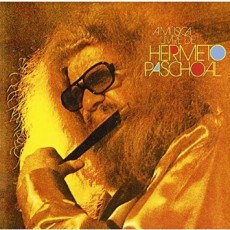
Hermeto Pascoal was born an albino on June 22, 1936 in Lagoa da Canoa, Alagoas, Brazil at a time when there was no electricity. He learned the accordion from his father and practiced for hours as his condition of birth did not allow him to work the fields.
Hermeto’s career began in 1964 with appearances on several Brazilian recordings alongside relatively unknown groups that included Edu Lobo, Elis Regina and Cesar Camargo Mariano, establishing widely influential new directions in post-bossa Brazilian jazz.
By 1966 he was playing in the Sambrasa Trio with Airto Moriera and Humberto Clayber releasing one album Em Som Maior. Then he and Airto joined Trio Novo and in 1967 renamed the group Quarteto Novo and released an album that launched the careers of Pascoal and Moreira. Pascoal would then go on to join the multi-faceted group Brazilian Octopus.
Pascoal initially caught the international public’s attention with an appearance on Miles Davis’s 1971 album Live-Evil, which featured him on three pieces he composed. Later collaborations involved fellow Brazilian musicians Airto and Flora Purim. From the late 1970s onward he has mostly led his own groups, that have included bassist Itibere Zwarg, pianist Jvino Santos-Neto and percussionists Nene, Pernambuco and Zabele.
Known as o Bruxo (the Sorcerer), Hermeto often makes music with unconventional objects such as teapots, children’s toys, and animals, as well as keyboards, button accordion, melodica, saxophone, guitar, flute, voice, various brass and folkloric instruments. Folk music from rural Brazil is another important influence in his work.
Between 1996 and 1997, Pascoal worked on a book project called the Calendário do Som, that contains a song for every day of the year, including 29 February, so that everyone would have a song for his or her birthday. He continues to perform, record and tour.
Jazz Is Global – Share
More Posts: accordion,flute,guitar,keyboard,melodica,saxophone,vocal
Daily Dose Of Jazz…
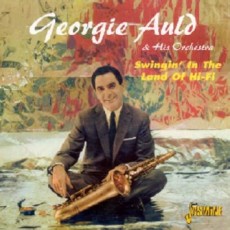
Babe Russin was born Irving Russin on June 18, 1911 in Pittsburgh, Pennsylvania. He played with some of the best-known jazz bands of the 1930s and 1940s, including Benny Goodman, Tommy Dorsey and Glenn Miller. He solos on the Glenn Miller band recording of A String of Pearls on Bluebird Records in 1941.
In the early Forties he briefly led his own band. In 1950, Babe was credited as a musician with the backup band on two Frank Sinatra tunes, Should I? and You Do Something To Me. He co-wrote the instrumental “All the Things You Ain’t” with Jimmy Dorsey that was recorded and released in 1945. He also recorded with Jack Hoffman in 1947 and Georgie Auld in 1955.
In 1953 he appeared briefly in the 1953 Universal-International movie The Glenn Miller Story. He plays Cheating On Me with a small group on the soundtrack to the 1954 Warner Bros. Judy Garland movie A Star Is Born. He also appeared in the 1956 movie The Benny Goodman Story. Tenor saxophonist Babe Russin passed away on August 4, 1984.
Dose A Day – Blues Away
More Posts: saxophone
Daily Dose Of Jazz…
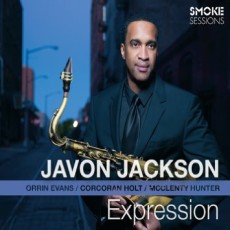
Javon Anthony Jackson was born June 16, 1965 in Carthage, Mississippi and raised in Denver, Colorado by parents who were musicians. His mother played the piano, and his father played trumpet, but he didn’t begin playing alto saxophone until age 10. By 16 he changed to the tenor saxophone and was taught by pianist Billy Wallace.
He briefly enrolled at the University of Denver prior to spending part of 1985-86 at Berklee College of Music, which he abandoned to become a Messenger with Art Blakey. Jackson would later finish his undergraduate degree and obtained a master’s degree from the State University of New York at Purchase where he later taught.
The hard bop, soul and mainstream tenor saxophonist has played with the Harper Brothers, Benny Green, Freddie Hubbard and Elvin Jones among others. He has fourteen albums as a leader, mainly on the Criss Cross and Blue Note labels. In between performing, touring or recording, he heads the Jackie McLean Institute of Jazz at the Hartt School at the University of Hartford and has been doing so since 2013.
Give The Gift Of Knowledge
More Posts: saxophone
Daily Dose Of Jazz…
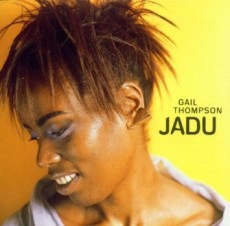
Gail Thompson was born on June 15, 1958 in London, England. Coming from a musical family as a child she learned to play the clarinet. At 16 she was playing baritone saxophone as a member of the National Youth Jazz Orchestra and founded her own bands.
She went on to become a founding member alongside with Courtney Pine of the British band Jazz Warriors. She played briefly with Art Blakey becoming the second female member of the Jazz Messengers along with Joanne Brackeen.
In 1986, she led the big band of Charlie Watts and then founded her first big band Formation Gail Force, for which she also composed music. Thompson’s music is inspired by Africa rhythms and hard bop bringing her stylistically close to the big band sounds of Abdullah Ibrahim and Quincy Jones.
In 1994, her debut recording session and album as a leader came with Gail Force. One year later as a product of a journey through the African continent, she recorded live in Duisburg the album Jazz Africa for Enja Records with Harry Beckett, Claude Deppa, Jerry Underwood and Patrick Hartley. After a stay in the Australian Queensland in 1999 she recorded the album Jadu, referencing Jazz Africa Down Under with bassist Mario Castronari.
For health reasons, flutist, saxophonist, composer and arranger of modern jazz Gail Thompson had to quit playing the saxophone but she put her energies towards focusing on music education activities. In 2003 she organized the Afro-European Women’s Big Band Femmes Noires , who performs her compositions.
Put A Dose In Your Pocket