

Daily Dose Of Jazz…
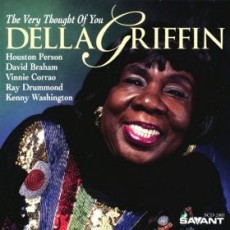
Della Griffin was born June 12, 1925 in Newberry, South Carolina but grew up in New York, the 19th of 20th children. She greatly admired and was influenced by Count Basie, Charlie Barnet, and most specifically Billie Holiday. She began singing when she was 12 and a few years after her graduation in 1943 from Jamaica High School in Queens, New York, she began singing professionally.
1950 found Griffin and Frances Kelley forming one of the first all female R&B singing group that played in small clubs whenever they could for about a year. In 1951, Della invited Jerry Blaine, the owner of Jubilee Records, to hear the group perform. So impressed by the group that he signed them the next day and in January 1952 Jubilee released “The Enchanters” first record, they began touring, dropped their second record and two members left the group.
Della and Kelley were determined to continue their careers and replaced the two members becoming the “Dell-Tones” after lead singer and drummer Della. They went on to record with Brunswick and Rainbow record labels, and toured with Jimmy Forrest. By 1957 the Dell-Tones slowly began to drift apart and Della left to perform on her own.
Over the years Griffin migrated towards jazz touring with and playing in support to many artists including Sonny Stitt, Benny Green, Illinois Jacquet, and Etta Jones. She began performing again in New York City clubs including the Blue Note and The Blue Book where she stayed for years.
In 1984, Della was hit by a car and took a break from singing. She came back as a featured singer that garnered her more attention than her drumming. Recording with Houston Person, she began performing overseas at age 88, she has since all but ceased her performances and appearances. While singing remained her passion, vocalist Della Griffin, who was also proficient on the drums, alto saxophone, and piano, transitioned in New York City on August 9, 2022, at the age of 100..

Inspire A Young Mind
Daily Dose Of Jazz…
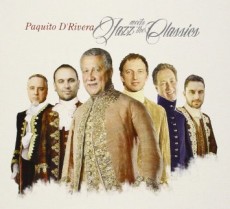
Paquito D’Rivera was born on June 4, 1948 in Havana, Cuba. He performed at age 10 with the National Theater Orchestra, studied at the Havana Conservatory of Music, and at 17, became a featured soloist with the Cuban National Symphony.
Through the Sixties and Seventies Paquito was dissatisfied playing under the constraints placed on his music by a communist Cuban government that described jazz and rock as imperialist music. After meeting with Che Guevara the idea of leaving Cuba became more than a thought. In early 1981, while on tour in Spain, he sought asylum with the American Embassy, leaving his homeland, wife and child behind in search of a better life with a promise to get them out.
With family support already in the States, D’Rivera settled into the New York jazz scene and became something of a phenomenon after the release of his first two solo albums, Paquito Blowin in 1981 and Mariel the following year. Throughout his career in the U. S. his albums have hit the top of the jazz charts and have shown his ability playing bebop, classical and Latin/Caribbean music. He is the only artist to ever have won Grammy Awards in both Classical and Latin Jazz categories.
Paquito also plays with the Ying Quartet, Turtle Island String Quartet, Mark Summer, Alon Yavnai, Yo-Yo Ma, as well as the National, London, Puerto Rico, Costa Rican and Simon bolivar Symphony Orchestras and the London and Florida Philharmonic Orchestras.
With his band, Paquito D’Rivera Quintet consisting of Peruvian bassist Oscar Stagnaro, Argentinean trumpeter Diego Urcola, American drummer Mark Walker and pianist Alex Brown they have won a Latin Grammy for Best Latin Jazz Album for Live At The Blue Note for a total of seven and has also won fourteen Grammy Awards.
Alto and soprano saxophonist, clarinetist, composer and bandleader Paquito D’Rivera has to date 72 albums as a leader and another 5 as a sideman playing with Dizzy Gillespie and Lalo Schifrin. He has received the National Medal of Arts, NEA Jazz Master, Jazz Legend Award, Two honorary Doctorates, and the Presidents Award from the IAJE amongst numerous others, continues to perform, record and tour.
Take A Dose On The Road
Daily Dose Of Jazz…
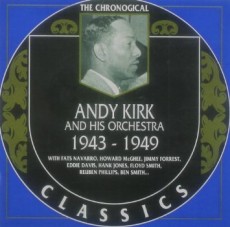
Andrew Dewey Kirk was born on May 28, 1898 in Newport, Kentucky but grew up in Denver, Colorado and was tutored by Paul Whiteman’s father, Wilberforce. He started his musical career playing with George Morrison’s band, but then went on to join Terence Holder’s Dark Clouds of Joy. In 1929 he was elected leader after Holder departed, renamed the band Clouds of Joy and also relocated the band from Dallas, Texas, to Kansas City, Kansas.
Also known as the Twelve Clouds of Joy for the number of musicians, they set up in the Pla-Mor Ballroom on the junction of 32nd and Main. They made their first recording for Brunswick Records that same year. Mary Lou Williams came in as a last moment pianist and so impressed the label’s Dave Kapp that she became a regular member and arranger of the band.
With the move they grew highly popular as they epitomized the Kansas City jazz sound and in mid-1936 Andy signed with Decca and made scores of popular records for the next decade. In 1938, he and band held the top spot of the Billboard chart for 12 weeks with “I Won’t Tell a Soul (I Love You)”, written by Hughie Charles and Ross Parker and featured Pha Terrell on vocals. In 1942 leading His Clouds of Joy, they recorded “Take It and Git”, which on October 24, 1942, became the first single to hit number one on the Harlem Hit Parade, the predecessor to the Billboard R&B chart. In 1943, with June Richmond on vocals, he had a number 4 hit with “Hey Lawdy Mama”.
Over time the band had Buddy Tate, Claude Williams, John Williams, bill coleman, Don Byas, Shorty Baker, Howard McGhee, Jimmy Forrest, Fats Navarro, Charlie Parker, Ben Thigpen,, Hank Jones, Joe Williams and Reuben Phillips among others.
In 1948, Kirk disbanded the Clouds of Joy and continued to work as a musician, but eventually switched to hotel management and real estate, but kept his hand in music serving as an official in the Musicians’ Union.[
Although the leader of the band, saxophonist and tubist Andy Kirk seldom was a soloist, utilizing the talent in his band for the spotlight. His genius lay in realizing how best to make use of his band members’ skills. On December 11, 1992 at the age of 94, he passed away in New York City.
Give A Gift Of Jazz – Share
Daily Dose Of Jazz…
Archie Shepp was born on May 24, 1937 in Fort Lauderdale, Florida but was raised in Philadelphia, Pennsylvania. He studied piano, clarinet and alto saxophone before focusing on the tenor saxophone. He studied drama at Goddard College from 1955-59, eventually turning professional.
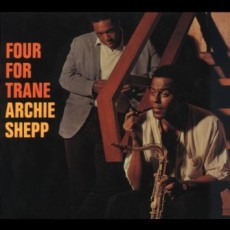
Shepp played in a Latin jazz band for a short time before joining the band of avant-garde pianist Cecil Taylor. His debut recording as a leader was under his own name, Archie Shepp-Bill Dixon Quartet on the Savoy label. The 1962 session included an Ornette Coleman composition was the initial link to the formation of the New York Contemporary Five, which included Don Cherry. Two years later with the admiration of Coltrane he recorded Four For Trane on Impulse Records with trombonist Roswell Rudd, bassist Reggie Workman and alto John Tchicai.
Archie participated in the sessions for Coltrane’s A Love Supreme in late 1964, but none of the takes were included on the final release but has since been made available on a 2002 reissue. He would cut Ascension with Coltrane in 1965, and his place alongside Coltrane at the forefront of the avant-garde jazz scene was epitomized when the pair split the record New Thing At Newport, the first side a Coltrane set, the second a Shepp set.
During the decade he would develop his political consciousness and Afrocentric orientation, recording albums that reflected. His albums Fire Music and The Magic of Ju-Ju put him at the forefront of the free-form avant-garde movement along with Pharoah Sanders. He continued to experiment into the new decade, at various times with harmonica players and even spoken word poets. Never far from political and social commentary Archie released Attica Blues for the prison riots and The Cry Of My People that spoke to civil rights. He also wrote for theater including The Communist and Lady Day: A Musical Tragedy.
In 1971, Shepp was recruited to the University of Massachusetts Amherst that began a thirty-year career as a professor teaching Revolutionary Concepts in African-American Music and Black Musician in the Theater, also teaching African-American Studies at SUNY in Buffalo, New York.
In the late 1970s and beyond Archie would record blues, ballads, spirituals, tributes to traditional jazz musicians, as well as R&B. He would perform with Sun Ra’s Arkestra, French trumpeter Eric Le Lann, with Michel Herr creating the original score for the film Just Friends. He also appeared on the Red, Hot Organization’s tribute to Fela Kuti titled Red, Hot and Riot.
He has been featured in two documentary films, 1981’s Imagine The Sound, in which he discusses and performs his music and poetry, and Mystery Mr. Ra in which he discusses and performs his music and poetry. Shepp also appears in Mystery, Mr. Ra, a 1984 French documentary about Sun Ra.
In 2004 he founded his own record label, Archieball, together with Monette Berthomier in Paris. Tenor and soprano saxophonist, pianist, vocalist Archie Shepp continues to perform, collaborate and record.
Put A Dose In Your Pocket
Daily Dose Of Jazz…
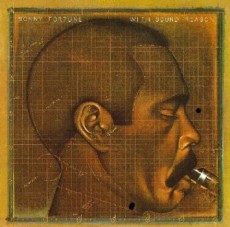
Sonny Fortune was born on May 19, 1939 in Philadelphia, Pennsylvania. After moving to New York City in 1967 he recorded and appeared live with drummer Elvin Jones’s group. In 1968 he was a member of Mongo Santamaria’s band. He subsequently performed with singer Leon Thomas and then with McCoy Tyner from 1971–1973.
In 1974 Sonny replaced Dave Liebman in Miles Davis’s ensemble and remained until spring 1975. He went on to join Nat Adderley after his brief tenure with Davis, and then formed his own group, recording two albums for A&M’s Horizon label. During the 1990s, he recorded several acclaimed albums for Blue Note.
He has performed with Roy Brooks, Buddy Rich, George Benson, Rabih Abou Khalil, Roy Ayers, Oliver Nelson, Gary Bartz, Rashied Ali and Pharoah Sanders, and was a part of the live album The Atlantic Family Live at Montreux.
Alto saxophonist and flautist Sonny Fortune, who also played the soprano, tenor and baritone saxophone and clarinet, continued to perform, record and tour until he died of a stroke at the age of 79 on October 25, 2018.
Inspire A Young Mind