

Daily Dose Of Jazz…
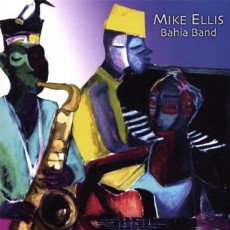
Mike Ellis was born in New York City in on January 18, 1957 where he was raised by artistically inclined parents during the fabulous Sixties. He began his musical training at age of eight on clarinet, piano and drums. By 19, he was working professionally and teaching.
Ellis paid his dues attending Berklee College, New School and the Institute of Artistic & Cultural Perception (I.A.C.P.) where Billy Pierce, Steve Lacy, Steve Grossman, Alan Silva and David Liebman were particularly helpful and influential as teachers and mentors during his early career.
Ellis’ eclectic approach to music has labeled it “World Jazz”, a term that may seem vague but it sums up what he’s been doing recently with Brazilian and African percussionists, seasoned international jazz artists and Siberian throat singers. After nearly 100 concerts in New York with Speak in Tones, he has performed alongside Antoine Roney, Graham Haynes, Terreon Gully, Phoenix Rivera, Taurus Mateen, Brian Carrott, Curtis Lundy, Bruce Cox, Daniel Moreno, just to name a few.
He recorded his last two projects in Salvador Bahia Brazil “Subaro” Speak in Tones and “Bahia Band” under his own name and on his label AlphaPocket Records. Some of the musicians on these projects include Jerry Gonzalez, Cheikh Tidiane Seck, Mo Brasil, Bira Reis, Adam Rudolf, Jean-Paul Bourelly and Darryl Hall.
Music has taken him around the world, from Moscow’s Tchaikovsky Hall to the Tokyo Jazz club scene and everything in between. Currently residing in Paris, he attends to his professorial and compositional duties while remaining active on the Parisian jazz scene performing regularly at Paris Clubs such as the Duc des Lombards, Sunset and the Baiser Sale. A few of his regular sidemen include John Betsch, J.J. Avenel, Michael Felberbaum, Brice Wassy, Bobby Few, Alain Jean Marie, Munir Hossn. All this, soprano saxophonist Mike Ellis accomplishes when he is not busy with projects in Brazil and New York.

Jazz Is Global – Share
More Posts: saxophone
Daily Dose Of Jazz…
Ramiro Flores was born on January 12, 1977 in Buenos Aires, Argentina. He began his musical training through the alto saxophone at the age of 11 years. He studied composition at the UCA and saxophone at the National Conservatory, while both played in the band folklorist César Isella, in addition to various projects.
In 1998 he traveled to Boston to continue his studies at Berklee College of Music, where he studied with musicians such as Joe Lovano, George Garzone and Jerry Bergonzi among others. He graduated with a dual major in Film Scoring and Performance in 2002 before moving to New York and continued developing his musical career in this city.
During this period he collaborated with Pedro Giraudo, Mr. Live Big Band, Pablo Ablanedo, The Monkeys, Ryle’s Big Band, Jerry Bergonzi and Slide Hampton. For a period he worked as a show band musician for Carnival Cruise Lines, was a composer for American Music Co. and wrote a book of instruction flute, and recorded for Music Sales Corporation NYC. He began his development as a leader to form his own band and performing his own music in Boston and New York.
Returning to Argentina in 2005, he participated in the projects of the local jazz including Mariano Otero, Ligia Piro, Juan Cruz de Urquiza, Pepi Taveira and Javier Malosetti amongst numerous others. The following year he won “80mundos, and by 2007 he produced and recorded his first CD “Flowers”, for BAU records, in which he collaborated with the likes of Juan Quintero,
That same year in December he received the Clarín Award as the revelation of jazz, voted best soprano saxophonist in 2008 by the newspaper La Nación. Alto saxophonist Ramiro Flores released his sophomore project “Son Dos” and continues to perform.
Inspire A Young Mind
More Posts: saxophone
Daily Dose Of Jazz…
Matthew Clayton was born in Philadelphia, Pennsylvania on January 10, 1980. Picking up the saxophone at age ten his love of jazz was fueled playing in big bands in middle school when he played lead alto. It was during this time that he began venturing into improvisation. By high school he was a member of the National Grammy All Star High School Jazz Band, played the Village Vanguard, Birdland and Carnegie Hall in New York City. While there he also met and gigged with Grover Washington, Jr. and Al Grey, and was a featured performer at a winter jazz festival in Paris, France.
Matriculating through Yale University, Matthew went on to get his Masters and Ph.D. from Harvard University specializing in ethnomusicology, with an emphasis on the study of jazz. While at Harvard, Clayton directed the Harvard Graduate School Big Band and performed with students from the nearby Berklee College of Music, taught saxophone privately and at the Litchfield Summer Jazz Camp in Connecticut and privately while completing his studies.
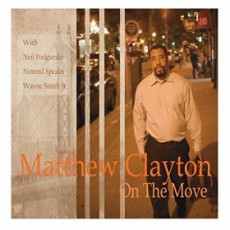
Dr. Matthew Clayton is currently on the faculty of the prestigious Nelly Berman School of Music, is the Director of Jazz Combos at the University of Pennsylvania, has released his debut album “On The Move” last year and continues to perform.
Jazz Is Global – Share
More Posts: saxophone
Daily Dose Of Jazz…
Juul Johansson, better known as Mads Mathias, was born on January 9, 1981 in Silkeborg, Denmark and grew up partly in Tanzania. Growing up in a musical home, his exposure to music began at infancy, picking up the saxophone as his main instrument by age 11. A car accident at seventeen left his right hand injured, losing his index finger and half of two other fingers. Afraid that his days of playing the saxophone were over, he started singing and writing songs instead.
Inspired and influenced by the great jazz vocalists of the past and present from Nat King Cole and Frank Sinatra to Harry Connick Jr, and with a deep respect for the crooner tradition, Mathias is nevertheless an original talent with a unique and effortlessly charming vocal delivery and a skill for writing catchy and memorable, stylishly crafted tunes.
Fortunately the rehabilitation of his hand made him able to play the saxophone again and at age 20 he was entered the Rhythmic Music Conservatory, graduating in 2007.From an early age, Mads Mathias was a part of Jutland jazz scene and today is part of the Danish music scene: As a studio musician, he has contributed to several record releases and frequently used live dates.
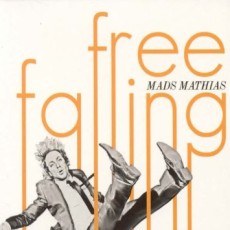
In 2012 released debut solo album Free Falling which won him a Danish Music Award for “Best New Danish Jazz Artist of the Year”, He also won an Honorable Mention Award at one of the world’s largest songwriting competitions for his song “Fool for Love” and Kvintet with the addition of Espen Laub in addition to critical reviews and airplay on Danish radio.
Besides his own Mads Mathias Orchestra, Mads formed Mads Mathias Kvartet with Peter Rosendal, Regin Fuhlendorf and Morten Ankarfeldt and appears with The Danish Radio Big Band, Tivoli Big Band and Six City Stompers. The vocalist, songwriter and saxophonist continues to perform and record.
Put A Dose In Your Pocket
Daily Dose Of Jazz…
Nigel Hitchcock was born in Rustington, England on January 4, 1971 and began to play alto sax at the age of eight. In 1982 he and his elder brother Clive joined the National Youth Jazz Orchestra and after one year he took the lead alto chair, holding it for five years. During this time the orchestra toured with different musicians such as Vic Damone, Buddy Greco and Al Martino.
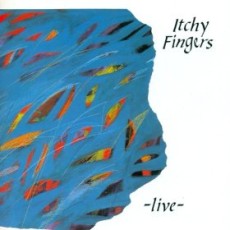
By 16, Hitchcock moved to London and began his career as a session musician and also had recorded TV jingles, movie soundtracks and pop solos. 1989 saw him joining the contemporary saxophone quartet Itchy Fingers and touring throughout Europe and Southeast Asia for 18 months. While with the group he received three jazz awards: the Schlitz Awar for Rising Star; the Cleo Laine Personal Award for Best Young Musician; and the Pat Smythe Trust Award.
With that behind him Nigel left the band and returned to continue working as a pop and session musician. This has given him the opportunity to work with many artists, among other, Tom Jones, Wet Wet Wet, Beverly Craven, Ray Charles, Swing Out Sister, Joe Cocker, Cher, Robbie Williams, Claire Martin, Mark Isham, Mark Knopfler and the London Symphony Orchestra. He has also released his debut solo album “Snake Ranch Sessions”.
Give A Gift Of Jazz – Share
More Posts: saxophone