

Daily Dose Of Jazz…
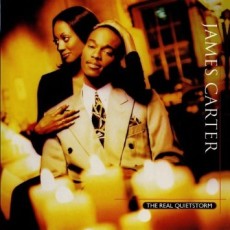
James Carter was born January 3, 1969 in Detroit, Michigan and learned to play under the tutelage of Donald Washington, becoming a member of his youth jazz ensemble Bird-Trane-Sco-NOW!! As a young man, he attended Blue Lake Fine Arts Camp and become the youngest faculty member at the camp. He first toured Europe (Scandinavia) with the International Jazz Band in 1985 at the age of 16.
By 1988, while at the Detroit Institute of Arts, Carter was a last-minute addition for guest artist Lester Bowie, which turned into an invitation to play with his new quintet in New York that following November at the now defunct Carlos 1 jazz club. This New York invite was pivotal in his career, putting him in musical contact with the world, and he moved to the city two years later.
James has won Down Beat magazine’s Critics and Readers Choice award for baritone saxophone several years in a row. He has performed, toured and played on albums with Lester Bowie, Julius Hemphill, Frank Lowe & the Saxemble, Kathleen Battle, the World Saxophone Quartet, Cyrus Chestnut, Wynton Marsalis, Dee Dee Bridgewater and the Mingus Big Band. On his 2000 album Chasin’ the Gypsy, he recorded with his cousin, jazz violinist Regina Carter.
An authority on vintage horns, Carter owns an extensive collection of them. He continues to be a prominent force as a performer and recording artist on the jazz scene since the late 1980s, playing saxophones, flute and clarinets.

Jazz Is Global – Share
Daily Dose Of Jazz…
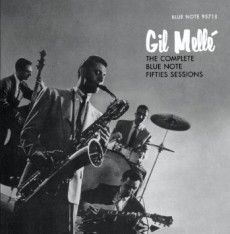
Gil Mellé was born December 31, 1931 in New York City and began his career in jazz as a post-bop baritone and tenor saxophonist, signed with Blue Note at the age of 19, becoming the first Caucasian on the label. Between 1953 and ’57 he recorded five 10” records and his debut 12” LP, Patterns in Jazz for Blue Note. Leaving the label he then went to Prestige releasing three albums.
In the 1950s, Mellé’s paintings and sculptures were shown in New York galleries and he created the cover art for albums by Miles Davis, Thelonious Monk and Sonny Rollins. During this period Gil played the tenor and baritone saxophone with George Wallington, Max Roach, Tal Farlow, Oscar Pettiford, Ed Thigpen, Kenny Dorham and Zoot Sims.
It was Mellé who introduced engineer Rudy Van Gelder to Alfred Lion, Blue Note’s founder, in 1952 after Lion was impressed with the sound of Mellé’s recordings. Abandoning jazz and moving to Los Angeles in the 60s his road led to composing for film and television, and experimenting with electronic music.
As a film and television composer, Mellé was one of the first to use electronic instruments that he built himself, was first to compose a main theme for Rod Serling’s Night Gallery series arranged entirely for electronic instruments as well as The Six Million Dollar Man. Gil composed more than 125 motion picture scores including That Certain Summer, The Andromeda Strain, The Judge and Jake Wyler.
Gil Mellé died of a heart attack on October 28, 2004 in Malibu, California.
Give The Gift Of Knowledge
More Posts: saxophone
Daily Dose Of Jazz…
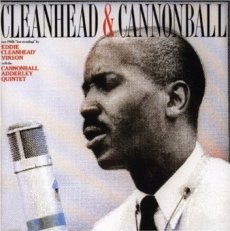
Eddie “Cleanhead” Vinson was born on December 18, 1917 in Houston, Texas and took up the alto saxophone in his youth. By the late 30s he joined Milton Larkin’s Orchestra and at various times sat next to Arnett Cobb, Illinois Jacquet, Cedric Haywood and Wild Bill Davis.
Exiting Larkin’s employment in 1941, Vinson picked up a few vocal tricks while touring with bluesman Big Bill Broonzy, moved to New York City joining and recording with Cootie Williams, and then struck out on his own in 1945, Eddie formed his own large band that performed, recorded and toured over the next ten years.
He signed with Mercury Records, and enjoying a double-sided hit in 1947 with his R&B chart-topper “Old Maid Boogie”, and the song that would prove to be his signature number, “Kidney Stew Blues”.
Vinson leaned towards jazz during the early 50s when his band included John Coltrane. In the early 1960s he moved to Los Angeles working with Johnny Otis and by the late 60s he was touring in a strict jazz capacity with Jay McShann and his career took an upswing. A 1970 appearance at the Monterey Jazz Festival with Otis spurred a bit of a comeback for Vinson and throughout the decade worked high-profile blues and jazz sessions for Count Basie, Johnny Otis, Roomful of Blues, Arnett Cobb and Buddy Tate.
During this period he also composed steadily, including “Tune Up” and “Four”, both of which have been incorrectly attributed to Miles Davis. Vinson recorded extensively during his fifty-odd year career and performed regularly in Europe and the United States.
Jump blues, R&B, jazz and bebop alto saxophonist Eddie “Cleanhead” Vinson, whose nickname came from a hair straightening incident in which the lye destroyed his hair, passed away on July 2, 1988 from a heart attack whilst undergoing chemotherapy in Los Angles, California.
Put A Dose In Your Pocket
Daily Dose Of Jazz…
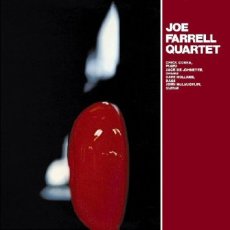
Joe Farrell was born Joseph Carl Firrantello on December 16, 1937 in Chicago Heights, Illinois and learned to play saxophone and flute. During the Sixties he played with The Thad Jones/Mel Lewis Orchestra and recorded with Charles Mingus, Andrew Hill, Jaki Byard, Players Association, and Elvin Jones.
In the 80s Joe released two albums with the group Fuse One, played sax and oboe on pop recordings by Hall & Oates, played with Airto and Flora Purim, his final recordings making their “Three-Way Mirror” project. He is best known for his series of albums as a leader for the CTI record label and for being an original member of Chick Corea’s Return To Forever.
Kanye West, Method Man, Redman and Common have sampled Farrell’s music “Upon This Rock”, without approval that subsequently resulted in a lawsuit by his daughter.
Tenor and soprano saxophonist and flautist Joe Farrell died of bone cancer on January 10, 1986 in Los Angeles, California at age 48.
Take A Dose On The Road
Daily Dose Of Jazz…
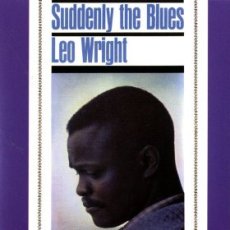
Leo Wright was born on December 14, 1933 in Wichita Falls, Texas and studied saxophone under the tutelage of his father. His first recording was made in 1958 with vibist Dave Pike and the next year played the Newport Festival with bassist Charles Mingus’ group. He followed this joining Dizzy Gillespie’s band in 1959, remaining until 1962.
In addition to his sideman work, Wright established himself as a leader in the early ’60s, leading New York-based bands that included the likes of Ron Carter, Junior Mance, Charlie Persip and Kenny Burrell, among others. In 1960 he signed with Atlantic Records and recorded “Blues Shout” with Mance, Persip, Art Davis and Richard Williams.
After leaving Gillespie’s band, Leo went on to play and record with Lalo Schifrin, Jack McDuff, Antonio Carlos Jobim, Johnny Coles, Gloria Coleman and Jimmy Witherspoon. Moving to Europe he spent time working with George Gruntz, Carmell Jones and Lee Konitz in the group Alto Summit. Eventually he moved to Berlin playing in a studio band and freelancing.
Back in New York by 1978, Wright co-led a studio session Red Garland for Muse Records and then retired from music around 1979. He re-emerged in the mid-’80s and was playing gigs in Paris by 1986, working with Grachan Moncur, Kenny Drew Sr. and Nat Adderley. In the years before his death Leo would perform and record with his wife Elly Wright, making his final recording with her titled “Listen To My lea”.
Leo Wright, bop alto saxophonist and one of the finest flutists jazz has known, passed away on January 4, 1991 in Vienna, Austria.
Inspire A Young Mind