

Daily Dose Of Jazz…
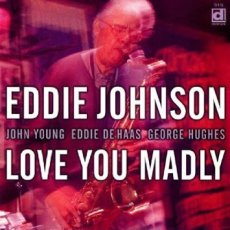
Eddie Johnson was born Edwin Lawrence Johnson on December 11, 1920 in Napoleonville, Louisiana. Gleaning his style from the pre-war tenor greats like Coleman Hawkins and Lester Young, he combined the big brawling sound with romantic lyricism to come into his own.
Settling in Chicago in 1941 the tenor saxophonist freelanced around town until joining Cootie Williams and His Orchestra in 1946, appearing on several Capitol and Majestic recordings. Leaving Williams to join the Louis Jordan outfit he would go on to play with Ella Fitzgerald and Duke Ellington, and regretfully turning down an offer to join the latter’s orchestra.
By the end of the 40’s Eddie retired from music, took a 9-5 job with the city to raise his family and didn’t pick up his horn until some 30 years later when he retired to music. He started playing at Andy’s in Chicago with a quintet and become a member of the Chicago Jazz Orchestra.
He soon became one of the city’s enduring tenor icons alongside Fred Anderson and Von Freeman. As a leader he released two albums, “Indian Summer” on the Nessa label and “Love You Madly” for Delmark. Tenor saxophonist Eddie Johnson passed away on April 7, 2010 at age 89.

Put A Dose In Your Pocket
More Posts: saxophone
Daily Dose Of Jazz…
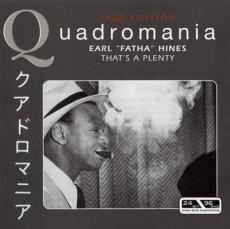
Cecil Irwin was born December 7, 1902 in Chicago, Illinois. Learning to play clarinet and tenor saxophone, his career began playing with Carroll Dickerson, Erskine Tate and Junie Cobb. He would then join Earl “Fatha” Hines in 1928 in the reed section and arranging for the big band.
During this period Cecil recorded on more than a dozen sessions with Hines in a variety of ensembles with which his playing and arranging is prominent. Irwin also freelanced as a sideman working and recording with New Orleans notables Johnny Dodds, Jabbo Smith, King Oliver, and also with Stephane Grappelli and Joe Venuti.
While on tour driving outside Des Moines, Iowa, tenor saxophonist and arranger Cecil Irwin perished in a car accident at the age of 32 on May 3, 1935, cutting short a promising career.
Dose A Day – Blues Away
Daily Dose Of Jazz…
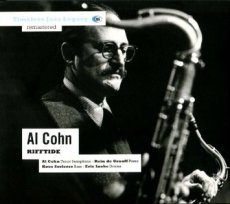
Alvin Gilbert Cohn was born on November 24, 1925 in Brooklyn, New York. He was initially known in the 1940s for playing in Woody Herman’s Second Herd as one of the Four Brothers, along with Zoot Sims, Stan Getz and Serge Chaloff. He contributed arrangements to the band until he left and formed a long association co-leading a quintet with Zoot while also playing with a variety of other musicians.
The partnership that began in 1956 lasted until Sims’ death and yielded one of their best albums on Mercury Records called You ‘n’ Me in 1960 and also backed Jack Kerouac on a few of his recordings. An accomplished arranger, Cohn worked Broadway arranging for such shows as Raisin’ and Sophisticated Ladies, worked with Linda Rondstadt, and appeared with Elvis Presley at Madison Square Garden.
Al Cohn, a tenor saxophonist, who had a reputation as a lyrical flowing soloist, passed away in Stroudsburg, Pennsylvania on February 15, 1988.
Take A Dose On The Road
More Posts: saxophone
Daily Dose Of Jazz…
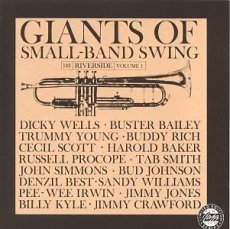
Cecil Scott was born in Springfield, Ohio on November 22, 1905 and played clarinet and tenor saxophone as a teenager with his brother, drummer Lloyd Scott. They played together as co-leaders through the end of the 1920s, holding residencies in Ohio, Pittsburgh, Pennsylvania and in New York City at the Savoy Ballroom. Among the members of this ensemble were Dicky Wells, Frankie Newton, Bill Coleman, Roy Eldridge, Johnny Hodges and Chu Berry.
By 1929 Cecil took full music control over the group in 1929, though Lloyd continued to manage the group. However, he was seriously injured in an accident in the early 1930s that temporarily sidelined his career. After recovery, he would play in different groups through the Thirties with Ellsworth Reynolds, Teddy Hill, Clarence Williams and Teddy Wilson accompanying Billie Holiday.
The early 1940s saw Scott playing with Albert Socarras, Red Allen, and Willie “The Lion” Smith prior to reassembling his band that hired at times Hot Lips Page and Art Hodes and towards the end of the decade worked with Slim Gaillard.
In 1950 Cecil disbanded the group, worked with Jimmy McPartland as a sideman, occasionally led groups and continued to play as a sideman up until the time of his death on January 5, 1964 in New York City. The clarinetist, tenor saxophonist and bandleader is credited on some 75 albums.
Inspire A Young Mind
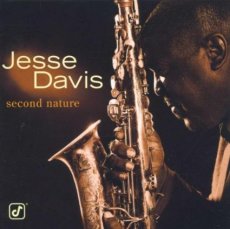
Daily Dose Of Jazz…
Jesse Davis was born on November 9, 1965 in New Orleans, Louisiana and showed signs of musical talent at a very young age. When he was eleven, his brother Roger, an accomplished tuba player bought Jesse a saxophone and taught him how to play it. He went on to study with Ellis Marsalis, whose teachings inspired him to become a music student at North-Eastern Illinois University on a full scholarship. He eventually transferred to William Patterson College in New Jersey, then to the New School in New York City, enrolling in their Jazz and Contemporary Music Program under the tutelage of Ira Gitler.
After graduating, alto saxophonist Jesse Davis embarked on a productive jazz career and has recorded eight albums on the Concord Jazz label. He has collaborated with such artists as Jack McDuff, Major Holley, Cecil Payne, Jay McShann, Cedar Walton, Benny Golson, Illinois Jacquet Kenny Barron and Roy Hargrove amongst a long list of notables.
Davis has received a “Most Outstanding Musician award” from magazine, won several awards at jazz festivals for outstanding soloist, toured Europe several times fronting his quartet and a member of the Sax Machine and made his debut as an actor in the celebrated Robert Altman movie “Kansas City”.
Jesse was equally influenced by Charlie Parker, Cannonball Adderley and Sonny Stitt and contributes a flawless technique and a natural feeling for the blues to every one of his performances as he continues to perform, record and tour.
Dose A Day – Blues Away
More Posts: saxophone