

Daily Dose Of Jazz…
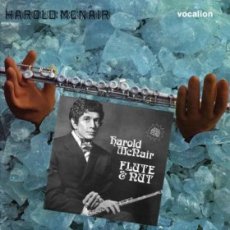
Harold McNair was born on November 5, 1931 in Kingston, Jamaica and started his instrumental training at the Alpha Boys School. Recording and playing mostly Caribbean music styles in the Bahamas, the first decade of his career he was known as “Little G”. During this time he sang and played both alto and tenor saxophones.
McNair played a calypso singer in the 1958 film Island Women and by 1960 he was in Miami recording his first album as a leader “Bahama Bash”, with a mixture of jazz and calypso numbers. It was around this time that he began playing the flute, which would eventually become his signature instrument. Though he took a few lessons in New York, he was largely self-taught.
Departing for Europe later in 1960 Harold toured with Quincy Jones, worked on film and TV scores in Paris, then settled in London gaining a formidable reputation and leading a regular gig at Ronnie Scott’s nightclub
Drawing the admiration of bassist Charles Mingus, in London to shoot the 1961 motion picture All Night Long, McNair became a member of the rehearsal quartet and appeared on the soundtrack on the now famous Mingus composition “Peggy’s Blue Skylight”.
A brief return to The Bahamas produced his first all jazz album “Up in the Air with Harold McNair”, then back to permanent London residence to release his first UK album of hard swinging standards as a leader, “Affectionate Fink” on Island Records with Ornette Coleman.
He signed with RCA and released his most famous composition “The Hipster” in 1968 that has become a playlist fixture. He continued to perform and record into 1971 working and recording with the likes of Philly Joe Jones, Eddie “Lockjaw” Davis, Blossom Dearie, Ginger Baker’s Air Force big band and John Cameron as both leader and sideman.
Harold McNair, flautist, alto and tenor saxophonist whose unique phrasing on the flute in particular also led to great demand for his services among non-jazz musicians, passed away of lung cancer in Maida Vale, North London on March 7, 1971 at age 39.

Put A Dose In Your Pocket
Daily Dose Of Jazz…
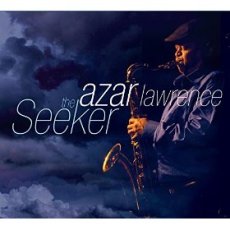
Azar Lawrence was born in Los Angeles, November 3, 1953 and started playing drums at the age of three. By five he began formal studies on piano and violin, encouraged by his mother, who was an elementary school music teacher. At 11, while performing with the USC Junior Orchestra, he became enamored with the sound of the alto saxophone and his father, a stalwart supporter of his son’s musical endeavors, promptly bought him a Selmer and his fate was sealed.
Playing in the Dorsey High Jazz Band, Lawrence met Herbert Baker, a piano prodigy who was playing with Freddie Hubbard. It was Baker who first introduced Lawrence to piano master Horace Tapscott, an important mentor who helped shape Lawrence’s musical philosophy and prepared him for the formidable task of playing with Elvin Jones.
Becoming a sideman with McCoy Tyner, replacing John Coltrane, he also worked with Miles Davis, Freddie Hubbard and Woody Shaw, released his album Bridge to the New Age in 1974 with Jean Carn, Julian Priester, Hadley Caliman and Ndugu Chancler followed by his sophomore project Summer Solstice working with Ron Carter and Albert Dailey.
He has release five albums as a leader and went on to work with Henry Franklin, Gene Harris, Patrice Rushen, Phyllis Hyman, Earth Wind & Fire, Lee Ritenour, Paul Jackson, Stanley Turrentine and Harvey Mason.
However, success has its monkey and Lawrence fell victim to drug abuse and all but disappeared from the jazz scene working only occasionally with Billy Higgins when he could borrow a saxophone. He eventually pulled himself into sobriety and embraced a new period of creativity releasing Mystic Journey in 2010 and the tenor saxophonist continues to perform.
Take A Dose On The Road
More Posts: saxophone
Daily Dose Of Jazz…
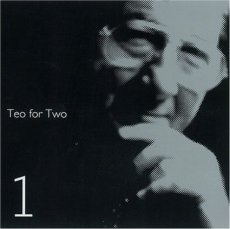
Teo Macero was born Attilio Joseph Macero on October 30, 1925 in Glen Falls, New York. After serving in the Navy he moved to New York City in 1948, attended the Julliard School of Music, studied composition and graduated from with Bachelor and Master degrees.
In 1953, Macero co-founded Charles Mingus’ Jazz Composers Workshop, and became a major contributor to the New York City avant-garde jazz scene. As a composer, Macero wrote in an atonal style as well as in third Stream, a synthesis of jazz and classical music. He performed live, and recorded several albums with Mingus and the other Workshop members over the next three years, including Jazzical Moods in 1954 and Jazz Composers Workshop the next year.
Macero found greater fame as a producer joining Columbia Records in 1957 producing hundreds of records while at the label, working with dozens of artists including Duke Ellington, Ella Fitzgerald, Johnny Mathis, Count Basie, Dave Brubeck, Tony Bennett, Dave Brubeck, Tony Bennett and Stan Getz, and was responsible for signing Mingus, Thelonious Monk and Charlie Byrd.
Over the course of his twenty-year tenure as a producer at Columbia he produced most of the Miles Davis catalogue including most notably Kind Of Blue and Bitches Brew along with Dave Brubeck’s Time Out, all three of which became three of the most influential jazz albums of all time. Beyond jazz, he produced a number of Broadway original cast recordings including A Chorus Line and Bye Bye Birdie as well as the soundtrack to the film The Graduate.
After his tenure at Columbia, Macero continued as a player and producer on other projects, working with Herbie Hancock, Michel Legrand, Wallace Roney, Shirley MacLaine, Vernon Reid, Robert Palmer and DJ Logic.
He recorded several albums as a leader and as a sideman with Mingus, contributed compositions to other albums, was included as an alternate soundtrack to the 1958 short experimental film Bridges-Go-Round. In the 1970s and 1980s, Macero again released a handful of his own albums, including Time Plus Seven, Impressions of Charles Mingus, and Acoustical Suspension, before founding his own label, Teorecords, in 1999. Subsequently, he released over a dozen albums of original compositions, and continued to produce reissues of Miles Davis and other artists for various record companies.
Teo Macero, saxophonist, composer and producer passed away on February 19, 2008.
Put A Dose In Your Pocket
More Posts: saxophone
Daily Dose Of Jazz…
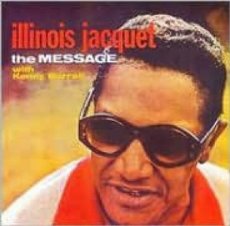
Jean-Baptiste Illinois Jacquet was born October 30, 1922 in Broussard, Louisiana to a Sioux mother and Creole father and bandleader. They moved to Houston, Texas when he was just an infant and grew up performing in his father’s band primarily on the alto saxophone.
At 15, Jacquet began playing with the Milton Larkin Orchestra, a Houston-area dance band. In 1939, he moved to Los Angeles, California where he met Nat King Cole and would sit in with the trio on occasion. In 1940, Cole introduced Jacquet to Lionel Hampton who hired him and asked him to switch to tenor.
In 1942, at age 19, Illinois soloed on the Hampton Orchestra’s recording of “Flying Home”, one of the very first times a honking tenor sax was heard on record. The song and solo became such a hit that every sax player who followed, notably Arnett Cobb, Dexter Gordon, Jimmy Forrest, Eddie “Lockjaw” Davis and Sonny Rollins, memorized them.
Quitting the Hampton band in 1943 and joined Cab Calloway’s Orchestra appearing with the band in Lena Horne’s movie Stormy Weather. Returning to California in 1944 he started a small band with his brother Russell and a young Charles Mingus.
It was at this time that Jacquet appeared in the Academy Award-nominated short film Jammin’ the Blues with Lester Young. He also appeared at the first Jazz at the Philharmonic concert and in 1946 he moved to New York City and joined Count Basie, replacing Young.
Through the 1960s and ‘70s he continued to perform mostly in Europe in small groups through the 1960s and 1970s, then led the Illinois Jacquet Big Band from 1981 until his death. He was the first jazz musician to be an artist-in-residence at Harvard University in 1983, played “C-Jam Blues” with President Clinton on the White House lawn during Clinton’s inaugural ball in 1993.
Illinois Jacquet, a skilled and melodic improviser, and a pioneer of the honking tenor saxophone that became the hallmark of early rock and roll, passed away of a heart attack in his home in Queens, New York on Thursday, July 22, 2004. He was 81 years of age.
Jazz Is Global – Share
Daily Dose Of Jazz…
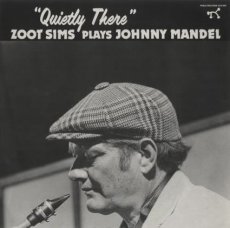
John Haley “Zoot” Sims was born on October 29, 1925 in Inglewood, California to vaudeville parents. Growing up in a performing family he learned to play both drums and clarinet at an early age along with steps taught him by his hoofer father.
Learning to play saxophone he followed in the footsteps of Lester Young, developing into an innovative saxophonist. Always fond of the higher register of the tenor sax, Sims was considered one of the strongest swingers in the field by his peers.
By the ‘50s and into the ‘60s Zoot had a long and successful partnership as co-leader of a quintet with tenor saxophonist Al Cohn, recording under the name of al & Zoot and a favorite at The Half Note club in New York. He added alto and soprano saxophones over the course of his career playing with renowned bands such as Benny Goodman, Artie Shaw, Stan Kenton and Buddy Rich. Zoot also play with Gerry Mulligan and later with Mulligan’s Concert Jazz Band.
During this period he recorded a series of albums for Norman Granz on his Pablo Records label and played on a few of Jack Kerouac’s recordings. However, it was early in his career that he acquired his nicknamed “Zoot” while working with the Kenny Baker band in California and was later appropriated for the sax-playing Muppet.
Zoot Sims, tenor and soprano saxophonist passed away in New York City on March 23, 1985.
Give The Gift Of Knowledge
More Posts: saxophone