

Daily Dose Of Jazz…
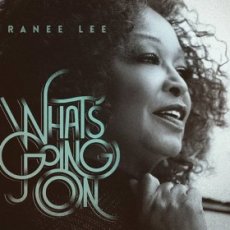
Ranee Lee was born October 26, 1942 and raised in Brooklyn, New York. She performed as a singer while in high school and after graduation she began her professional career as a dancer, and during the Seventies began playing drums and saxophone with various touring groups in the U.S. and Canada.
Settling in Montreal she turned to the stage starring in Lady Day as Billie Holiday, winning a Dora Mavor Moore Award and singing took over her past musical endeavors. She began recording and released her first album Deep Song in 1989 with bassist Milt Hinton and Oliver Jones followed up with her sophomore project Jazz On Broadway with Red Mitchell.
Over the years with numerous releases Ranee has become one of Canada’s most popular jazz vocalists and was named a member of the Order of Canada in 2006, the second highest order of merit. Her music appears in the animated short film, Black Soul, and has won a 2010 Juno Award for her album Ranee Lee Lives Upstairs.
An accomplished author, Lee has written children’s books, has performed on stage, television, film and jazz festivals, has sat on the faculty of the University of Laval in Quebec City for seven years and The Schulich School of Music of McGill University. She continues to record, perform and tour.

Inspire A Young Mind
Daily Dose Of Jazz…
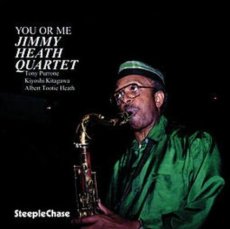
Jimmy Heath was born James Edward Heath on October 25, 1926 and he originally played alto saxophone until influenced by Charlie Parker’s work with Howard McGhee and Dizzy Gillespie, he switched to tenor.
He shared a short tenure with Miles Davis’s group in 1959, replacing John Coltrane, then also worked with Kenny Dorham and Gil Evans, and composed most of the 1956 Chet Baker/Art Pepper album Playboys. During the 1960s, he frequently worked with Milt Jackson and Art Farmer.
Jimmy recorded a string of impressive albums for Riverside and worked as a freelance sideman and arranger. He has recorded as a leader for Cobblestone, Muse, Xanadu, Landmark, and Verve. By 1975, he and his brothers formed The Heath Brothers with pianist Stanley Cowell.
As an educator, in the 1980s, he joined the faculty of the Aaron Copland School of Music at Queens College in the City University of New York. With the rank of Professor, he led the creation of the Jazz Program at Queens College along with teaching at Jazzmobile. He served on the Board of the Louis Armstrong Archives, and the restoration and management of the Louis and Lucille Armstrong Residence in Corona, Queens.
Tenor saxophonist, composer and arranger Jimmy Heath, nicknamed “Little Bird” is the brother of Percy and Albert and the father of James Mtume and is a 2003 recipient of the NEA Jazz Masters Award and honorary Doctorate in Human Letters.
Jazz Is Global – Share
More Posts: saxophone
Daily Dose Of Jazz…
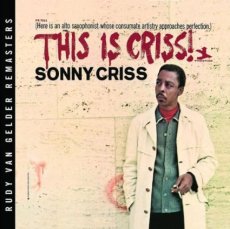
William “Sonny” Criss was born on October 23, 1927 in Memphis, Tennessee and at the age of 15 moved to Los Angeles. Developing a concise, bluesy tone he easily fit into the bands he drifted between such as Howard McGhee’s playing alongside Charlie Parker, Johnny Otis and Billy Eckstine.
As his ability continued to increase his first major break came in 1947 with Norman Granz, playing on a number of jam sessions. In 1956 he was signed to Imperial Records, recorded a number of underground classics like “Jazz U.S.A.”, “Go Man” and “Sonny Criss Play Cole Porter” that featured Sonny Clark on piano.
He would go on to record for Muse, Impulse and Prestige record labels, worked with Wynton Kelly, rooted himself in the hard bop tradition recording charts by Horace Tapscott and also several well-acclaimed albums like Sonny’s Dream.
Alto saxophonist Sonny Criss settled in Los Angeles and continued to perform and record but by 1977 had contracted stomach caner. Unable to bear the pain, he committed suicide by gunshot on November 19, 1977. after contracting stomach cancer earlier that year and unable to bear the painful condition he was experiencing.
Give The Gift Of Knowledge
Daily Dose OF Jazz…
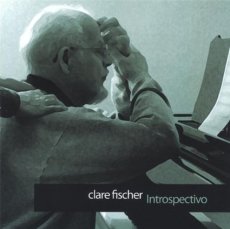
Clare Fischer was born October 22, 1928 in Durand, Michigan and started general music study in grade school with violin and piano as his first instruments. By age 7 he was picking out four-part harmony on the piano and by 12 was composing classical music and creating instrumental arrangements for dance bands.
In high school he added cello, clarinet and saxophone to his arsenal of instruments and studied music theory, harmony and orchestration privately. He started his own band at 15, writing all the arrangements, went on to college studying music composition and theory as a piano major. After graduation and a stint in the Army as the arranger for the U.S. Military Academy Band at West Point, N.Y., he returned to Michigan State and received his Masters in 1955.
He went on to arrange for the vocal quartet Hi-Lo’s that would later become a major influence on Herbie Hancock, would record under his own name in 1962 for Pacific Jazz, play with Bud Shank, Joe Pass and Cal Tjader among others, arrange for Sergio Mendes and Willy Ruff, began playing organ and composed his most famous compositions, Pensativa and Morning.
By the mid-‘70s Fischer was pioneering the electric keyboard, reconnected with Tjader started his group Salsa Picante, won a Grammy for his album 2+2 and Free Fall, forayed into R&B doing orchestral sweeteners, worked with Rufus with Chaka Khan, The Jacksons, Earl Klugh, The Debarges, Shot-gun and Atlantic Starr and pop artists such as Paul McCartney, Prince, Celine Dion and Robert Palmer, picking up numerous gold records.
From the Eighties on Clare has been commissioned to score symphonic work using Duke Ellington and Billy Strayhorn themes, working with Branford Marsalis, the Netherlands Metropole Orchestra, arranged for Spike Lee’s Girl 6, has conducted clinics and master classes at numerous universities, and continued to record in small group and orchestral settings until his death in Los Angeles, California on January 26, 2012 at age 82..
Take A Dose On The Road
More Posts: arranger,bandleader,composer,keyboard,piano,saxophone,synthesizer
Daily Dose Of Jazz…
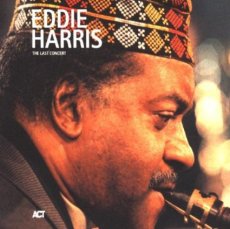
Eddie Harris was born on October 20, 1934 in Chicago, Illinois to a Cuban father and New Orleans mother. He studied music at DuSable High School, then Roosevelt University becoming proficient on piano, vibraphone and tenor saxophone and playing professionally with Gene Ammons.
After graduating and a stint in the 7th Army Band playing alongside Leo Wright, Don Ellis and Cedar Walton, he worked in New York City prior to his Chicago return. He signed with Vee Jay Records and released his debut “Exodus To Jazz” and his jazz arrangement of the theme to Exodus was so heavily played on radio, it became the first jazz record ever to be certified gold.
Throughout his career he recorded for Columbia and Atlantic Records, ventured into electric piano and Varitone saxophone mixing jazz with funk on albums like “The Electrifying Eddie Harris” and crossing into rhythm and blues markets. By 1969 he would perform with Les McCann at Montreux with an unrehearsed band that produced the seminal work Swiss Movement that became one of the best selling jazz albums ever.
In the early to mid ‘70s Harris experimented with altering instruments like his reed trumpet with a sax mouthpiece, saxobone with a trombone mouthpiece and guitorgan, a guitar/organ combination. He also forayed into singing blues, played with jazz-rock, and comic R&B consisting of mostly stand-up comedy all of which ultimately declined his popularity.
He would work with Horace Silver in the ‘80s, record regularly well into the 1990s, tour and perform in Europe and return to hard bop. His move to Los Angeles in the mid-1970s allowed him the opportunity to provide much of the music for The Bill Cosby Show.
Eddie Harris, tenor saxophonist and multi-instrumentalist and composer of “Freedom Jazz Dance” popularized by Miles Davis in the Sixties and also the tune “Listen Here”, passed away from bone cancer and kidney disease at the age of 62 on November 5, 1996.
Inspire A Young Mind
More Posts: organ,piano,saxophone,vibraphone