

Daily Dose Of Jazz…
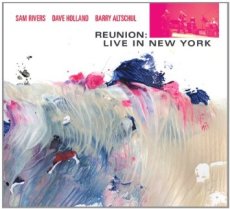
Samuel Carthorne Rivers was born September 25, 1923 in Enid, Oklahoma, the son of a gospel musician who sung with the Fisk Jubilee Singers and the Silverstone Quartet which exposed a young Sam to music at an early age. By 1947 he was in Boston studying Alan Hovhaness at the Boston Conservatory.
Active in jazz since the early 1950s, by the end of the decade he was performing with then 13 year-old drummer Tony Williams. In the mid Sixties he held a short-lived tenure with Miles Davis, producing the album Miles In Tokyo. He went on to sign with Blue Note leading four dates, his first being Fuschia Swing Song and contributing many more as a sideman.
A multi-instrumentalist, Rivers who plays soprano and tenor saxophones, bass clarinet, flute, harmonica and piano, is also a composer. Rooted in bebop and equally adept at free jazz he has performed and recorded with the likes of Quincy Jones, Herb Pomeroy, Tadd Dameron, Jaki Byard, Freddie Hubbard, Herbie Hancock, Andrew Hill, Larry Young and many others.
The 70s saw the rise of the loft era and Rivers ran RivBea in New York’s NoHo district where numerous performance lofts emerged. He continued to perform and record for a variety of labels including several albums for Impulse Records, two big band albums for RCA Victor, and joined Dizzy Gillespie’s band near the end of the trumpeter’s life.
With a thorough command of music theory, orchestration and composition, Rivers has been an influential and prominent artist in jazz music. He performs regularly with his RivBea Orchestra and Trio and is currently recording new works. Sam Rivers, who played soprano and tenor saxophones, bass clarinet, flute, harmonica and piano in the avant-garde and free jazz arenas, passed away on December 26, 2011 in Orlando, Florida at age 88.

Put A Dose In Your Pocket
Daily Dose Of Jazz…
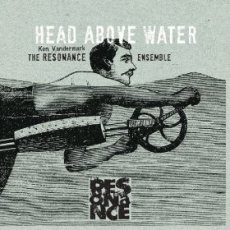
Ken Vandermark was born September 22, 1964 in Warwick, Rhode Island but grew up in Boston, Massachusetts. Mostly a self-taught musician, the saxophonist studied intermittently under George Garzone in the early 80s. He performed and led groups while in high school and at McGill University in Montreal, graduated in 1986.
Returning to Boston Ken co-led the groups Lombard Street, Mr. Furious and Barrage Double incorporating “suite forms” into his arrangements and composing pieces dedicated to other Boston bands, thus, developing broad, free-ranging charts as his signature especially in large ensemble settings.
Vandermark moved to Chicago in 1989 and has performed or recorded with many musicians such as Fred Anderson, Joe Morris, Fredrik Ljungkvist and Yakuza to name a few. He first gained widespread attention working with the NRG Ensemble from 1992 to 1996, went on to co-lead DKV Trio, Free Fall, Territory Band, the Vandermark Five and some six more groups, collaborated with Joe Harriott, released his album Furniture Music in 2002 marking his debut as an accomplished soloist and has since concentrated on his own compositions.
A fixture on the Chicago music scene Vandermark plays tenor and baritone saxophone, clarinet and bass clarinet and has received critical praise for his performing multilayered compositions that typically balance intricate orchestration with passionate improvisation. He was awarded a 1999 MacArthur Fellowship, won the Cadence magazine poll for Best Artist and Best Recording. He continues to perform and record.
Dose A Day – Blues Away
Daily Dose Of Jazz…
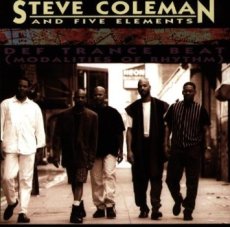
Steve Coleman was born on born September 20, 1956 in Chicago, Illinois and grew up in the musically rich Southside. As a child, he was in little singing groups, imitating the Jackson 5, singing in church and he started playing alto saxophone at the age of 14. About three years later he began to study the music of Charlie Parker, Sonny Rollins and John Coltrane and other masters.
He spent two years at Illinois Wesleyan University, transferred to Roosevelt University to concentrate on Chicago’s musical nightlife, having been introduced to Chicago premier saxophonists Von Freeman, Bunky Green and Sonny Stitt are just a few names from whom he learned.
Moving to New York in 1978 he joined the big bands of Thad Jones/Mel Lewis, Slide Hampton, Sam Rivers, and Cecil Taylor and was soon recording as a sideman with David Murray, Doug Hammond, Dave Holland, Mike Brecker and Abbey Lincoln. During this period he was playing the club circuit and putting a band together that would evolve into the Five Elements. He would go on to cofound the M Base movement with Cassandra Wilson and Greg Osby.
Influenced by Parker and Coltrane, gleaning improvisation from Von Freeman, composition from Sam Rivers and conceptual thinking from Doug Hammond, the alto saxophonist has added to his arsenal West African music, non-western cultures, Black American rhythm and blues and even nature by studying the flight patterns of bees. Steve Coleman continues to perform, record and tour and compose within the construct of contemporary jazz.
Give A Gift Of Jazz – Share
More Posts: saxophone
Daily Dose Of Jazz…
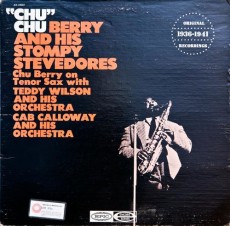
Chu Berry was born Leon Brown Berry on September 13, 1908 in Wheeling, West Virginia. Following in his piano playing stepsister’s footprints, Chu became interested in music at an early age, playing alto saxophone at first with local bands. It wasn’t until he heard Coleman Hawkins was he inspired to take up the tenor.
Most of Berry’s abbreviated career was spent in the sax sections of major swing bands of Sammy Stewart, Benny Carter, Teddy Hill, Fletcher Henderson and Cab Calloway. He recorded with Count Basie, Bessie Smith, Mildred Bailey, The Chocolate Dandies, Teddy Wilson, Billie Holiday and Lionel Hampton among others.
Although Berry based his style on Hawkins’ playing, the older man regarded Berry as his equal, saying, “‘Chu’ was about the best.” His mastery of advanced harmony and his smoothly-flowing solos on up-tempo tunes influenced such young innovators as Dizzy Gillespie and Charlie Parker and Chu was one of the jazz musicians who took part in the jam sessions at Minton’s Playhouse in New York that led to the development of bebop.
Collaborating with lyricist Andy Razaf, he composed “Christopher Columbus”, a tune that was the last important hit recording of the Fletcher Henderson orchestra. From 1937 to 1941 he would be associated with Cab Calloway until his death from complications stemming from a car accident. On October 30, 1941, tenor saxophonist Chu Berry passed away. He was just 33 years old. Author Jack Kerouac immortalized him in the beginning of his novella “The Subterraneans”.
Give A Gift Of Jazz – Share
More Posts: saxophone
Daily Dose OF Jazz…
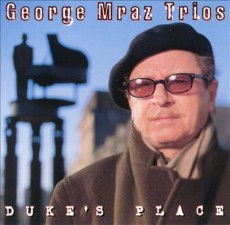
George Mraz was born Jiří Mráz on September 9, 1944 in Pisek Protectorate of Bohemia and Moravia, now the Czech Republic. He began his musical studies on violin at age seven and started playing jazz in high school on alto saxophone. He attended the Prague Conservatory in 1961 studying bass violin and graduating in 1966. During that time he was performing with the top jazz groups in Prague.
His first introduction to jazz was through the Voice Of America radio and Louis Armstrong which opened him to a vast new world of possibilities across the ocean. After finishing his studies George moved to Munich and played clubs and concerts throughout Germany and Middle Europe with Benny Bailey, Carmel Jones, Leo Wright, Mal Waldron, Hampton Hawes, Jan Hammer and others.
Mraz was greatly influenced by Ray Brown, Scott LaFaro, Paul Chambers, and Ron Carter. In 1968 he ventured to Boston on a scholarship to the Berklee School of Music and played at Lennie’s on the Turnpike and the Jazz Workshop with such artists as Clark Terry, Herbie Hancock, Joe Williams and Carmen McRae. By ’69 he was playing with Dizzy Gillespie and then on the road with Oscar Peterson for two years followed by a six- year residency with the Thad Jones/Mel Lewis Orchestra.
From the late seventies on he worked with Stan Getz, New York Jazz Quartet, Chet Baker, Hank Jones, Paul Motian, Zoot Sims, Bill Evans, John Abercrombie, Joe Lovano, Carmen McRae, Joe Henderson, Tommy Flanagan and the list of jazz luminaries is to long to elaborate. He was a member of the New York Jazz Quartet and Quest. Bassist and alto saxophonist George Mraz continues to perform, record and tour.
Take A Dose On The Road