

Daily Dose Of Jazz…
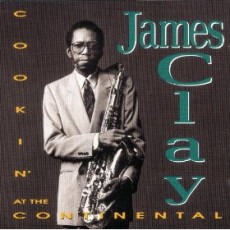
James Earl Clay was born on Sept. 8, 1935 in Dallas, Texas. While in school Clay played alto saxophone, became a professional musician, and played with Booker Ervin and other local Dallas bands. An early associate of Ornette Coleman, he also played with Don Cherry and David “Fathead” Newman.
He later went to California where he played in 1957 in Red Mitchell’s quartet and on recordings with Lawrence Marable but by the end of the year was back in Dallas. Clay served in the Army in 1959.
As a leader he recorded for the Antilles, Jazz West, Fresh Sounds, Polygram and OJC record labels. Jazz flautist, tenor and alto saxophonist James Clay, known for his appealing tone and bop style passed away in Dallas on January 1, 1994.

Dose A Day – Blues Away
Daily Dose Of Jazz…
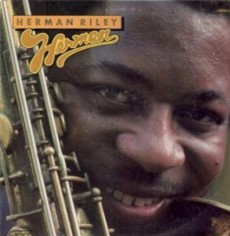
Herman Riley was born on August 31, 1933 in Algiers, Louisiana across the river from the French Quarter in New Orleans into a family setting where his mother Nell Brooks was a hard swinging jazz and gospel singer. He attended the L.B. Landry High School and under the influence of his music teacher William Houston, heard local jazzmen playing at assemblies and school dances.
In his mid-teens Herman took to the saxophone after seeing Illinois Jacquet but inspired by the locals he organized a jazz combo with his friends and took part in his school orchestra and marching band. It wasn’t long before he “was on the street, playing professionally”, taking short-lived gigs with R&B bandleaders like Ivory Joe Hunter, Guitar Slim and Paul Gayten. By the time he was majoring on cello and bassoon at Southern University in Baton Rouge, Louisiana, Riley had completed eight years of study of European music.
After two non-musical years in the US army and a short spell in New York, he ended up in San Diego, California, pursuing his music studies at City College, while playing in clubs and taking private lessons. After winning an award as outstanding solo artist at the 1962 California colleges’ jazz festival at Monterey, Riley felt confident enough to make for Los Angeles.
Recruited for some of LA’s better jazz groups, he played and recorded with Dolo Coker, Bobby Bryant, Smokey Robinson and the Miracles, Martha and the Vandellas, The Supremes, Della Reese, Sammy Davis Jr, Gene Ammons, Bobby Hutcherson and Blue Mitchell among others. Over the course of his illustrious career Riley added flute, oboe, cor anglais, clarinet and bass clarinet to the arsenal of saxophones that he carried to meet the demands of studio sessions. He toured with Quincy Jones, Benny Carter, Lionel Hampton, Mercer Ellington, Monk Montgomery, Jimmy Smith, Etta James, as well as with the Count Basie, Bill Berry and Juggernaut big bands. Quiet in manner and self-effacing, bebop and blues tenor saxophonist Herman Riley died on April 14, 2007 at the age of 73.
Inspire A Young Mind
More Posts: saxophone
Daily Dose Of Jazz…
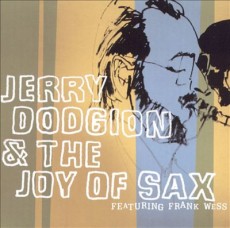
Jerry Dodgion, born August 29, 1932 in Richmond, California, played alto saxophone in middle school and began working around the San Francisco area in the Fifties. He played in bands with Rudy Salvini, John Coppola, Chuck Travis and Gerald Wilson. He worked with the Vernon Alley Quartet, accompanying Billie Holiday in 1955.
Dodgion also played with Benny Carter and Red Norvo in the 50s, Benny Goodman and Oliver Nelson in the Sixties, Thad Jones, and Mel Lewis from 1965-1979, as well as Herbie Hancock, Duke Pearson, Blue Mitchell, Count Basie and Marian McPartland, as well as Etta Jones, Johnny Hammond, Yusef Lateef, Shirley Scott and numerous others.
A long career as a sideman, Jerry recorded up to 2004 only two dates as leader or co-leader: two tracks in 1955 for Fantasy Records with Sonny Clark on piano and an album in 1958 for World Pacific together with Charlie Mariano.
Dodgion’s first true release as a bandleader came in 2004 with an ensemble called The Joy of Sax, featuring saxophonists Frank Wess, Brad Leali, Dan Block, Jay Brandford, Mike LeDonne, Dennis Irwin and Joe Farnsworth. The saxophonist and flautist continues to perform and record.
Jazz Is Global – Share
Daily Dose Of Jazz…
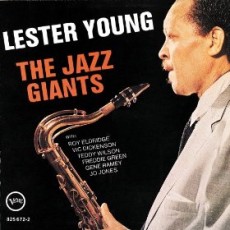
Lester Willis Young was born on August 27, 1909 in Woodville, Mississippi and grew up in a musical family. His father, Willis Handy Young, was a respected teacher, his brother Lee Young was a drummer, and several other relatives performed music professionally. His family moved to New Orleans, Louisiana when he was an infant, then later to Minneapolis, Minnesota. His father was a musician, who would teach his son to play the drums, trumpet and violin in addition to the saxophone.
Playing in his family’s band, known as the Young Family Band, vaudeville and carnivals were their circuit but in 1927 he left, refusing to play the Southern states under the racial segregation of Jim Crow laws.
Settling in Kansas City, Missouri in 1933, he briefly played in several bands, then rose to prominence with Count Basie. He would leave Basie to replace Coleman Hawkins in the Fletcher Henderson orchestra, followed by a stint with Andy Kirk, then back to Basie. Lester made small group recordings for Commodore Records, and the sessions became known as the Kansas City Sessions by the Kansas City Seven, playing clarinet and tenor.
After Young’s clarinet was stolen in 1939, he abandoned the instrument until about 1957. He left the Basie band in late 1940, subsequently led a number of small groups that often included his brother, accompanied Billlie Holiday in a couple of studio sessions in 1940 and 1941 and also made a small set of recordings with Nat King in June 1942. It was Holiday who gave Young the nickname “Pres”, short for President.[
In December 1943 Young returned to the Basie fold for a 10-month stint, drafted into the army during WWII and after discharge joined Norman Granz’s Jazz at the Philharmonic troupe in 1946 and for the next 12 years toured regularly with them. He recorded for Verve, Aladdin and Savoy records through the Forties.
From around 1951 Young’s level of playing declined more precipitously as his drinking increased. His playing showed reliance on a small number of clichéd phrases and reduced creativity and originality. His playing and health went into a crisis, culminating in a 1955 hospital admission following a nervous breakdown, emerging improved in 1956. He recorded and toured with Miles Davis and the Modern Jazz Quartet through Europe and had a successful stint in Washington, DC with the Bill Potts Trio.
By 1957 Lester appeared with Billie Holiday, at a time when both were in their declining years, but both gave brilliant and moving performances with Holiday’s tune “Fine and Mellow”. By this time his alcoholism had a cumulative effect and he was eating significantly less, drinking more and more, and suffering from liver disease and malnutrition.
He made his final studio recordings and live performances in Paris in 1959 with drummer Kenny Clarke at the tail end of an abbreviated European tour during which he ate next to nothing and virtually drank himself to death. He died in the early morning hours of March 15, 1959, only hours after arriving back in New York, at the age of 49.
Give The Gift Of Knowledge
Daily Dose Of Jazz…
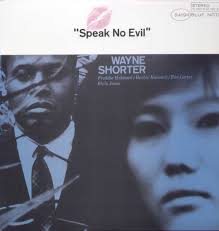
Wayne Shorter was born August 25, 1933 in Newark, New Jersey and attended Newark Arts High School where his love of music flourished under the encouragement of his father to take up the saxophone. In his youth Shorter had acquired the nickname “Mr. Gone”, which later became an album title for Weather Report.
Graduating in 1952, he matriculated through New York University in 1956, spent two years in the Army, during which he briefly played with Horace Silver and after his discharge, he played with Maynard Ferguson.
In 1959, Shorter became a Messenger joining Art Blakey, stayed five years and became the bands musical director. When Coltrane left Miles Davis’ band he proposed Wayne, as his replacement but his unavailability di not release him from Blakey until 1964. Along with Herbie Hancock, Ron Carter and Tony Williams, the Second Great Quintet was born.
During his tenure with Miles, Wayne would compose “Prince of Darkness”, “E.S.P.”, “Footprints”, “Sanctuary”, “Nefertiti”, and many others; often providing half of the compositions on an album, typically hard bop workouts with long, spaced-out melody lines above the beat. He remained in Davis’s band after the breakup of the quintet in 1968, playing on the early jazz-fusion recordings including “In A Silent Way” and “Bitches Brew”.
Until 1968, he played the tenor saxophone exclusively but the next year he put down the tenor after his final Davis recording of Filles de Kilimanjaro and began playing the soprano, which he used on his own Super Nova release with Chick Corea and John McLaughlin. By the early 1970s, however, he chiefly played soprano.
Shorter recorded eleven albums for Blue Note Records featuring almost exclusively his own compositions, with a variety of line-ups, quartets and larger groups. He would enlist the talents of Freddie Hubbard, Lee Morgan, McCoy Tyner, Reggie Workman and Elvin Jones.
Juju, Speak No Evil and Adam’s Apple The All Seeing Eye and Schizophrenia played in the spaces between free-jazz and carefully constructed melodies. Hey incorporated old friends like Hancock, Carter, Curtis Fuller and Joe Chambers. He recorded occasionally in the sideman slot with Donald Byrd, McCoy tyner, Grachan Moncur III, Hubbard, Morgan, Hancock and Williams.
In 1970, Shorter formed the fusion group Weather Report with Joe Zawinul and Miroslav Vitous, Airto Moreira and Alphonse Mouzon. They lasted until 1985. One of the most notable alumni included revolutionary bassist Jaco Pastorious and the band produced funk, bebop, Latin jazz, ethnic music and futuristic recordings.
He would record with Milton Nascimento, Carlos Santana, V.S.O.P Quintet, Joni Mitchell, Steely Dan’s Aja, Terri Lynne Carrington, Marilyn Mazur, Jim Beard, Don Henley, Wallace Roney, and can be heard on the Harrison Ford film soundtrack of The Fugitive. By the mid 90s Wayne released his Verve Records debut High Life and received a Grammy for Best Contemporary Jazz Album in 1997.
Into the millennium Shorter has continued to receive wide acclaim working with Hancock once again in 1997, on the much acclaimed and heralded album 1+1. The song “Aung San Suu Kyithem won them both a Grammy Award. He continues to work in a number of group configurations and winning Grammys for his Beyond The Sound Barrier & Alegria – Best Instrumental Jazz Album amongst his 10 Grammy Awards, and has been a Down Beat reigning critics’ poll winner for ten consecutive years and the readers’ for 18. The soprano saxophonist has amassed an impressive discography and continues to compose, reinvent his music, perform and tour.
Dose A Day – Blues Away
More Posts: saxophone