


GORDON GOODWIN’S BIG PHAT BAND
25th Anniversary Year of Celebration of the Grammy Award-winning big band.
Gordon Goodwin is a 70-year-old pianist, saxophonist, composer, arranger and conductor. Best known for leading Gordon Goodwin’s Big Phat Band, an 18-piece jazz orchestra that blends big band swing with funk and jazz fusion. Goodwin has won four Grammy Awards and three Emmy Awards.
August 15th Fri. – August 18th Mon.8.15 fri., 8.18 mon.
[1st]Open5:00pm Start6:00pm [2nd]Open7:45pm Start8:30pm
Cover: ¥ 11,000 | $74.05
More Posts: adventure,arranger,bandleader,club,composer,conductor,instrumental,jazz,music,piano,preserving,saxophone,travel
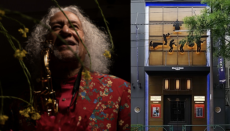
GARY BARTZ QUINTET
Saxophonist Gary Bartz is a NEA Jazz Master and two time Grammy Award winner and Living Legacy Award recipient. He comes to Blue Note Tokyo with his quintet for a three day residency. He was first exposed to jazz as the son of the owners of a jazz nightclub in Baltimore, Maryland.
In 1958 he left Baltimore to study at the Juilliard School. In the early 1960s, he performed with Eric Dolphy and McCoy Tyner in Charles Mingus’ Jazz Workshop. He worked as a sideman with Max Roach and Abbey Lincoln before joining Art Blakey and the Jazz Messengers. In 1968, he was a member of McCoy Tyner’s band, Expansions.
In 2019, Revive Music and Bartz celebrated the 50th Anniversary of his Another Earth album at Winter Jazzfest in New York City, alongside original member Pharoah Sanders. He is Professor of Jazz Saxophone at Oberlin College.
Tickets: ¥ 9,900 | $66.65
More Posts: adventure,bandleader,club,genius,jazz,music,preserving,saxophone,travel

SEBASTIAN LOIACONO QUINTET
Sebastian Loiacono Quintet Plays Duke Ellington
The Quintet
Sebastián Loiacono ~ saxophone | Mariano Loiacono ~ trumpet | Pablo Raposo ~ piano | Mauricio Dawid ~ double bass | Alejandro Beelmann ~ drums
Table. One ticket per person ~ $20,000 peso | $15.74
Stools. One ticket per person ~ $16,000 peso | $12.59
Location with reduced vision ~ $10,000 peso | $7.87
More Posts: adventure,bandleader,club,genius,instrumental,music,preserving,saxophone,travel
Requisites
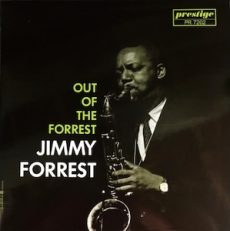
Out Of The Forrest ~ Jimmy Forrest | By Eddie Carter
This morning’s spotlight shines on Jimmy Forrest, whom I first heard on the 1960 release, “Soul Battle,” with King Curtis and Oliver Nelson. Out of the Forrest (Prestige PRLP 7202) was his fifth outing as a bandleader and hit the stores in 1961. Jimmy was born in St. Louis, Missouri and built his reputation with the Count Basie, Duke Ellington, Andy Kirk, Fate Marable, and Jay McShann bands. Forrest demonstrated impressive versatility on the tenor sax, delivering energetic solos at brisk tempos. He also infused the lively pulse of bop at a medium beat, and he poured deep emotion into every ballad or standard. On this date, he’s supported by Joe Zawinul on piano, Tommy Potter on bass, and Clarence Johnston on drums.
My copy of the album is the 2023 Analogue Productions U.S. stereo audiophile reissue, matching the original catalog number. Side One opens with Bolo Blues, an original by Jimmy Forrest, which was one of his biggest hits. His relaxing introduction sets the melody off to a comfortable groove. The saxophonist has the solo spotlight to himself and delivers a thoughtfully crafted, laid-back interpretation, leading to the theme’s reprise and climax. The beat moves upward for the jazz and pop standard, I Cried For You, by Gus Arnheim, Arthur Freed, and Abe Lyman. Forrest’s brief introduction quickly segues to the ensemble’s medium theme. Jimmy goes to work first with a sparkling solo. Zawinul responds with a performance as refreshing as a cold drink on a hot day until the melody’s restatement and close.
I’ve Got a Right to Cry by Joe Liggins is a beautiful ballad beginning with a delicately expressive introduction by the quartet that continues as the melody unfolds. Jimmy, again, is the lone soloist and awakens poignant memories in a tenderly passionate interpretation before the theme’s return leads to a soft ending. This Can’t Be Love by Richard Rodgers and Lorenz Hart has long been a favorite of jazz musicians and vocalists. The trio’s introduction develops nicely into the ensemble’s lively theme. Forrest takes the first solo with stunning precision and enthusiasm on each note. Zawinul gets the last word and gives an excellent account before the theme is restated.
Side Two gets underway with By the River Sainte Marie by Edgar Leslie and Harry Warren. The rhythm section’s introduction segues into the quartet’s medium melody. Jimmy’s opening statement swings with a joyful spirit. Tommy takes a short, satisfying walk in his first solo next, then the leader makes his return for a concise comment leading to the finale. The quartet takes a nostalgic trip back in time with Yesterdays by Otto Harbach and Jerome Kern. Forrest’s gentle introduction sets things in motion for the foursome’s melody. Jimmy is the song’s only soloist, and his reading is very intimate, complemented by the rhythm section’s tender accompaniment ahead of a soft summation.
Crash Program by Jimmy Forrest and Clarence Johnston is off and running from the outset of the ensemble’s rapid theme. The saxophonist flies out of the gate with a flawlessly executed burst of speed. Joe continues soaring with infectious energy in the following solo. Johnston rounds things out with a swift finale, before the quartet returns to the theme and a quick exit. The album ends with a gorgeous rendition of That’s All by Alan Brandt and Bob Haymes. The pianist’s concise introduction sets the mood for Forrest’s sultry theme and elegantly phrased opening solo. Zawinul has a lovely interlude of tenderness preceding the leader’s return to take the song out softly.
Esmond Edwards supervised the initial session, and Rudy Van Gelder expertly managed the recording dials. Kevin Gray mastered this audiophile reissue from the original tapes at Cohearant Audio. The record was pressed on 180-gram vinyl and is dead silent until the music begins. The album’s sound quality is sensational, with an outstanding soundstage placing your sweet spot in the studio with the musicians. Out of the Forrest impresses not only from the music itself but also from the exceptional support of the ensemble. If you’re in the mood for a top-tier quartet and enjoy the tenor sax, I highly recommend Out of the Forrest by Jimmy Forrest for a spot in your library. If you’re a newcomer to his music, this album is a fine place to start your journey!
~ Soul Battle (Prestige PRLP 7223/PRST 7223) – Source: Discogs.com
~ I Cried For You, That’s All, This Can’t Be Love, Yesterdays – Source: JazzStandards.com
>© 2025 by Edward Thomas Carter

More Posts: choice,classic,collectible,collector,history,instrumental,jazz,music,saxophone
Requisites
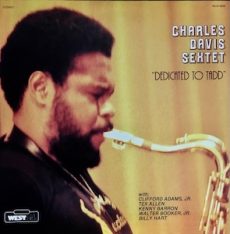
Dedicated to Tadd ~ The Charles Davis Sextet | By Eddie Carter
The Charles Davis Sextet steps into this morning’s spotlight, showcasing the multi-instrumentalist on his second outing as a bandleader with Dedicated to Tadd (West 54 WLW 8006). My introduction to Davis came through three standout albums: “Breakthrough,” “Illumination,” and “Manhattan Project.” Davis has contributed as a sideman to more than 100 recordings, with some of jazz’s brightest talents; however, he is best known for his work with Archie Shepp and Sun Ra. This date features a stellar lineup: Tex Allen on trumpet; Clifford Adams, Jr. on trombone; Charles Davis alternates between baritone sax (A2, B3), soprano sax (A1, B2), and tenor sax (A3, B1); Kenny Barron on piano; Walter Booker, Jr. on bass; and Billy Hart on drums. My copy of the album is the 1979 U.S. stereo release.
Monking, the first of four originals by Charles Davis, gets off to a good start with the sextet’s engaging melody in unison. The fun begins as Tex leads with a lively opening solo. Clifford comes in next, laying down an infectious groove. Kenny takes over to deliver a performance executed with thoughtful, nuanced articulation. Charles glides effortlessly through the closing statement on soprano into the climax. Eastern Vibrations comes to life with the ensemble’s collective theme at medium speed. Allen steps forward first with a bright and captivating solo. Adams is especially impressive in the following reading. Barron tackles the third reading incisively, and then Booker seizes the moment in his first statement. Davis’s baritone brings it all home with unmistakable authority, leading to the theme’s reprise.
The group ventures onto Mexico Street next, beginning with Billy’s concise introduction ahead of the sextet’s rapid-fire theme. Tex sets the bar with a brisk and agile solo, paving the way for Clifford’s energetic interpretation. Charles’s tenor sax brings a thrilling intensity to the following statement. Kenny keeps things rolling in an electrifying performance, then Walter and Billy both make a brief comment preceding the ensemble’s robust exit. The title tune, Dedicated to Tadd, unfolds as a graceful ballad, opening with a soft piano prelude that ushers in the group’s beautiful melody. Davis draws out the song’s tenderness in the opening tenor sax statement. Barron infuses the following solo with sensitivity and finesse, before the ensemble’s gentle reprise of the theme and a touching ending.
The last two tracks come from the pen of Tex Allen, starting with the sextet’s introduction and medium melody to Love Gods. Charles gets the opening solo underway with a laid-back soprano interpretation. A brief piano interlude leads to Tex, who hits his target in the following interpretation. A second short piano break leads to the sextet’s closing chorus and finale. Sir Charles, the trumpeter’s tribute to Charles Davis, turns the beat upward one final time for the ensemble’s introduction and theme. Davis gets right to work on the baritone sax and turns in an opening solo that’s a sheer delight. Allen shines in a flawless performance, which in turn leads to Barron’s final statement preceding the sextet’s return to the theme, affording Adams a concise comment as the music gracefully fades away.
Roger Pola produced the album, and the executive producer was Pierre Bourdain. Allan Tucker was behind the dials as the recording engineer. The album’s sound quality is excellent, featuring a superb soundstage that places the musicians directly in the listener’s sweet spot with impressive fidelity. Dedicated to Tadd is an enjoyable album that showcases each artist at their best. If you’re a sax fan and are looking for something fresh to add to your library, I offer for your consideration Dedicated to Tadd by the Charles Davis Sextet on your next record-shopping trip! It shines a spotlight on a truly talented multi-instrumentalist deserving of wider recognition!
~ Breakthrough (Cobblestone CST 9011), Illumination! (Impulse A-49/AS-49), Manhattan Project (Bee Hive Records BH 7001) – Source: Discogs.com
© 2025 by Edward Thomas Carter
More Posts: choice,classic,collectible,collector,history,instrumental,jazz,music,saxophone