

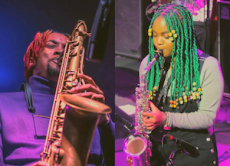
EBBAN & EPHRAIM DORSEY: HOMECOMING
The multi-talented siblings have been playing together since they were 10 and 11. They continue to strive with their gifts as they travel, playing with some of the best local, national and international recording artists. Their performances can be described as two different voices coming together to create a healing, ethereal, and emotional experience for the listeners, as well as themselves.
Ebban Dorsey, 19-year-old alto saxophonist, composer, and bandleader, is from Baltimore, Maryland and has studied with Blake Meister, Carl Grubbs, Tim Green, and Gary Thomas. Ebban has gained a lot of experience playing Jazz and has even performed with Carl Grubbs, Gary Bartz (Performed on a live recording for the documentary titled, “Blues Chronicles”), Kamasi Washington, John Lamkin, Warren Wolf, Benito Gonzales, Kenny Garett, Tia Fuller, Sean Jones, Wycliffe Gordon, Tanya Darby, Erica Von Kleist, Mimi Jones, Shamie Royston, Reginald Thomas, Allison Miller, José James, Matthew Stevens, The Chuck Redd Band, Christian Scott, and many more. She was a member of NYO Jazz 2020 as well as NYO Jazz 2021 and recorded an album with the 2021 Jazz band. She has also performed a jazz rendition of “This Land is Your Land” at the Baltimore Orioles stadium as part of the “Women of Music” concert series, and later performed the national anthem alongside Ephraim Dorsey for the 2020 season opener. Ebban Dorsey is an extraordinary musician with a bright future ahead of her.
Ephraim Dorsey, 20-year-old tenor saxophonist, composer, and bandleader, is from Baltimore, Maryland and has studied with Blake Meister, Carl Grubbs, Tim Green, and Gary Thomas. Ephraim has gained a lot of experience playing Jazz and has performed with Carl Grubbs, Gary Bartz (Performed on a live recording for the documentary titled, “Blues Chronicles”), Kamasi Washington (participated in a film project entitled, “As told to G/D thyself”’, which is available for viewing on iTunes and the Apple Store), Kenny Garett, John Lamkin, Warren Wolf, Benito Gonzales (Performed with at the twins Jazz Club), Kris Funn, Sean Jones, Wycliffe Gordon, Erica Von Kleist, Reginald Thomas, The Chuck Redd Band, Christian Scott, and many more. He was a member of NYO Jazz 2021 and recorded an album with the 2021 Jazz Band. Ephraim is a passionate Jazz musician and aims to share his gift with the rest of the world.
Ticket Fees: $1.70~$3.46
More Posts: adventure,club,genius,guitar,jazz,music,preserving,saxophone,travel
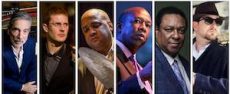
THE HEAVY HITTERS
The Heavy Hitters is a sextet co-led by pianist Mike LeDonne and tenor saxophonist Eric Alexander. The band is rounded out by some of the premiere purveyors of straight-ahead swinging jazz: Vincent Herring on alto saxophone, Joshua Bruneau on trumpet, Peter Washington on upright bass, and Kenny Washington on drums.
The music is built to tickle your mind, hit you in the heart and get your head swaying back and forth. The Heavy Hitters make soulful kickass swinging music that you might have heard on a Blue Note record back in the day. Not to look back… this is a band that is all about the NOW because it’s happening right now!
The Heavy Hitters have been swinging hard their whole lives! Their debut record was recorded at Rudy Van Gelder’s studio, a place we are so lucky to still have up and running and that is putting out the same great sound we have all loved for all these years. It’s a true “Jazz” sound, recorded by some of the greatest jazz musicians of their generation.
Tickets Fees: $3.07~$4:05
More Posts: adventure,club,genius,jazz,music,piano,preserving,saxophone,travel
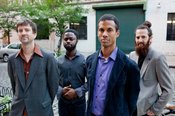
MARK TURNER QUARTET
Saxophonist Mark Turner has recorded over five dozen albums as a leader, member of a group and as a sideman. He brings his quartet to the club for a special week of music.
He released his first album as a leader in 2004 on ECM Records. It features trumpeter Avishai Cohen, bassist Joe Martin, and drummer Marcus Gilmore. Turner is a member of the trio Fly, with bassist Larry Grenadier, and drummer Jeff Ballard. He also appears in guitarist Gilad Hekselman’s Quartet, and drummer Billy Hart’s Quartet. Turner has recorded extensively with guitarist Kurt Rosenwinkel, saxophonist David Binney, and pianist Aaron Goldberg, among others. Turner, the ultimate jazz sideman, has played or collaborated with more than 45 jazz bands. In 2018 and 2019 alone he played on eight different jazz albums as a sideman or collaborator.
More Posts: adventure,club,genius,jazz,music,preserving,saxophone,travel
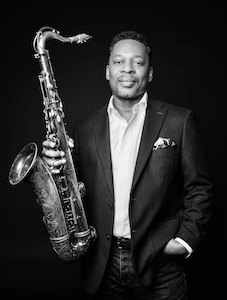
RAVI COLTRANE
He bears the name of jazz royalty, and he’s spent many hours curating, archiving and producing his parents’ recordings. But when he picks up his own saxophones, Ravi Coltrane blows an original and distinctly modern strain of jazz, distilling but never seeking to imitate his family’s adventurous improvising spirits. Now one of today’s top saxophonists.
The Band: Ravi Coltrane – Saxophone | Jonathan Finlayson – Trumpet | Luis Perdomo – Piano | Robert Hurst – Bass | Mark Whitfield Jr. – Drums
All Show Sold Out Except The 10:00pm Shows On Tuesday, Wednesday, Thursday & Sunday
More Posts: adventure,club,genius,jazz,music,preserving,saxophone,travel
Daily Dose Of Jazz…
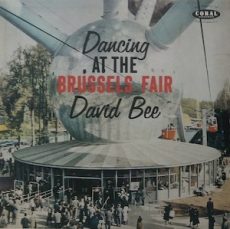
David Bee was born on October 17, 1903 in Brussels, Belgium. He was a multi-instrumentalist adept on clarinet, harp, piano, and alto and tenor saxophone. For a year in 1924 he played with the group Bistrouille ADO before co-founding an ensemble with Peter Packay called Red Beans. The group toured widely throughout western Europe.
After returning to Belgium, David joined Robert De Kers’s band, and also played in Paris, France at Chez Florencewith Benny Carter and Willie Lewis. He recorded with Gus Deloof in the early Forties and after World War II he played with Robert Bosmans and Chas Dolne later in the decade. He led his own bands and groups at various times in the 1950s and continued recording late into the decade and the 60s.
As a composer, Bee pennedr the tunes High Tension recorded by Luis Russell) and Obsession recorded by Ted Heath and Reg Owen.
Clarinetist, harpist, pianist, alto and tenor saxophonist, arranger and composer David Bee, also known as Ernest Craps, Ernie Sparks, and Manuel Travo, transitioned in 1992.

More Posts: arranger,clarinet,composer,harp,history,instrumental,jazz,music,saxophone