

Daily Dose Of Jazz…
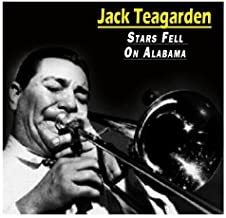
Jack Teagarden was born Weldon Leo Teagarden on August 20, 1905 in Vernon, Texas into a musical family, two brothers, a sister and father all musicians. His father started him on baritone horn but by age seven he had switched to trombone. His first public performances were in movie theaters, where he accompanied his mother, a pianist.
By 1920, Teagarden was playing professionally in San Antonio, Texas with the band of pianist Peck Kelley. In the mid-1920s he started traveling widely around the United States in a quick succession of different bands. 1927 saw him in New York City where he worked with several bands and by 1928 he was playing with the Ben Pollack band.
In the late 1920s, he recorded with such bandleaders and sidemen as Louis Armstrong, Benny Goodman, Bix Beiderbecke, Red Nichols, Jimmy McPartland, Mezz Mezzrow, Glenn Miller, and Eddie Condon. Miller and Teagarden collaborated to provide lyrics and a verse to Spencer Williams’ “Basin Street Blues”, which in that amended form became one of the numbers that Teagarden played until the end of his days.
Seeking financial security during the Great Depression, Jack signed an exclusive contract to play for the Paul Whiteman Orchestra from 1933 through 1938. In 1946, he joined his lifelong friend Louis Armstrong and his All Stars. In late 1951, he left to again lead his own band.
Suffering from pneumonia, trombonist and singer Jack Teagarden, considered the most innovative jazz trombone stylist of the pre-bebop era, passed away in New Orleans at the age of 58 on January 15, 1964.
More Posts: bandleader,history,instrumental,jazz,music,trombone,vocal
Requisites
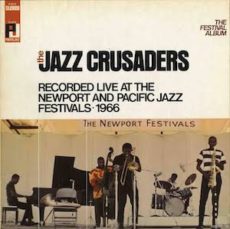
The Festival Album ~ The Jazz Crusaders | By Eddie Carter
This morning’s discussion is a 1966 live album by four friends from Houston, Texas who began performing locally in 1956. After moving to Los Angeles in 1961, they became The Jazz Crusaders, one of the best West Coast jazz groups. I became a fan of their music listening to Chuck Lansing of Cleveland’s jazz station, WCUY 92.3 FM. His opening theme was The Young Rabbits, taken from their second LP, Lookin’ Ahead (1962). The Festival Album (World Pacific Jazz ST-20115) contains two performances from The Pacific Jazz Festival and The Newport Jazz Festival. The quartet consists of Wayne Henderson on trombone, Wilton Felder on tenor sax, Joe Sample on piano, and Stix Hooper on drums. Jimmy Bond (tracks: A1, A2) and Herbie Lewis (tracks: B1, B2) on bass, complete the group. My copy used in this report is the 1967 Stereo reissue (Pacific Jazz ST-20115).
Trance Dance by Kenny Cox opens Side One with a collective soulful theme. Wayne goes first with a noteworthy contribution offering a relaxing informality. Wynton follows with an excellent solo of his own, then Joe gives a spirited closing reading ahead of the ensemble’s reprise and ending. A Summer Madness is the collaborative creation of Sample, Henderson, and Felder. Wayne leads the quintet on the mid-tempo melody, then entices the listener with a captivating first statement. Wilton builds a satisfying groove with inspired lines next. Joe unfolds the next reading with a mellow tone effortlessly, and Jimmy makes a brief remark into the finale and crowd’s ovation.
Henderson’s Young Rabbits is off to the races from the intensely hot opening notes of the melody. Felder takes the first solo at breakneck speed with electrically charged excitement. Sample steps up next for a high-octane statement. Stix provides an energetic interpretation leading to the vigorous ending. Sample’s Freedom Sound was the title tune of their debut album (1961). The trio begins this midtempo swinger with a march-like introduction developing into the quintet’s theme. Felder takes the lead with a cheerfully, light-hearted reading. Henderson swings comfortably into the next statement, and Joe wraps the album with a leisurely-paced performance powered by Herbie and Stix’s excellent groundwork.
This was The Jazz Crusaders’ twelfth LP for World Pacific Jazz and Pacific Jazz Records. *They were extremely popular and well known on the West Coast, but their first trip to The Newport Jazz Festival was significant because it introduced them to a whole new group of fans and brought them to the attention of the New York City jazz clubs. I only wish it would have been released as a two-record set with each festival highlighted on one LP. The Festival Album was produced by Richard Bock, and the sound quality of each session is quite good with an exquisite soundstage. For those fans that only know of The Crusaders’ music from the seventies and eighties, The Festival Album shows the group in excellent form live and gives a snapshot of the Hard-Bop sound they created when Jazz was their middle name! ~ *AllMusic Review by Thom Jarek – Source: AllMusic.com
~ Freedom Sound (Pacific Jazz PJ-27/ST-27), Lookin’ Ahead (Pacific Jazz PJ-43/ST-43) – Source: Discogs.com © 2021 by Edward Thomas Carter

More Posts: bass,choice,classic,collectible,collector,drums,history,instrumental,jazz,music,piano,saxophone,trombone
Three Wishes
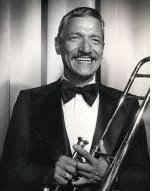
Upon receiving the question of three wishes from the Baroness, Frank Rehak responded with:
“Improvement of the caliber of recorded music. In general, the public has been exposed – via radio, TV, disc-jockeys, etc. – to bad sounds for many years, which in turn has caused a yardstick of poor music to measure by. If, on the other hand, good music had been given the same exploitation, the taste of John Q. Public would have been made vastly more musical, if by nothing more than the repeated playing and hearing of music worthwhile. I.e.: If any person is exposed to any sound continuously, and for a long period of enough time, it will begin to sound musical to him.
Classic example: The audience hisses, booed, and left the auditorium when Bach first used the sixth in addition to a triad-which of course is now one of the most common sounds used in any type of music. Ditto the dominant seventh which, when first employed, was considered completely distasteful, dissonant, and disgusting to the uneducated ear.
To sum this rambling up, I wish that more good music could be brought across to the general public via any medium. It would make we musicians’ jobs so much more fun and educational.”
*Excerpt from Three Wishes: An Intimate Look at Jazz Greats ~ Compiled and Photographed by Pannonica de Koenigswarter

More Posts: baroness,history,instrumental,jazz,music,pannonica,three,trombone,wishes
Daily Dose Of Jazz…
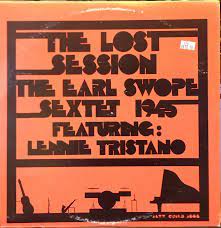
Earl Bowman Swope was born on August 4, 1922 in Hagerstown, Maryland into a musical family: his parents, a sister and two brothers were all musicians. When he was 20, he played with Sonny Dunham.
During the Forties, from 1943~47 he played with Boyd Raeburn, Georgie Auld, and Buddy Rich. Then, from 1947 to 1949 he worked with Woody Herman and recorded in small groups with Stan Getz and Serge Chaloff. The Fifties began with Earl working with Elliot Lawrence, then worked freelance in New York and Washington, D.C.
Later in the 1950s he returned to big band work, playing with Jimmy Dorsey and Louie Bellson. Residing in Washington, D.C. in the 1960s he played locally until his death. Trombonist Earl Swope, whose style was not influenced by J. J. Johnson and played in a modern barrelhouse style, passed away on January 3, 1968.
More Posts: history,instrumental,jazz,music,trombone
Daily Dose Of Jazz…
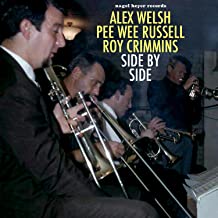
Roy Crimmins was born in London, England on August 2, 1929. Originally self-taught, he was later mentored by the American bass trombonist with the Philarmonia Orchestra, Ray Premru, and the then Ted Heath principal trombonist, Don Lusher. He turned professional when he joined the Mick Mulligan band in 1952.
Collaborating with Alex Welsh in 1954, the pair started their own band and recorded with American guest stars such as the clarinetist Pee Wee Russell and Wild Bill Davison. For the next decade they performed until Roy moved to Germany in 1965 where he kept a consistent line-up and a regular group. Residing in Switzerland from 1970 until 1977 he formed his own band under the pseudonym Roy King and recorded three albums.
Touring Europe extensively during this era, he had his own television show in Vienna, Austria for five years. The late 1970s saw Crimmins returning to England and working once again with Welsh until he died in 1982. In the mid-1980s he was approached to join his Benny Goodman and Duke Ellington orchestras,interpreting the original Lawrence Brown, Tricky Sam Nanton and Juan Tizol trombone solos. He performed at the Nice and North Sea Jazz Festivals.
As an advisor to the Mayor of Eilat, Israel, his involvement in this venture led to the renowned Red Sea Jazz Festival. Soon after, Roy and his family moved to Tel Aviv, Israel where he established the Israel Jazz Ensemble, and was commissioned by Musica Nova to write a concerto, which premiered in the Tel Aviv Museum of Art to great acclaim. His music is still broadcast regularly.
Trombonist, composer and arranger Roy Crimmins, whose career spanned over fifty years, passed away on August 27, 2014 at the age of 85. He is buried on a hill overlooking the Sea of Galilee.
More Posts: arranger,composer,history,instrumental,music,trombone