

Daily Dose Of Jazz…
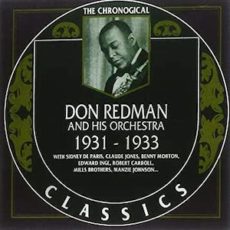
Claude Jones was born on February 11, 1901 in Boley, Oklahoma and began playing trombone at the age of 13, and studied at Wilberforce College before dropping out in 1922 to join the Synco Jazz Band. This group eventually evolved into McKinney’s Cotton Pickers, where he would play intermittently until 1929.
From there, Jones played in a variety of noted swing jazz ensembles from 1929 through the Depression until 1950, playing with Fletcher Henderson, Don Redman, Alex Hill, Chick Webb, and Cab Calloway.
He recorded with Jelly Roll Morton in 1939 and Louis Armstrong/Sidney Bechet in 1940. During the 1940s and into the Fifties, he also played with Coleman Hawkins, Zutty Singleton, Joe Sullivan, Benny Carter, and Duke Ellington.
After completing his second stint with Ellington, trombonist Claude Jones became a mess steward on the ship S.S. United States and passed away at sea on January 17, 1962.

More Posts: history,instrumental,jazz,music,trombone
Daily Dose Of Jazz…
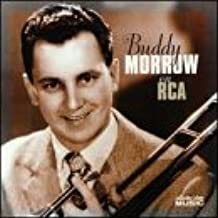
Buddy Morrow was born Muni Zudekoff on February 8, 1919 in New Haven, Connecticut. Receiving a scholarship at age 16, he studied trombone with Ernest Horatio Clarke at Juilliard from October to December 1936. During the next year he began playing trombone with Sharkey Bonano’s Sharks of Rhythm, an Eddie Condon group. He then worked with Eddy Duchin, Vincent Lopez, and Artie Shaw.
In 1938 Muni became known as Buddy Morrow when he joined the Tommy Dorsey band. The following year he performed with Paul Whiteman’s Concert Orchestra for their recording of Gershwin’s Concerto in F. In 1940, Morrow joined the Tony Pastor band, but this was only a short detour on his way to replacing Ray Conniff in the Bob Crosby band. Shortly after, he joined the U.S. Navy, during which he recorded with Billy Butterfield, leading a ten-piece band with three trombones, accompanying Red McKenzie singing four arrangements, including Sweet Lorraine and It’s the Talk of the Town.
After demobilization, Morrow joined Jimmy Dorsey’s band, then went into radio freelancing as a studio musician. He began conducting sessions, which introduced him to bandleading. RCA Victor sponsored him as director of his band in 1951. The band’s first hit, Night Train by Jimmy Forrest, was a hit in rhythm and blues.
Morrow was a member of The Tonight Show Band. His early 1950s records such as Rose, Rose, I Love You and Night Train appeared on the Billboard magazine charts. Night Train reached No. 12 in the U.K. Singles Chart in 1953. In 1959 and 1960 Morrow’s Orchestra released two albums of American television theme songs: Impact and Double Impact respectively.
In 2009 he received a Lifetime Achievement Award from the International Trombone Association. He led the Tommy Dorsey Orchestra from 1977 through 2010, when he appeared with the band for the final time. Over the course of his career he recorded 18 albums as a leader and 30 as a sideman. Trombonist, arranger, composer and bandleader Buddy Moorow, who was also known as Moe Zudekoff, passed away on September 27, 2010 in Maitland, Florida.
More Posts: arranger,bandleader,composer,history,instrumental,jazz,music,trombone
Daily Dose Of Jazz…
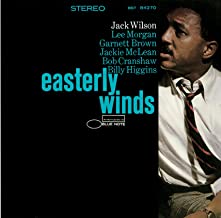
Garnett Brown, born January 31, 1936 in Memphis, Tennessee and graduated from the University of Arkansas at Pine Bluff and later studied film scoring and electronic music at University of California Los Angeles. Winning the DownBeat Reader’s poll for trombonists, he appeared on the classic 1976 recording Bobby Bland and B.B. King Together Again…Live.
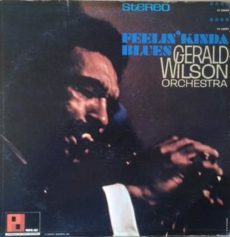
As a sideman he recorded with Chico Hamilton, Charles Lloyd, Roland Kirk, Art Blakey, Booker Ervin, Lou Donaldson, Teddy Edwards, Frank Foster, Duke Pearson, George Benson, Charles Tolliver, Johnny Hodges, Houston Person, Louis Armstrong, Gene Ammons, Modern Jazz Quartet, Gil Evans, Jackie and Roy, Airto Moreira, Hubert Laws, Dakota Staton, Reuben Wilson, Charles Earland, Don Sebesky, Lou Donaldson, Charles McPherson, Joe Chambers, Yusef Lateef, Jack McDuff, Rusty Bryant, Les McCann, Billy Cobham, Arif Mardin, Herbie Hancock, Charles Tolliver, Richard “Groove” Holmes, Eddie Harris, Horace Silver, Ahmad Jamal, and Gerald Wilson Orchestra of the 80’s among others.
He has worked as a composer in film and television due to his training in the field. In 1989 he was the conductor and orchestrator for Harlem Nights. Trombonist Garnett Brown, having been diagnosed with dementia, he is now retired and living in West Hollywood, California.
More Posts: history,instrumental,jazz,music,trombone
Daily Dose Of Jazz…
Streamline Ewing was born John Richard Ewing on January 19, 1917 in Topeka, Kansas and began his career when he was seventeen. Four years later he was with Horace Henderson, then with Earl Hines live and on record from 1938 to 1939 and from 1941 to 1942. He worked for short spans with Louis Armstrong and Lionel Hampton in the 1940s, in addition through the 1940 decade he worked with Jimmie Lunceford, Cab Calloway, Jay McShann, Cootie Williams, Louis Jordan, and Earl Bostic.
Moving to California in the early 1950s Ewing played with George Jenkins and in the studio with T-Bone Walker and Gerald Wilson. He began playing with Teddy Buckner in 1956 and the two would play together on and off into the 1980s. He led his band the Streamliners for recording sessions in 1958 and 1960. In 1962 he toured with Henderson again and with Rex Stewart in 1967. Late in the 1960s he played in the Young Men of New Orleans band.
In 1983 he played with the Eagle Brass Band and recorded with Johnny Otis in 1990. In the 1990s he played on two Willy DeVille albums: Backstreets of Desire and Big Easy Fantasy.
A prolific session player he recorded with Hoyt Axton, David Bromberg, Roy Brown, Bobby Bryant, Teddy Buckner, Red Callender, Papa John Creach, Willy DeVille, Judy Henske, Earl Hines, Diana Ross, Ike & Tina Turner, and Bob Thiele among others. Trombonist Streamline Ewing passed away on February 1, 2002 in Pasadena, California.
More Posts: history,instrumental,jazz,music,trombone
Daily Dose Of Jazz…
Joe Britton was born on November 28, 1903 in Birmingham, Alabama and following his student days under the guidance of Fess Whatley, he went to work with Bessie Smith who took him on the road from 1924 through 1926 as a member of her backing group, followed with the Fred Longshaw Orchestra and then the Bill Woods Orchestra. The next year, he jumped to Frank Bunch & the Fuzzy Wuzzies, most likely the most obscure name in the list of the groups he played for.
Settling in New York in the ’30s and immediately got into the fast-paced jazz scene working with Ellsworth Reynold’s Bostonians, Teddy Hill, the band of classic jazz drummer Kaiser Marshall, Charlie Johnson, Edgar Hayes, and the Vernon Andrade Orchestra. In the ’40s: he worked with Benny Carter from 1940-1941 and Dizzy Gillespie, while at the same time collaborating on older styles of jazz.
In the 1940s Britton worked and recorded with Jelly Roll Morton, Jay McShann, and Lucky Millinder in 1942. He would go on to be employed by Wynonie Harris showing up on a half-dozen of her R&B records, and also recorded with Sister Rosetta Tharpe.
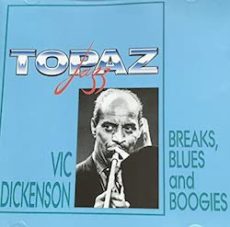
He performed and recorded with pianist Earl Hines. The trombonist dabbled into orchestra arrangements and his work in this field is highlighted on the album Breaks, Blues and Boogies by fellow bone-man Vic Dickenson. retired from full-time professional playing in the 1950s, however, he gigged off and on into the Sixties, including a regular stint in a band led by saxophonist Wesley Fagan. Trombonist Joe Britton passed away on August 12, 1972 in New York City, New York.
More Posts: arranger,bandleader,history,instrumental,jazz,music,trombone