

Daily Dose Of Jazz…
Kiane Zawadi was born Bernard Atwell McKinney on November 26, 1932 in Detroit, Michigan into a family of ten children, several of whom also became musicians. A trombone and euphonium player, he first worked with Barry Harris and Sonny Stitt in 1951, and then played with Alvin Jackson’s band early in the decade. Toward the middle of the decade, he joined Art Blakey, and by 1959 he moved with Yusef Lateef to New York City.
The 1960s had him playing with Illinois Jacquet, James Moody, and Curtis Fuller. It was later in the Sixties that Bernard adopted the name Kiane Zawadi. By the 1970s he was performing with Archie Shepp, Carlos Garnett, Harold Vick, Frank Foster, Charles Tolliver, Abdullah Ibrahim, and McCoy Tyner.
In 1978, he played in the pit orchestra for Dancin’, a Broadway show. He also appeared at a Charlie Parker tribute at Town Hall in New York City in 1985. Other musicians Zawadi worked with include Mongo Santamaría, Dizzy Gillespie, Clark Terry, Joe Henderson, and Aretha Franklin.
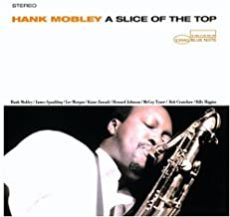
As a sideman, he has recorded thirty-eight albums with Foster, Slide Hampton, Freddie Hubbard, Clifford Jordan, Yusef Lateef, Donald Byrd, Pepper Adams, James Moody, Sun Ra, Hank Mobley, Howard McGhee, Freddie Roach, Archie Shepp, Willis “Gator” Jackson, Dollar Brand, McCoy Tyner, Les McCann, Shirley Scott, Jackie DeShannon, Harold Vick, Charles Tolliver, Carlos Garnett, Kenny Vance, Ralph MacDonald, Phyllis Hyman, Cornell Dupree, Grant Green, Mickey Bass, Illinois Jacquet, Rodney Kendrick, Joe Henderson, and Patience Higgins.
Trombonist and euphonium player Kiane Zawadi, one of the few jazz soloists on the latter instrument, at 87 he continues to perform and record.
More Posts: euphonium,history,instrumental,jazz,music,trombone
Daily Dose Of Jazz…
Keg Johnson was born Frederic Homer Johnson on November 19, 1908 in Dallas, Texas. His father was a choir director and he and his younger brother, Budd began their musical careers singing and playing first with their father and later with Portia Pittman, daughter of Booker T. Washington. They played in Dallas-area bands like the Blue Moon Chasers, then with Ben Smith’s Music Makers, eventually performing with Gene Coy and The Happy Black Aces.
Playing a variety of instruments but most noted as a trombonist, around 1928, in Kansas City, Missouri they played in several bands but by 1930 Keg left for Chicago, Illinois to play with Louis Armstrong, recording his first solo on Armstrong’s Basin Street Blues album. His move to New York City in 1933 Keg played with Fletcher Henderson, Benny Carter, and Cab Calloway at the Cotton Club, remaining with Cab for 15 years.
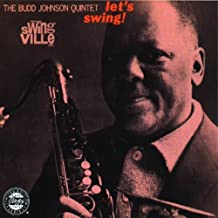
Leaving New York City for Los Angeles, California he briefly changed careers renovating houses. During the 1950s he returned to New York City where he and his brother reunited and recorded the album Let’s Swing. In 1961, he began playing with Ray Charles and was still in his band when trombonist Keg Johnson passed away in Chicago on November 8, 1967.
More Posts: history,instrumental,jazz,music,trombone
Daily Dose Of Jazz…
Jimmy Archey was born on October 12, 1902 in Norfolk, Virginia. He began playing when he was twelve and was getting professional gigs a year later. He studied at Hampton Institute from 1915 to 1919, played in Atlantic City, New Jersey for a while before moving to New York City in 1923.
During the Roaring Twenties, he played with Edgar Hayes, Most noteworthy for his work was in several prominent jazz orchestras and big bands of his time, including leading one of his own. He performed and recorded with the James P. Johnson Orchestra, King Oliver, Fats Waller, and the Luis Russell Orchestra, among others.
The late 1930s saw Archey participating in big bands that simultaneously featured musicians such as Benny Carter, Coleman Hawkins, Cab Calloway, Duke Ellington, and Claude Hopkins. In the 1940s he toured France with Mezz Mezzrow and in the 1950s, he spent much of his time working with New Orleans revivalist bands with artists such as Bob Wilber and Earl Hines.
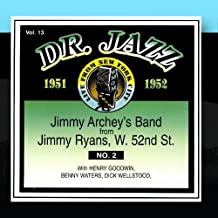
Becoming a bandleader, during the next few years, he headed a sextet, which in 1952 had trumpeter Henry Goodwin, Benny Waters on clarinet and pianist Dick Wellstood. A major yet underrated musician, his only sessions recorded as a leader were for Nec Plus Ultra, the French Barclay and the 77 label. Trombonist Jimmy Archey passed away on November 16, 1967 in Amityville, New York.

More Posts: bandleader,history,instrumental,jazz,music,trombone
Daily Dose Of Jazz…
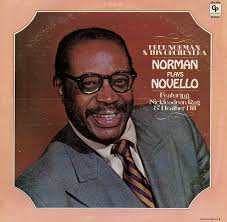
Fred Norman was born on October 5, 1910 in Leesburg, Florida and started out playing trombone when he was 14. After working with local bands in Florida, until moving to Washington, D.C. in 1930. There he worked with Duke Eglin’s Bell Hops, Booker Coleman, and Elmer Calloway (Cab’s younger brother). When he joined Claude Hopkins’ Orchestra in 1932, he doubled as a singer and contributed many arrangements.
Norman was with the Hopkins Big Band during its key years (1932-37), and when he departed, gave up the trombone and stuck exclusively to writing. Norman wrote arrangements for many big bands including those of Benny Goodman (1938), Bunny Berigan, Gene Krupa, Lionel Hampton, Jack Teagarden, Glenn Miller, Harry James, Artie Shaw, and Tommy Dorsey.
Landing the position of staff arranger for Krupa from 1940 to 1943, he spent periods writing exclusively for Dorsey and Charlie Spivak. In the 1950s, Fred started working closely with MGM and Carlton record labels, among others, and often as a musical director for singers such as Dinah Washington, Sarah Vaughan, and Brook Benton.
Although his orchestra backed numerous singers, he led his own orchestra record date, producing Norman Plays Novello. Trombonist, vocalist, and arranger Fred Norman, who spent most of the swing era as a busy arranger, passed away on February 19, 1993 in New York City, New York.
More Posts: arranger,bandleader,history,instrumental,jazz,music,trombone,vocal
Daily Dose Of Jazz…
John L.Thomas was born September 18, 1902 in Louisville, Kentucky, but relocated to Chicago, Illinois as a child, receiving his formal education in the Windy City. Sliding into on-stage trombone performances with the Clarence Miller Orchestra around 1923. Between 1927 and 1928 he worked with Erskine Tate, which led to his entry into Louis Armstrong’s legendary Hot Seven, replacing Kid Ory in Armstrong’s band and also played with Erskine Tate, among others, becoming associated with the Chicago jazz scene.
He was briefly with McKinney’s Cotton Pickers for jobs in the Northeast in the ’30s; in 1937 he was part of a touring revue fronted by pianist and singer Nat King Cole. He was once again with Tate as well as drummer Floyd Campbell’s outfit prior to switching his trombone case for the tool kit of a defense plant worker during the Second World War. That hiatus from playing took place prior to dropping out completely during the ’50s, as he did gig once again in a group led by guitarist Walter Dysett in 1944.
He had a wonderful repertory band led by Franz Jackson with which Thomas performed and recorded through the first half of the ’60s. The ’50s, on the other hand, may have simply depressed the trombonist with its onslaught of rock & roll, because he simply stopped playing completely representing the first major halt in musical action for this performer since his professional activities began in the Roaring Twenties.
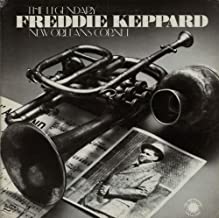
The trombonist continued working with a wide range of classic jazz bandleaders, including trumpeter Freddie Keppard. Preferring to move in and out of groups such as that of the aforementioned Tate and Reuben Reeves, in one lineup and then out of the next. Trombonist John L. Thomas passed away on November 7, 1971 in Chicago, Illinois.

More Posts: history,instrumental,jazz,music,trombone