

Daily Dose Of Jazz…
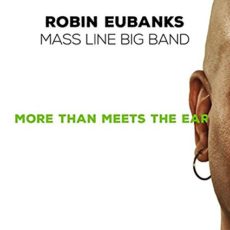
Robin Eubanks was born in Philadelphia, Pennsylvania.on October 25, 1955. Into a musical family. His brothers Kevin and Duane play guitar and trumpet respectively and his uncles are pianist Ray Bryant and bassist Tommy Bryant. After graduating from the University of the Arts, he moved to New York City and first appeared on the jazz scene in the early 1980s. He played with Slide Hampton, Sun Ra, and Stevie Wonder.
Eubanks went on to become a member of the Jazz Messengers with drummer Art Blakey and in then in Elvin Jones’ band. He was a contributor on fellow jazz trombonist Steve Turre’s 2003 release One4J: Paying Homage to J.J. Johnson.
He played for 15 years in double bassist Dave Holland‘s quintet, sextet, octet and big band. J.J. Johnson recommended Robin for the position at the Oberlin Conservatory in Ohio, where he is now a tenured professor of Jazz Trombone and Jazz Composition. He has also taught at New England Conservatory and Berklee College of Music in Boston. He has been a member in the all-star group the SFJAZZ Collective for the past seven years.
He is one of the pioneers of M-Base, a musical concept he pioneered with other musicians such as Steve Coleman and Greg Osby among others. He has recorded with Geri Allen, Joe Henderson, Ronald Shannon Jackson, Bobby Previte, Hank Roberts, Herb Robertson, Kenny Drew, McCoy Tyner, Barbra Streisand, Abdullah Ibrahim, Andrew Hill and B.B. King, Sadao Watanabe, Grover Washington Jr. and Chip White to name a few.
He has appeared on numerous television shows and specials, is a frequent lecturer, guest soloist and clinician at various colleges and universities in the U.S. and around the world and has voted #1 Trombonist by Down Beat magazine.
Slide trombonist, Robin Eubanks, who plays in the mainstream and fusion jazz genres, has released nine albums as a leader, 38 as a sideman and continues to perform and record.

More Posts: trombone
Daily Dose Of Jazz…
Frank Traynor was born on August 8, 1927 in Melbourne, Victoria, Australia. He formed his first band, the Black Bottom Stompers, in 1949 and in 1951 he joined the Len Barnard Band. That same year he was voted best trombonist in the Make Way for the Bands poll and made his first recordings with this band.
Traynor became a regular feature at Athol’s Abbey, an underground bar and grill on the corner of St Kilda Road and Park Street. In 1963, Traynor recorded an EP with Judith Durham titled, Judy Durham. Frank and his band the Jazz Preachers were also a feature of the Melbourne City Council’s – Free Entertainment in the Parks.
Founding the Melbourne Jazz Club in 1958, and not limiting his entrepreneurial skills to just jazz he also established and ran the Frank Traynor’s Folk and Jazz Club from 1963–75, which played a central role in the Australian folk revival.
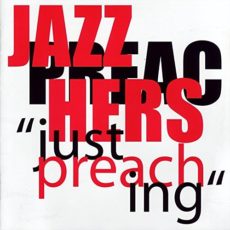
Trombonist Frank Traynor led Australia’s longest continuously running jazz band, the Jazz Preachers, from 1956 until he was diagnosed with leukaemia and passed away on February 22, 1985 in Melbourne.
More Posts: trombone
Daily Dose Of Jazz
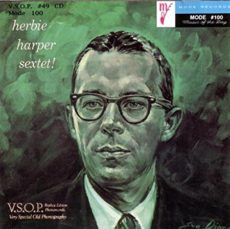
Herbert Harper was born July 2, 1920 in Salina, Kansas and studied trombone in his youth. He first started playing swing music with Benny Goodman and Charlie Spivak in the 1940s and 1950s. A move to Los Angeles, California saw him working on the West Coast jazz scene and performing with the likes of Stan Kenton, Bill Perkins and Maynard Ferguson, among others.
In 1949, he became a member of the band backing Billie Holiday on her famous Just Jazz radio broadcast for AFRS in Los Angeles. During this period he performed alongside band members trumpeter Neal Hefti, clarinetist and tenor saxophonist Herbie Steward pianist Jimmy Rowles bassist Robert “Iggy” Shevak and drummer Roy “Blinky” Garner.
In 1954, he recorded several sessions as a member of Steve White’s Hollywood-based quartet. As a leader he released his inaugural self titled recording in 1954 and followed up with another trio of albums that same year. With two more during the same decade, Herbie would record again as a leader until the Eighties. He would however record profusely as a sideman with Pete Rugolo and Ferguson.
Trombonist Herbie Harper, who concentrated his playing in the West Coast jazz school, passed away on January 21, 2012.
Sponsored By

www.whatissuitetabu.com

#preserving genius
More Posts: trombone
Daily Dose Of Jazz…
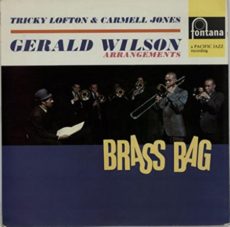
Tricky Lofton was born Lawrence Lofton on May 28, 1930 in Houston, Texas. Not much is documented about him but he studied trombone with Kid Ory and J. J. Johnson.
He recorded several recordings with Carmell Jones, Ron Jefferson, Richard “Groove” Holmes, Wayne Henderson, Bobby Hutcherson, Leroy Vinnegar, Frank Strazzeri, Bill Berry’s LA Big Band, Jimmy Cleveland, Les McCann and Ben Webster. He worked with arranger Gerald Wilson and recorded on Pacific Jazz, Fresh Sound Records.
Trombonist Tricky Lofton passed away on December 15, 1993 in San Francisco, California.
Sponsored By
www.whatissuitetabu.com
#preserving genius
More Posts: trombone
Daily Dose Of Jazz…
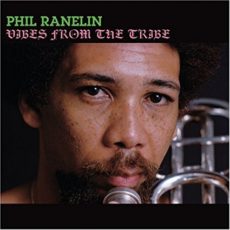
Phil Ranelin was born May 25, 1939 in Indianapolis, Indiana and lived in New York City before moving to Detroit, Michigan in the 1960s. He worked as a session musician on many Motown recordings, including with Stevie Wonder.
In 1971, he and Wendell Harrison formed a group called The Tribe, which was an avant-garde jazz ensemble devoted to black consciousness. Alongside it he co-founded Tribe Records. He released several albums as a leader in the 1970s, and continued with The Tribe project until 1978. Following this, Ranelin worked with Freddie Hubbard, Freddie Redd and the Red Hot Chili Peppers..
Working for the most part locally around Detroit in the following decades, Phil did not find widespread acceptance among jazz aficionados. He did, however, eventually gain the attention of rare groove collectors who became increasingly interested in his work. As a result, Tortoise drummer John McEntire remastered some of his older material and re-released it on Hefty Records. He also recorded on Lifeforce, Wide Hive and Rebirth record labels.
Trombonist Phil Ranelin continues to perform, compose, and record.
Sponsored By
#preserving genius
More Posts: trombone