

Daily Dose Of Jazz…
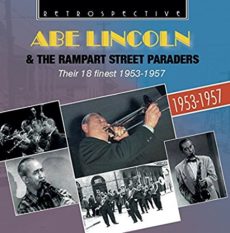
Abram Lincoln was born March 29, 1907 in Lancaster, Pennsylvania, one of six brothers, and began playing trombone at age five, instructed by his cornet playing father John. His older brother Bud, would also become a professional musician, as would brothers Roy and Chet.
He began working professionally in the early 1920s and 1930s spending time playing with Adrian Rollini’s California Ramblers, replacing Tommy Dorsey. Lincoln also performed with Arthur Lange, Ace Brigode, Roger Wolfe Kahn, Paul Whiteman, and Ozzie Nelson.
As a studio musician, Abe most prominently performed occasional solos and dixieland-stylings during the musical portions on the Old Time Radio show on NBC. In the 1930s and into the 1940s he work primarily in Los Angeles, California studios as a sideman. He played on Fibber McGee and Molly from the mid-40s until 1953 with the Billy Mills Orchestra.
During the Dixieland revival of the 1950s Abe’s career saw a resurgence, playing with Wingy Manone, the Rampart Street Paraders, Red Nichols, Bob Scobey, Pete Fountain, Jack Teagarden, and Matty Matlock.
Lincoln played his trombone for music and sound effects for Walter Lantz Woody Woodpecker cartoons and some Buster Keaton comedies. He recorded with Wild Bill Davison and did freelance work into the 1970s, though he went into semi-retirement by the 1980s. Trombonist Abe Lincoln, who played weddings and special occasions, passed on June 8, 2000 in Van Nuys, California.
Sponsored By


#preserving genius
More Posts: trombone

Daily Dose Of Jazz…
Roy Williams was born on March 7, 1937 in Bolton, Lancashire, England and began his career as a trombonist during the British trad jazz movement of the 1950s. He played with trumpeter Mike Peters and clarinetist Terry Lightfoot in the early Sixties, then joined trumpeter Alex Welsh’s Dixieland outfit in 1965, replacing Roy Crimmins. While with Welsh, he played with visiting American jazz players as Wild Bill Davison, Bud Freeman, and Ruby Braff.
Williams left Welsh in 1978 and joined Humphrey Lyttlelton’s band, staying with the latter for four years. In the ’80s he began working freelance and soon became a first call trombone playing with clarinetist Peanuts Hucko, tenor saxophonist Scott Hamilton, trumpeter Bent Persson and clarinetist John Barnes. He performed with The World’s Greatest Jazz Band.
Among Roy’s recordings are Gruesome Twosome on the Black Lion label, and Interplay for Sine Records, both with Barnes. In 1998 he co-led a swing-oriented quintet date with saxophonist Danny Moss titled Steamers! on the Nagel-Heyer label. Though not as active as he was up through the Nineties, trombonist Roy Williams won numerous jazz polls, toured Europe and the United States and remains a popular presence when he’s on the British mainstream jazz scene.

#preserving genius
More Posts: trombone
Daily Dose Of Jazz…
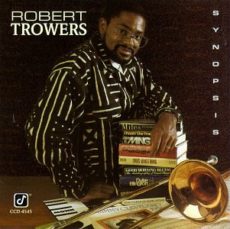
Robert Trowers was born on March 3, 1957 in Brooklyn, New York into a family of musicians that fostered a love for music at an early age. After the mandatory piano lessons during early childhood, he developed an interest in the trombone from listening to the music of the Swing Era. Among the bands that sparked his interest in jazz were those of Count Basie, Duke Ellington, Glenn Miller, and Artie Shaw. The trombonists that influenced Robert were Laurence Brown, “Tricky Sam” Nanton, Tyree Glenn, Tommy Dorsey, Glenn Miller and Jack Teagarden, J.J. Johnson, Jimmy Cleveland, Curtis Fuller, and Frank Rosolino.
During his college years Trowers played around New York City with Jaki Byard’s Apollo Stompers, Ray Abrams/Hank Doughty Big Band, Charles Byrd, Ray Draper, Cecil Payne, Harold Cumberbatch, Bill Hardman, Junior Cook, and Mario Escalera. His first European tour and Carnegie Hall date were with Abdullah Ibrahim’s band Ujammah in 1979.
In 1982, he joined Lionel Hampton for three and a half years, then a year freelancing in New York and teaching in the Public School system, before another European tour with Illinois Jacquet. Upon returning he joined the Count Basie Orchestra, under the direction of Frank Foster, playing the trombone in this band for the next eight years, leaving in 1995 to pursue other opportunities. The years with those stellar bands put him onstage with some of the greatest names in jazz, including Sarah Vaughan, Dizzy Gillespie, Billy Eckstine, Nancy Wilson, Cab Calloway, Jay McShann, Sonny Stitt, Benny Carter, Al Grey, Frank Sinatra, Joe Williams, Tony Bennett, Randy Weston, George Gee and many others.
He went on to record two albums as a leader, Synopsis and Point of View in the Eighties, toured with Lincoln Center Jazz Orchestra led by Wynton Marsalis, and later became a member of the Carnegie Hall Jazz Band under Jon Faddis. Robert worked a short tour with T.S. Monk, did a European tour with a traveling theatre production of the Broadway show Black and Blue, and gained membership into the Vanguard Jazz Orchestra.
Along with Derrick Gardner and Frank Foster, he started a nonprofit arts organization named Progressive Artistry that promoted jazz in all its various forms in concerts and lecture/demonstrations in inner city neighborhoods until 2004. Most recently, trombonist Robert Trowers has been on the faculty of North Carolina Central University.
Sponsored By

#preserving genius
More Posts: trombone
Daily Dose Of Jazz…
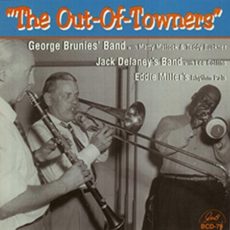
George Clarence Brunies, a.k.a. Georg Brunis was born into a musical family on February 6, 1902 in New Orleans, Louisiana.. His father led a family band with his brothers Henry, Merritt, Richard, and Albert who all became noted professional musicians. By the age of 8 he was already playing alto saxophone professionally in Papa Jack Laine’s band, but a few years later he switched to trombone.
Though Brunies never learned to read music, he played with many jazz, dance, and parade bands in New Orleans, quickly picking up tunes and inventing a part for his instrument. He first went to Chicago, Illinois in 1919 with a band led by Ragbaby Stevens, then worked the riverboats up and down the Mississippi River.
By 1921 he returned to Chicago and joined a band of his New Orleans friends playing at the Friar’s Inn, and this band eventually became famous as the New Orleans Rhythm Kings. His trombone style was influential to the young Chicago players, and his records were much copied. In this era Brunies was never bested as he could play anything any other trombonist could play as well or better. He would often end battles of the bands or cutting contests by outplaying other trombonists while operating the slide with his foot.
In 1924 after the Rhythm Kings broke up in Chicago, George joined the Ted Lewis band, which he played with through 1934. He spent some time with Louis Prima’s band, then landed a steady gig at the New York City jazz club Nick’s through 1938. In 1939 he joined Muggsy Spanier, with whom he made some of his most famous recordings. The following year he returned to Nick’s, where he remained through 1946 and then worked with Eddie Condon.
In 1949 Brunies returned to Chicago and landed at the 1111 Club leading his own band. Often showing off his unusual technical abilities and bizarre sense of humor at the same time, for example, he would lie on the floor and invite the largest person in the audience to sit on his chest while he played trombone. Believing that this name change would increase his good luck, on the advice of a numerologist, he changed his name to Georg Brunis in the late 1940s. While in residence every now and then other well-known jazz musicians would sit in and play until the wee hours.
Trombonist George Brunies, known as the King of the Tailgate Trombone, passed away in Chicago on November 19, 1974.
Sponsored By

Voices From The Community
#preserving genius
More Posts: trombone

Daily Dose Of Jazz..
Fred Lee Beckett was born on January 23, 1917 in Nettleton, Mississippi and began playing horn in high school. He began playing the trombone professionally in Kansas City, Missouri in the 1930s. Soon after beginning his career he landed a job with Eddie Johnson’s Crackerjacks in St. Louis, Missouri.
He went on to play with Duke Wright, Tommy Douglas, Buster Smith and Andy Kirk over the next few years. Beckett spent time as well in a territory band with Prince Stewart and played a gig in Omaha, Nebraska with Nat Towles. Towards the end of the Thirties he played with Harlan Leonard.
The early 1940s saw Fred performing and recording extensively with Lionel Hampton, and providing trombone support behind Dinah Washington recordings. Serving in the Army during World War II he contracted tuberculosis and passed away of the illness on January 30, 1946. He was twenty-nine years old.
Sponsored By

#preserving genius
More Posts: trombone