

Daily Dose Of Jazz…
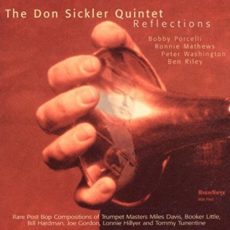
Don Sickler was born on January 6, 1944 in Spokane, Washington and with his mother’s guidance, an accomplished teacher, started learning accordion and piano at the age of four. At five he wrote his first composition that his parents published in their Sickler Accordion Course books. Taking up the trumpet at age ten, two years later he formed his first jazz combo and by 1957 was leading a nonet, playing for school and college dances. He went on to matriculate through Gonzaga University and the Manhattan School of Music in 1970 with a Master’s Degree in Trumpet Performance.
In New York he played commercially, subbed in Broadway show bands, played in rehearsal bands and jazz lofts though he turned towards music publishing. Don began working at E.B. Marks Music as music editor to managing editor, then moved to production manager of United Artists Publishing’s print division. Though they controlled the music catalogues of Blue NOte and Pacific Records that shaped much of his early life, he became disillusioned by the lack of corporate priority given to jazz. So he left and established his own publishing companies: Second Floor Music and 28th Street Music, which have published the works of over 350 jazz composers including Hank Mobley, Kenny Dorham, Bobby Timmons, Gigi Gryce, James Williams, Bobby Watson and a list too long to name.
After a seven-year hiatus Sickler resumed his playing career by collaborating with Philly Joe Jones that lasted for five years. This association afforded him opportunities to play with Art Blakey, Billy Higgins, Roy Haynes, Ben Riley and Charli Persip and other great players on every instrument. By 1982 he and Philly Joe created Dameronia, an all-star tribute band to Tadd Dameron, releasing two critically acclaimed albums and he transcribed all arrangements.
He would go on to release albums as a leader with Jimmy Heath, Cedar Walton, Ron Carter, Billy Higgins, Roy Hargrove, Mulgrew Miller, Bobby Watson, Ralph Moore, Wallace Roney, Clark Terry, Grover Washington, Joe Henderson, and Renee Rosnes. As a sideman he has worked with Herbie Hancock, Frank Wess, Wayne Shorter, Christian McBride, Larry Coryell Freddie Redd and Superblue.
Trumpeter, arranger, producer, publisher, music director and educator Don Sickler has won five Grammy Awards beginning with Joe Henderson’s Lush Life in 1992 and has been nominated several times that include J. J. Johnson’s The Brass Orchestra. His tribute album Monk on Monk was DownBeat Magazine’s 1998 Album of the Year. He is currently the musical director for the annual Thelonious Monk International Jazz Instrumental Competition for the Thelonious Monk Institute, conducts workshops, master classes and teaches trumpet, jazz arranging and composition at Columbia University.
Sponsored By


#preserving genius
More Posts: trumpet
Daily Dose Of Jazz…
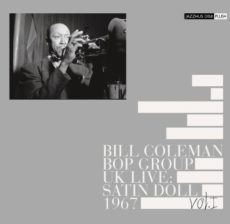
Alan Littlejohn was born Albert John Alan Littlejohns on January 4, 1928 in Highgate, London, England. Taking up the trumpet in 1946, he trained as an accountant after the War but also played semi-professionally with bands such as the Blue Note Swingtet and the Galleon Jazz Band. In 1952 he joined Cy Laurie and then a year later moved to play with Eric Silk. Moving to Manchester for eight months he worked with Ron Simpson and the Saints Jazz band in 1954, but then returned to London to work with Eric Silk again.
1955 saw Littlejohn taking a residency at the Putney Jazz Club and a further residency in Chelsea in 1960. In 1963 he led a quintet with trombonist Tony Milliner, pianist Mat Mathewson, bassist Bucky Cowman and Terry Cox on drums, emulating the style of the Bob Brookmeyer/Clark Terry band. Cox and Cowman were soon replaced by Max Cutlan and Dave Holland, respectively.
Over the course of his career Alan would play with Mal Cutlan, Lew Hooper, Jimmy Hamilton, Matt Methewson, Cat Anderson, Peanuts Hucko, Earl Warren, Sonny Dee, the Georgia Jazz Band and to be the support band for Dave Brubeck at his Festival Hall gig. From 1973 to 1978, he played with Alvin Roy’s Band which had a residency at The Prospect of Whitby in London.
When not in residency at clubs in London Littlejohn toured Spain and Germany, guest appeared with the Merseysippi Jazz Band and during the Eighties played as a full-time professional musician for a short period. From 1990 he worked with Laurie Chescoe’s Good Time Jazz until a month before his death. Trumpeter, flugelhornist and bandleader Alan Littlejohn, most notable for his work with artists such as Ben Webster, Earl Hines, Billy Butterfield and recording with Bill Coleman, passed away on November 12, 1995 in Barnet in Hertfordshire.

Uplift Someone’s World
#preserving genius
More Posts: flugelhorn,trumpet
Daily Dose Of Jazz…
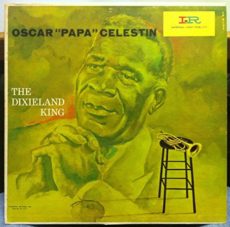
Oscar “Papa” Celestin was born on January 1, 1884 in Napoleonville, Louisiana to a Creole family. As a youth he worked on rural Louisiana plantations but eager for a better life, he worked as a cook for the Texas & Pacific Railroad, saved up money and bought used musical instruments. He played guitar and trombone before deciding on cornet as his main instrument. He took music lessons from Claiborne Williams, who traveled down the Bayou Lafourche from Donaldsonville.
Celestin played with the Algiers Brass Band by the early 1900s, and with various small town bands before moving to New Orleans in 1904, at age 20. There he played with the Imperial, Indiana, Henry Allen senior’s Olympia Brass Band, and Jack Carey’s dance band. Early in his career he was sometimes known as Sonny Celestin. Around 1910 he landed a job as leader of the house band at the Tuxedo Dance Hall on North Franklin St. at the edge of Storyville.
Keeping the name Tuxedo as the band’s name after the Dance Hall closed, they dressed in tuxedos and became one of the most popular bands hired for society functions, both black and white. He co-led the Tuxedo Band with trombonist William Ridgely and made their first recordings during the Okeh Records field trip to New Orleans in 1925. Following a fallout with Ridgely, the two led competing Tuxedo bands for about five years. Celestin’s Original Tuxedo Orchestra had Louis Armstrong, Bill Mathews, Octave Crosby, Christopher Goldston, Joe Oliver, Mutt Carey, Alphonse Picou and Ricard Alexis as a members over the years and made an additional series of recordings for Columbia Records through the 1920s. He also led the Tuxedo Brass Band, one of the top brass bands in the city.
Forced out of the business by depression economics, Papa worked in a shipyard until putting together another band after the World War II. The new Tuxedo Brass Band was tremendously popular and became a New Orleans tourist attraction. By 1953 he appeared in the travelogue Cinerama Holiday, became a regular feature at the Paddock Lounge on Bourbon Street and gave a command performance for President Eisenhower at the White House. He made regular radio broadcasts, television appearance, and more recordings with his last recording was singing on Marie LaVeau in 1954.
Bandleader, trumpeter, cornetist and vocalist Papa Celestin passed away in New Orleans, Louisiana on December 15, 1954, amassing 4000 people who marched in his funeral parade. The Jazz Foundation of New Orleans had a bust made and donated to the Delgado Museum in New Orleans, in honor of his contributions to the genre. #preserving genius
Give A Gift Of Jazz – Share
Daily Dose Of Jazz…
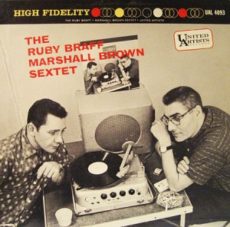
Marshall Brown was born on December 21, 1920 in Framingham, Massachusetts. Little recorded, he devoted most of his career to education, earning a music degree from New York University, as a member of the Zeta Psi Fraternity.
He was also a high school band director leading the Farmingdale New York Daler Band from the early 1950s through 1957. Brown was the first high school band director to initiate a jazz education program, which he did in his tenure at Farmingdale High. By 1956 his stage band, the Daler Dance Band, a jazz big band with an average age of 14 years old, was so formidable and impressive, boasted future jazz stars pianist Michael Abene, saxophonist Andrew Marsala, and whiz drummer Larry Ramsden. One night at the 1957 Newport Jazz Festival, Count Basie, who was late for his appearance as he entered the festival grounds heard the Daler Band performing their set and exclaimed, “Damn, they started already”, mistaking the Dalers for his band.
Marshall received some attention for performing and recording in a quartet with Pee Wee Russell in the early 1960s. While Russell was most often associated with Dixieland or swing, their quartet performed more adventurous, free jazz-oriented pieces, including pieces by Ornette Coleman and John Coltrane.
During the Sixties he was the resident trombonist at Jimmy Ryan’s, a noted dixieland venue. He also club dated with Luke O’Malley’s Irish band during this time. Brown also performed or recorded at one time or another with Ruby Braff, Beaver Harris, Lee Konitz, George Wein and Basie.
Conductor, arranger and educator Marshall Brown, who also played the valve trombone, trumpet, euphonium, electric bass and the banjo, passed away on December 13, 1983 in New York City.
Uplift Someone’s World
More Posts: banjo,bass,euphonium,trombone,trumpet,valve trombone
Daily Dose Of Jazz…
Jimmy Nottingham was born December 15, 1925 in New York City. His first professional job was with Cecil Payne in 1943 prior to serving in the Navy from 1944 to 45 and playing in Willie Smith’s band. Following his discharge from the service he worked with Lionel Hampton for two years and then with Charlie Barnet, Lucky Millinder, Count Basie and Herbie Fields through the rest of the decade.
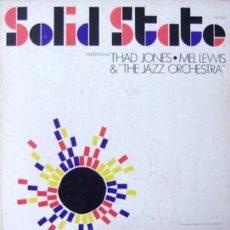
He played Latin jazz from 1951–53, then was hired by CBS as a staff musician in 1954, working for the network for more than 20 years. In his spare time he played jazz with Budd Johnson, Dizzy Gillespie, Oliver Nelson, Benny Goodman, Thad Jones/Mel Lewis and Clark Terry. He recorded with Mose Allison, Joe Cain, Coleman Hawkins, Billy Byers, Seldon Powell, Charlie Mariano, Kenny Burrell, Tony Scott, Maynard Ferguson, Jimmy McGriff, Chico O’Farrill, Shirley Scott and Sonny Stitt among numerous others.
Trumpeter Jimmy Nottingham was such a valuable big band and studio musician that he spent most of his life playing anonymously in the background and had limited chances to solo. He never released an album as a leader, but did, record four songs for Seeco Records in 1957. He passed away at the age of 52 on November 16, 1978 in his home city.
Sponsored By

More Posts: trumpet