

Daily Dose Of Jazz…
Karl Curtis George was born on April 26, 1913 in St. Louis, Missouri. Early in his career he played with McKinney’s Cotton Pickers in 1933, and Cecil Lee. in the 1930s he spent time in the Jeter Pillars Orchestra and then in the orchestras of Teddy Wilson from 1939–40, followed by a year-long stint with Lionel Hampton in 1941.
George served in the Army from 1942 to 1943, then moved to California and played with Stan Kenton, Benny Carter, spent a spring with Count Basie and in Los Angeles with Happy Johnson, his final collaboration of note.
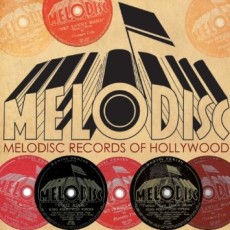
He also played in sessions led by Charles Mingus, Slim Gaillard, Oscar Pettiford, Dinah Washington and Lucky Thompson. During years1945-1946 Karl led his own group on record the track “Peek-A-Boo” by the Karl George Octet, originally released on Melodisc, has been reissued on a Topnotch compilation.
Jazz trumpeter Karl George retired back in his hometown once his health got the better of him, while recordings he had played on continued to be stocked on record store shelves. He lived out the rest of his life in almost total obscurity until passing away in May 1978.

Dose A Day – Blues Away
More Posts: trumpet
Daily Dose Of Jazz…
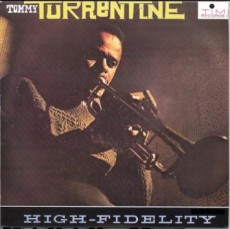
Tommy Turrentine was born Thomas Walter Turrentine, Jr. on April 22, 1928 in Pittsburgh, Pennsylvania and is the older brother of saxophonist Stanley Turrentine.
Tommy played in the bands of Benny Carter, Earl Bostic, Charles Mingus, Billy Eckstine, Dizzy Gillespie and Count Basie. While his brother had a successful career and recorded a number of albums over his lifetime, Tommy only recorded one album under his name with Julian Priester, Bob Boswell, Max Roach and Horace Parlan before retiring in the 1960s.
However, he recorded a number of sessions as a sideman with Sonny Clark, Booker Ervin, Lou Donaldson, Abbey Lincoln, Dexter Gordon, Jackie McLean, Archie Shepp, Sun Ra and his brother’s bands. In the late 1950s Turrentine began a working relationship with Max Roach that was spawned in part when he joined the Max Roach Quintet following the death of Clifford Brown.
In the 1970s he lived on the ground floor of a brownstone with his wife Jane on West 82nd Street in New York City, a street which during that period had a number of jazz luminaries living along its blocks between Broadway and Central Park, including Tommy Flanagan and Pharoah Sanders.
In the summer of 1979 Turrentine was one of several star trumpeters who appeared at the Village Gate for an all-star tribute to Blue Mitchell. He was also adept on the piano at chord blockings and was a compositional exponent of Thelonious Monk’s earlier chordal voicing. His bebop compositions combined a sophisticated and emotional fusion and poignant lyricism reminiscent of Benny Golson and with the passionate, spirited influence of the Brown/Roach Quintet. Trumpeter Tommy Turrentine passed away on May 13, 1997 in New York City.
Dose A Day – Blues Away
More Posts: trumpet
Daily Dose Of Jazz…
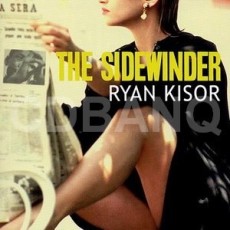
Ryan Kisor was born April 12, 1973 in Sioux City, Iowa and learned trumpet from his father. He started playing in a local dance band, the Eddie Skeets Orchestra, at age ten. By 12 he was taking classical trumpet lessons, met Clark Terry when he was 15 while attending his summer jazz camp, and played with all-star high school bands. In 1990, he won the Thelonious Monk Institute’s trumpet contest at the age of 17, performing against Nicholas Payton and Marcus Printup.
Following this he was signed by Columbia Records and released his first two albums, 1992’s Minor Mutiny and 1993’s On the One. Following this, Kisor entered the Manhattan School of Music and studied under Lew Soloff among others.
He has played in New York with the Mingus Big Band, Michel Camilo Big Band, with Gerry Mulligan, Wynton Marsalis, Wycliffe Gordon, Horace Silver and Walter Blanding. Since 1994 he has been a member of the Jazz at Lincoln Center Orchestra, has released fifteen albums as a bandleader and continues to perform and record.
Inspire A Young Mind
More Posts: trumpet
Daily Dose Of Jazz…
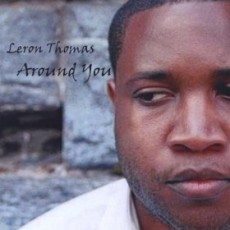
Leron Thomas was born on April 8, 1979 in Houston, Texas and his musical journey began with inspiration fro his family rich with respect and understanding of quality music. He graduated from Houston’s High School for the Performing and Visual Arts and ventured to New York City to develop as a trumpet player and composer, enrolling in Manhattan’s The New School.
While studying, Leron’s own music was evolving and maturing and began performing professionally with various artists including Bilal, Billy Harper, Charles Tolliver and Roy Hargrove. The quality of his original compositions was enhanced when playing live alongside talented peers Robert Glasper, Damion Reid, Vicente Archer, Marcus Strickland, Harold O’Neal, Isaac Smith, Reggie Quinerly and Omer Avital.
After matriculation through The New School in 2003 he remained in Manhattan to pursue his professional career as a writer and trumpeter. Thomas expanded his scope of playing and has worked with many artists from a variety of genre’s including Michael Stipe, Lauryn Hill, Bobby Watson and Mos Def, to name a few. Subsequently he found ways to liberate himself through a natural, fluid progression into writing and performing ‘other music’. These compositions required his personal trumpet tone along with his vocals to emphasize the diverse sound.
Since 2004 he has developed this genre-crossing music incorporating jazz, blues, pop, country, electro-pop and rock. With eight independently released projects and critical acclaim, he explores a range of artistic media. Having composed for film, he is featured in an independent short film 2010 and appears on Gilles Peterson’s Brownswood Bubblers Eight. Trumpeter Leron Thomas continues to compose, perform and record.
Inspire A Young Mind
More Posts: trumpet
Daily Dose Of Jazz…
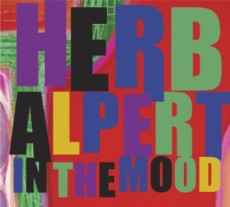
Herbert Alpert was born on March 31, 1935 and raised in the Boyle Heights section of East Los Angeles, California. His family was Jewish, emigrating from Radomyshl, now present day Ukraine and Romania. His father, a talented mandolin player, his mother taught violin, and his older brother a drummer. He began trumpet lessons at the age of eight and played at dances as a teenager. Acquiring an early wire recorder in high school, he experimented on this crude equipment.
Following graduation in 1952, he joined the U.S. Army and frequently performed at military ceremonies. After his service in the Army, Alpert tried his hand at acting, but eventually settled on pursuing a career in music. While attending the University of Southern California he became a member of the USC Trojan Marching Band, and appeared in the un-credited role as “Drummer on Mt. Sinai” in the film The Ten Commandments in 1056. In 1962, he had an un-credited part in a scene in the film Mr. Hobbs Takes A Vacation, playing a solo in a dance band.
In 1957, Alpert teamed up with Rob Weerts, co-wrote a number of Top 20 hits including Baby Talk for Jan & Dean and Wonderful World for Sam Cooke. By 1960 he was signed with RCA Records as a vocalist under the name of Dore Alpert.
In 1962 along with Jerry Moss they founded A&M Records and their very first hit was “The Lonely Bull” adapted from the mariachi bands and the cheers of bullfighting spectators. The title song reached No. 6 on the Billboard Pop Singles chart and became A&M’s first album with the original release number being #101.
By the end of 1964, with top session players he began touring with the Tijuana Brass. Television specials followed by 1967, as well as two albums, Whipped Cream and Other Delights and Going Places. The single “A Taste Of Honey” won a Grammy Award for Record of the Year.
The Brass would go on to perform the title tack to the first movie version of Casino Royale in 1967. His music would be used on The Dating Game, bringing him greater exposure. The band would win six Grammy Awards, fifteen of their albums went gold, fourteen platinum, and in 1966 outsold the Beatles.
Alpert’s only No. 1 single during this period, and the first No. 1 hit for his A&M label, was a solo effort of “This Guy’s In Love With You” by Bacharach/David. In the 1970s, 1980s, and 1990s, Alpert enjoyed a successful solo career. In 1979 he had his biggest instrumental hit titled “Rise”. He would go on to work with Jimmy Jam, Terry Lewis, Janet Jackson and Lisa Keith. He performs with Gato Barbieri, Rita Coolidge, Brian Culbertson, and others. With his wife kani Hall (Sergio Mendes fame), they have released the live album Anything Goes. In 2013, he released a new album, Steppin’ Out which won a Grammy.
Herb and Moss received a Grammy Trustees Award, a Grammy Lifetime Achievement Award, he was awarded the National Medal of Arts by President Obama in 2013, has a star on the Hollywood Walk Of Fame, and received the “El Premio Billboard” for his contributions to Latin music. Trumpeter, pianist, vocalist, composer, arranger, songwriter, record producer of jazz, Latin and pop music continues to perform, record and tour.
Give A Gift Of Jazz – Share