

Daily Dose Of Jazz…
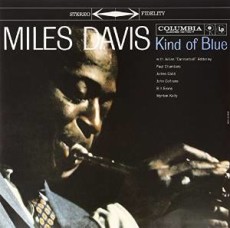
Miles Dewey Davis III was born May 26, 1926 in Alton, Illinois into an affluent family, father a dentist and his mother a blues pianist. They owned a substantial ranch in the Delta region of Pine Bluffs, Arkansas. When he was one years old the family moved to East St. Louis and it was between there and Pine Bluffs that his appreciation for music came out of the Black church.
His musical studies began at 13, when his father gave him a trumpet and arranged lessons with local musician Elwood Buchanan. He learned to play with out vibrato which gave him his clear signature tone. By age 16, Davis was a member of the music society and, when not at school, playing professionally first at the local Elks Club. At 17, he spent a year playing in Eddie Randle’s band, the Blue Devils and during this time, Sonny Stitt tried to persuade him to join the Tiny Bradshaw band, then passing through town. His mother insisted that he finish his final year of high school and he graduated from East St. Louis Lincoln High School in 1944.
In 1944, the Billy Eckstine band visited East St. Louis with Dizzy Gillespie and Charlie Parker in tow. Miles was brought in on third trumpet for a couple of weeks because the regular player, Buddy Anderson, was out sick. Even after this experience, once Eckstine’s band left town, Davis’ parents were still keen for him to continue formal academic studies.
However, In the fall of 1944, following graduation from high school, Davis moved to New York City to study at the Juilliard School of Music. His arrival marked a new chapter and he spent his first weeks attempting to contact Charlie Parker, against all advice even from Coleman Hawkins. Finally locating his idol, he became one of the cadre of musicians who held nightly jam sessions at Minton’s Playhouse and Monroe’s, both Harlem nightclubs. He was among future leaders of bebop Fats Navarro, Freddie Webster, J. J. Johnson as well as the established Thelonious Monk and Kenny Clarke.
Dropping out of Juilliard after asking permission from his father, Miles began playing professionally, performing in several 52nd Street bands led by Coleman Hawkins, and Eddie Lockjaw Davis. By 1945, he entered a recording studio for the first time, under the leadership of Herbie Field. This was the beginning of his many sideman recordings until 1946 when he recorded as a leader with the Miles Davis Sextet plus Earl Coleman and Ann Hathaway. Though a member of the groundbreaking Charlie Parker Quintet, he can be heard accompanying singers. He would play with Max Roach, Al Haig, Sir Charles Thompson, Duke Jordan, Curley Russell, Tommy Potter and Leonard Gaskin. This gave him numerous recording sessions and the beginning of what would become his cool jazz style.
After Parker’s breakdown and committal to Camarillo State Mental Hospital while on tour in Los Angeles, Davis, found himself stranded. He roomed and collaborated for some time with Charles Mingus, got a job with Billy Eckstine and eventually got back to New York. He would freelance and sideman in some of the most important combos on the New York jazz scene.
By 1948 Davis grew close to Canadian composer and arranger Gil Evans and his basement apartment had become the meeting place for several young musicians and composers such as Davis, Roach, John Lewis and Gerry Mulligan who were unhappy with the bebop scene. Together they created the tuba band sound that included French horn and tuba in the nonet line-up. The objective was to achieve a sound similar to the human voice, through carefully arranged compositions and by emphasizing a relaxed, melodic approach to the improvisations.
A contract and recording sessions between 1949-1950 with Capitol Records brought about the release of Birth Of The Cool in 1956, which gave its name to the cool jazz movement. Though met with resistance, years later it was co-opted by white musicians like Mulligan and Dave Brubeck and the critics who hailed it as a success.]
By the first half of the 1950s Davis was on tour in Paris with Tadd Dameron, Kenny Clarke and James Moody, and living the life of a black musician abroad. He was involved with French actress and singer Juliette Greco for a time and then returned to the States to be underappreciated by the critics and a liaison with the mother of his two children unraveled. This is when his heroin addiction began, with subsequent arrests. But iwas during this period that he became acquainted with Ahmad Jamal’s music and his elegant approach and use of space influenced him deeply and he definitely severed all ties to bebop.
Through the decade he would record for Prestige, work with Art Blakey, Sonny Rollins and John Coltrane, began using the Harmon mute creating a signature sound and phrasing. The most important Prestige recordings of this period were Dig, Blue Haze, Bag’s Groove, Miles Davis and the Modern Jazz Giants and Walkin’. This placed him in the center of the hard bop movement. It also hailed his period of withdrawal, being distant, cold, contempt for critics, and his quick temper.
His first great quintet included John Coltrane, Red Garland, Paul Chambers and Philly Joe Jones. This group brought forth such titles as Relaxin’, Steamin’, Workin’ and Cookin’ all with The Miles Davis Quintet. From 1957 to 1963 Davis recorded a series of albums with Gil Evans playing often trumpet and flugelhorn on Miles Ahead, Porgy and Bess, Sketches of Spain, and Quiet Nights. In 1959 with Bill Evans, Wynton Kelly, John Coltrane, Cannonball Adderley, Paul Chambers and Jimmy Cobb he recorded his magnus opus Kind Of Blue.
Through the Sixties he recoded with a number of musicians, Hank Mobley, Sonny Stitt, Jimmy Heath, George Coleman, Ron Carter, Tony Williams, Herbie Hancock and Sam Rivers. But it was Hancock, Williams, Carter and Wayne Shorter that became the nucleus of his second great quintets.
He would work with Chick Corea and Dave Holland, enter into his electric period playing with Joe Zawinul, John McLaughlin, Jack DeJohnette, Airto Moriera, Bennie Maupin and recorded the landmark Bitches Brew. He would create the Cellar Door Band before retiring in 1975. By 1979, he overcame his cocaine addiction and regained his enthusiasm for music and put together new smaller combos playing up until his death.
Miles Davis is regarded as one of the most innovative, influential and respected figures in the history of music. He has received numerous Grammy Awards, and according to the RIAA, the album is the best-selling jazz album of all time, having been certified as quadruple platinum (4 million copies sold. In 2009, the US House of Representatives voted 409–0 to pass a resolution honoring the album as a national treasure. On September 28, 1991 he passed away in Santa Monica, California.

Dose A Day – Blues Away
More Posts: flugelhorn,trumpet
Daily Dose Of Jazz…
Al Porcino was born on May 14, 1925 in New York City. He began playing trumpet professionally in 1943 in many of the big bands over the next two decades including those of George Auld, Louis Prima, Jerry Wald, Tommy Dorsey, Gene Krupa and Chubby Jackson.
Porcino played with Woody Herman in 1946, 1949-1950, and again in 1954. He also did two stints with Stan Kenton in 1947-48 and 1954-55. By the 1950s, he was playing with Pete Rugolo, Dizzy Gillespie, Count Basie, Elliot Lawrence and Charlie Barnet.
In 1957 he moved to Los Angeles and started working in the studios. Al played in the Terry Gibbs Dream Band for three years starting in 1959. Throughout the Sixties he often played in orchestras backing vocalists, performed on two soundtracks The Cincinnati Kid and Music from Mission Impossible with Lalo Schifrin, played with Buddy Rich, Gil Fuller, Thad Jones, Mel Lewis and again with Woody Herman in 1972.
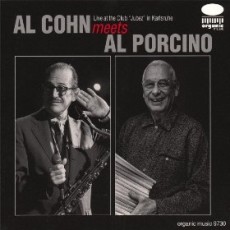
Al formed his own big band and recorded behind Mel Torme in addition to their own work. During the Seventies he moved to Germany playing on Al Cohn’s final recordings in 1987 and led big bands there until his death in Munich on December 31, 2013.
Dose A Day – Blues Away
More Posts: trumpet
Daily Dose Of Jazz…
Creed Taylor was born May 13, 1929 in Bedford, Virginia and played trumpet in the high school marching band and symphony orchestra. He grew up surrounded by country music and bluegrass but gravitated more toward the sounds of jazz after listening to Dizzy Gillespie in high school. He spent countless evening listening to Symphony Sid broadcast live from Birdland in New York City. He went on to attend Duke University, perform with the Duke Ambassadors and The Five Dukes.
After graduation, a couple of years in the Marines, and a year of graduate school, he made his way to New York City to pursue becoming a record producer. Convincing the Duke alum running Bethlehem Records to allow him to record vocalist Chris Connor with the Ellis Larkins Trio and the album becoming a success, led Taylor to become head of A&R. He was at Bethlehem during its two most significant years, recording Oscar Pettiford, Ruby Braff, Carmen McRae, Charles Mingus, Herbie Mann, Charlie Shavers and the J.J. Johnson/Kai Winding Quintet.
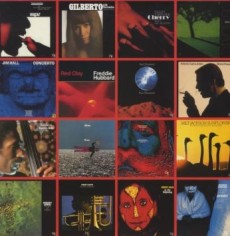
Creed went on to join ABC-Paramount, founded the subsidiary Impulse label four years later dubbing it “The New Wave In Jazz”. He recruited John Coltrane and released gatefold albums by Ray Charles, Gil Evans, Kai Winding, J.J. Johnson and Oliver Nelson. His use of photographers for cover art that blurred the lines of jazz and popular music would set him apart and come in handy in later years.
By 1961 Taylor left and went to Verve Records introducing bossa nova to the US through recordings such as “The Girl From Ipanema” with Antonio Carlos Jobim and Stan Getz. The music was picked up by Dizzy Gillespie, and caught the ear of jazz guitarist Charlie Byrd and the sound exploded through the jazz community. Never leaving jazz, he also produced albums by Wes Montgomery, Jimmy Smith, Bill Evans and many others.
From Verve Creed went to A&M Records in 1967 and formed his own label, CTI (Creed Taylor Inc.), the following year. A&M distributed CTI releases until 1969, when he left to establish CTI as an independent record company. CTI became one of the most popular and successful jazz record companies of the 1970s, achieving fame for his unrivalled ability to balance the artistic with the commercial. He recorded Freddie Hubbard, Stanley Turrentine, George Benson, Chet Baker, Gerry Mulligan, Nina Simone, Paul Desmond, Art Farmer, Herbie Hancock and Ron Carter as well as forming the Kudu label and recording the likes of Hank Crawford, Grover Washington, Jr. and Esther Phillips.
Facing financial problems in 1974 Taylor caused by setting up his own network to distribute CTI labels and made a new distribution deal with Motown. This, however, was the beginning of the end with litigation, losing artists and bankruptcy. Finally Columbia agreed to distribute but he gave up his rights to the masters.
Record producer Creed Taylor has won numerous Grammy Awards for his decades of production work including sessions by Stan Getz’s Focus 1961, Desafinado by Stan Getz/Charlie Byrd, 1962, Bill Evans’ Conversations With Myself 1963, The Girl from Ipanema by Stan Getz and Joao Gilberto 1964, Willow Weep For Me by Wes Montgomery in 1969 and First Light by Freddie Hubbard in 1972. His CTI label changed the way music was produced for the decade of the 70s and forever left an indelible stamp on the genre of jazz.
Get A Dose On The Road
More Posts: record producer,trumpet
Daily Dose Of Jazz…
Maynard Ferguson was born Walter Maynard Ferguson on May 4, 1928 in Verdun, Quebec, Canada. Encouraged by his musician parents he was playing piano and by the age of four. A child prodigy violinist, at nine he heard a cornet and ask for one. By thirteen, he was heard soloing regularly with the Canadian Broadcasting Corporation Orchestra, featured on “Serenade for Trumpet in Jazz, and won a scholarship to the Conservatoire de Musique du Quebec a Montreal where he studied from 1943 through 1948.
Dropping out of Montreal High School at 15 to pursue his music career ore actively, Ferguson began playing in various dance bands and then took over his saxophonist brother Percy’s band. He played around Montreal and became an opening act for touring bands. This brought him to the attention of many bandleaders in the U.S. and he started getting offers to cross the border.
Maynard eventually relocated to the United States in 1948, intent on joining Stan Kenton’s organization. However, it had just disbanded so he started playing with Boyd Raeburn, Jimmy Dorsey and Charlie Barnet’s bands. When Barnet retired he went to work with Stan Kenton’s newly formed 40-piece Innovations Orchestra in 1950. For three years running, 1950, 1951, and 1952, he won the Down Beat Readers’ Poll as best trumpeter. In 1953, become a session player for Paramount Pictures, soon becoming the first-call player and appeared on 46 soundtracks, and to get around the studio contract that prevented him from playing jazz clubs he would appear under aliases Tiger Brown, Foxy Corby and others.
By 1956, Ferguson became the leader of the Birdland Dream Band, a 14-piece all-star big band formed by Birdland’s owner Morris Levy. He has played with Slide Hampton, Don Ellis, Don Sebesky, John Bunch, Joe Zawinul, Joe Farrell, Jaki Byard, Nino Tempo and others as well as arrangers Bob Brookmeyer, Jimmy Guiffre, Bill Holman and Marty Paich to name a few.
He went on to guest with the New York Philharmonic, then moved to the Hitchcock estate with Timothy Leary, Ram Dass and their Harvard community in 1963 and experimented with LSD, psilocybin and other psychedelic drugs for spiritual awakening. After three years he moved to India, engaged with a guru and established the Sri Sathya Sai Institute of Higher Learning Boys Brass Band and taught for several years.
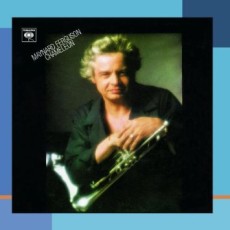
By 1969, Maynard was in England, signed with CBS Records, formed a big band with British musicians and performed on television then returned to debut his new band in New York. He would recruit young talent from jazz programs from institutions like Berklee College of Music, North Texas State University and the University of Miami and targeting young audiences.
For the next couple of decades he would play the Olympics, work with large ensembles, formed the Big Bop Nouveau, backed vocalists such as Diane Schuur and Michael Feinstein, performed, toured and recorded big band albums. Ferguson has been an influence in the worlds of big band, swing, bebop, cool jazz, Latin, jazz-rock, fusion classical and opera. As an educator he has conducted scores of master classes with amateurs and professional trumpeters over the course of his career. In addition to trumpet he plays the flugelhorn, valve trombone, baritone horn and French horn.
He has been inducted into the Down Beat Jazz Hall of Fame, is a member of Kappa Kappa Psi, honorary member of Phi Mu Alpha’s Xi Chi Chapter, received Phi Mu Alpha Sinfonia Charles E. Lutton man of Music Award, has an honorary doctorate from and The Maynard Ferguson Institute of Jazz Studies at Rowan University, and his extensive memorabilia is housed at the Sherman Jazz Museum in Texas. He passed away on August 23, 2006 at age 78 in Ventura, California.
Take A Dose On The Road
More Posts: flugelhorn,saxophone,trumpet,valve trombone
Daily Dose Of Jazz…
Ambrose Akinmusire was born May 1, 1982 and raised in Oakland, California. A member of the Berkeley High School Jazz Ensemble, he caught the attention of saxophonist Steve Coleman who was visiting the school to give a workshop. Coleman hired him as a member of his Five Elements band for a European tour and the young trumpeter was also a member of the Monterey Jazz Festival’s Next Generation Jazz Orchestra.
Ambrose studied at the Manhattan School of Music before returning to the West Coast to obtain a master’s degree at the University of Southern California and attend the Thelonious Monk Institute of Jazz in Los Angeles. In 2007, he won the Thelonious Monk International Jazz Competition, the Carmine Caruso International Jazz Trumpet Solo Competition and released his debut recording Prelude…To Cora on the Fresh Sound New Talent label.
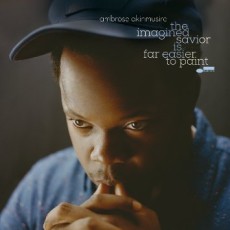
Moving back to New York City he began performing with Vijay Iyer, Aaron Parks, Esperanza Spalding and Jason Moran, taking part in Moran’s innovative multimedia concert event In My Mind: Monk At Town Hall, 1957. It was also during this time that he caught the attention of Bruce Lundvall, President of Blue Note Records. Akinmusire released his sophomore album as a debut on the Blue Note label in 2011 titled When The Heart Emerges Glistening, featuring his quintet of tenor saxophonist Walter Smith III, pianist Gerald Clayton, bassist Harish Raghavan and drummer Justin Brown. His third album, The Imagined Savior Is Far Easier To Paint was released in 2014.
Trumpeter Ambrose Akinmusire has won the North Sea Jazz festival Paul Acket award and has worked with Kendrick Lamar, Aaron Parks, Sara Gazarek, Alan Pasqua, Mike Ladd, Josh Roseman, David Binney, John Escreet, Le Boeuf Brothers, Vince Mendoza, Jack DeJohnette and Dana Stephens. He continues the tradition of performing and recording.
Inspire A Young Mind
More Posts: trumpet