

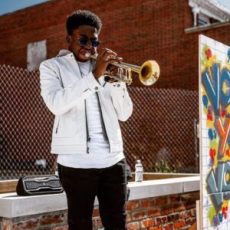
JAURON PERRY
Jauron Perry, is a rising Detroit-Native Jazz Trumpeter, Composer, and Bandleader, currently a first year undergraduate studying jazz performance at Michigan State University’s College of Music. Selected as the Next Generation of Talent award recipient, Jauron has quickly gained much experience performing and working with Detroit jazz masters such as Rodney Whitaker, Dwight Adams, James Carter, Dee Dee Bridgewater, Vincent Chandler, Kris Johnson, Diego Rivera, Sean Dobbins, Wendell Harrison, Marion Hayden, and Regina Carter, just to name a few. Other sensations outside of his hometown include Etienne Charles, Wynton Marsalis, Marcus Printup, Walter Blanding, Jerome Jennings, Tim Warfield, Helen Sung, and Jeff Hamilton.
Jauron has also been featured in popular events such as the Detroit Jazz Festival, Michigan Jazz Festival, African World Festival, East Lansing Summer Solstice Jazz Festival, and as of
recent, the Jack Rudin Jazz Championship at Jazz at Lincoln Center with MSU’s Jazz Orchestra 1. From his experience has come his reputation for being vastly knowledgeable, passionate, and mature about his craft for his age. He has been said, according to Kris Johnson, to be a “natural leader who searches for new ways to make personal connections with the music”. Having graduated from the acclaimed Detroit School of Arts High School, known for producing popular artists such as Aaliyah, and even the vibrant Endea Owens, a strong foundation and seriousness was established for Jauron early on through effective exposure and world-class mentorship. In addition to his performance endeavors, Jauron also works as a
youth mentor and advocate for young people matriculating into the arts and entertainment industry.
He is currently constructing his own original compositions and aspires to lead bands of varying styles and sizes from small group to big band and straight ahead jazz to funk and fusion to perform across numerous venues around the country and internationally. Jauron desires to spread a message of unity, diversity, and awareness through his music, honor the tradition by highlighting the great eras of jazz and pay tribute to legends and his mentors, and include relevant themes in how he approaches performing even jazz classics through the lens of today’s world.
Showtimes: 7:30p | 9:30p
More Posts: adventure,club,genius,jazz,music,preserving,travel,trumpet
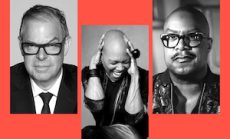
BILL CHARLAP TRIO
Special Guests: Dee Dee Bridgewater & Nicholas Payton
“There are certain gigs that remind you why you fell in love with jazz in the first place. Vocalist Dee Dee Bridgewater and pianomeister Bill Charlap did just that Friday night at Catalina’s,” wrote Jazz Weekly following a 2022 performance at the famed LA jazz club.
The NEA Jazz Master and triple Grammy Award winner teams with Grammy-winning trumpeter Nicholas Payton and the Grammy-winning Bill Charlap Trio – Peter Washington on bass, Kenny Washington on drums – to open the 2023 Jazz in July season. They bring the artistic alchemy that has made their collaborations a joyride of spontaneous storytelling and improvisation, making this opening concert one not to miss.
More Posts: adventure,drums,festival,genius,jazz,music,piano,preserving,travel,trumpet,vocal
Daily Dose Of Jazz…
Hank Shaw was born Henry Shalofsky was born June 23, 1926 in London, England. At the age of 15 he played with Teddy Foster’s band during World War II. In the latter half of the decade he played around his hometown with Oscar Rabin, Frank Weir, and Tommy Sampson, then switched permanently from swing to playing bebop music in 1946 after hearing Dizzy Gillespie.
Visiting the United States in 1947 he came with close friend and fellow pioneer bebopper altoist Freddy Syer. However, unable to secure work permits they moved to Canada where they played with Oscar Peterson and Maynard Ferguson. Returning to England in 1948, Hank was one of the early Club Eleven players, along with Ronnie Scott, John Dankworth, Lennie Bush, and others. He also played with many of these musicians on the recordings of Alan Dean’s Beboppers.
After Club Eleven shuttered, Shaw played with Vic Lewis and toured Europe with Cab Kaye, then joined Jack Parnell’s ensemble in 1953 and Ronnie Scott’s nonet in 1954. He joined Jamaican alto saxophonist Joe Harriott in his celebrated quintet in 1958 but left with pianist Harry South when Harriott sought to introduce his “free-form” concept. Shaw played regularly both live and as a session musician for many British jazz musicians over the course of the next twenty or so years, working with Joe Harriott, Tony Crombie, Don Rendell, Tony Kinsey, Stan Tracey, Bill Le Sage, and others.
He led a quartet at the 100 Club in the Sixties, and played in the Bebop Preservation Society and the John Burch Quartet for over two decades each. He retired due to ill health in the late 1990s. Bebop trumpeter Hank Shaw transitioned four months past his 80th birthday on October 26, 2006 in Kent, England.

More Posts: bandleader,history,instrumental,jazz,music,trumpet
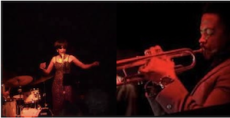
THE TERENCE HARPER PROJECT FEATURING AUDREY SHAKIR
Terence Harper is one of the youngest members of the Harper Family Dynasty and is currently touring around the world. He has played and recorded with the great Curtis Lundy, Steve Turre, Jimmy Heath, Musiq Soulchild, Solange, Keith David, Bobby Watson and Chinese Movie Star and Mandopop artist Andy Lau just to name a few. He has also appeared on numerous television shows and movies including, The Orignals as well as the remake of the movie The Color Purple, directed by Blitz Bazawule and produced by Quincy Jones, Scott Sanders, Steven Spielberg and Oprah Winfrey.
Audrey Shakir is a jazz-pop vocalist extraordinaire and dubbed Atlanta’s First Lady of Jazz. She has entertained throughout the United States and internationally. Her scatting talents have been compared to the great Ella Fitzgerald, and she brings a remarkable jazz influence to all the material she performs.
Showtimes: 7:30pm & 9:30pm
More Posts: adventure,album,club,festival,genius,jazz,museum,music,preserving,restaurant,travel,trumpet,vocal
Requisites
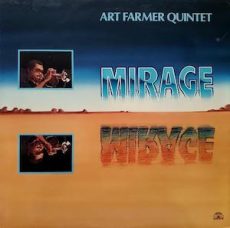
Mirage ~ Art Farmer Quintet | By Eddie Carter
The word mirage, defined in the Merriam-Webster Dictionary, is “something that is believed to be true or real but is actually false or unreal.” This morning’s record from the library by The Art Farmer Quintet is an excellent Hard-Bop release that’s certainly not a Mirage (Soul Note SN 1046). This album marked a reunion for the leader and Clifford Jordan. They’d known each other for a long time but only recorded occasionally. The group is Art Farmer on flugelhorn, Clifford Jordan on tenor sax, Fred Hersch on piano, Ray Drummond on double bass, and Akira Tana on drums. My copy is the 1982 Italian Stereo release with a cover variation.
Side One starts with Barbados by Charlie Parker. Akira and Ray bring the song to life with two concise comments that segue into the quintet’s inviting theme. Art opens things up with an easygoing solo. Clifford follows with a few leisurely flowing lines, then Fred concludes with a carefree statement into the closing chorus and fades out. Passos by Fritz Pauer has a Bossa-Nova beat in its structure. The song’s title means “steps” in Portuguese, and the group moves unhurriedly through the melody. Farmer sets the mood with a relaxing solo, followed by Jordan’s laid-back reading. Hersch ends with a delightful interpretation as refreshing as a gentle breeze leading to the ensemble’s exit.
My Kinda Love by Louis Alter and Jo Trent is an old song that the group freshens up with a soothing theme. Jordan’s opening solo is as relaxing as a cup of chamomile tea; then Farmer moves into the next reading with cat-like ease. Hersch follows with a soulful charm next, and Drummond goes for a leisurely walk toward the reprise and close. The title tune, Mirage, is a thoughtfully tender ballad by Fred Hersch that begins Side Two with the quintet’s polite opening chorus. Farmer opens with a deeply lyrical statement that hits the sweet spot. Jordan infuses the second solo with an expressive beauty, and Hersch carries things to a gorgeous climax in an intimate finale.
Cherokee Sketches by Fritz Pauer starts with a melody reminiscent of Thelonious Monk. Art speeds out of the gate like a rocket, then Clifford flies down the road like the Road Runner. Fred shifts into high gear on the following solo. Akira shares the first part of his statement with the front line before embarking on an explosive run ahead of the reprise and exit. Smiling Billy is Jimmy Heath’s tribute to drummer Billy Higgins. It gets underway with the quintet’s lightly swinging melody. Drummond opens with a relaxed statement, and Farmer makes his mark in a gorgeous solo. Jordan succeeds him with a tasty reading; afterward, Hersch has the last word ahead of the theme’s return.
Art Farmer produced Mirage, and Giovanni Bonandrini was the executive producer. Dave Baker was behind the dials of the recording session. The sound quality is excellent, with a superb soundstage that brings the musicians to your listening room in stunning detail. Both front and rear covers also have a nice gloss. If you’re an Art Farmer fan and are in the mood for a Hard-Bop album, I’m pleased to recommend and invite you to consider Mirage by The Art Farmer Quintet on your next vinyl shopping trip. It’s a gorgeous release with an outstanding lineup that will take your breath away each time you listen!
Postscript: A second album cover of Mirage was released in 1982 with two mirror image photos of Art Farmer.
~ Passos – Source: Album liner notes by Ira Gitler ~ Barbados, My Kinda Love – Source: Wikipedia.org © 2023 by Edward Thomas Carter For the serious collector of jazz… #Jazz #Classic #Collectible #Music #Notorious
More Posts: choice,classic,collectible,collector,history,instrumental,jazz,music,trumpet