

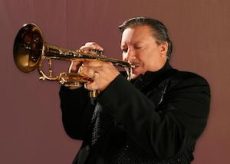
ARTURO SANDOVAL
“Born into poverty in Cuba and held back by his government, he risked everything to share his gifts with the world. In the decades since, this astonishing trumpeter, pianist and composer has inspired audiences in every corner of the world and awakened a new generation of great performers. He remains one of the best ever to play.”
~ Barack Obama (presenting The Presidential Medal of Freedom to Arturo Sandoval)
A protégé of the legendary jazz master Dizzy Gillespie, Sandoval was born in Artemisa, a small town in the outskirts of Havana, Cuba, on November 6, 1949, just two years after Gillespie became the first musician to bring Latin influences into American Jazz. Sandoval began studying classical trumpet at the age of twelve, but it didn’t take him long to catch the excitement of the jazz world. He has since evolved into one of the world’s most acknowledged guardians of jazz trumpet and flugelhorn, as well as a renowned classical artist, pianist and composer.
Showtimes:
7:00 pm | Thurs, Sun~$65.00, Fri, Sat~$75.00
9:00 pm | Thurs, Sun~$65.00, Fri, Sat~$75.00
$15 food/beverage minimum per person not included in ticket price.
More Posts: adventure,album,club,genius,jazz,museum,music,preserving,restaurant,travel,trumpet

THE COOKERS
Each member of the Cookers has spent time leading his own series of groups, and each has a keenly individual sound. But it’s the unmistakable power of teamwork that makes this music so commanding and resonates with a kind of depth and beauty that speaks of the seasoned track record of its principals (combined, the group has over 250 years of experience in the jazz world and has been a part of over 1,000 recordings). You can feel the collective weight of that experience in their CDs and especially in their live performances.
David Weiss, trumpet
Eddie Henderson, trumpet
Donald Harrison, alto sax
Billy Harper, tenor sax
George Cables, piano
Cecil McBee, bass
Billy Hart, drums
Showtimes:
Streaming: Fri, Sat, November 18~19, 7:30 pm | Sun, November 20, 5:00 pm
$10 + $1.70 fee
Live: Fri, Sat, November 18~19, 7:30 & 10:00 pm | Sun, November 20, 5:00 pm
$35 – $45 + $3.46 – $4.16 fee
More Posts: adventure,album,bass,club,drums,genius,jazz,museum,music,piano,preserving,restaurant,saxophone,travel,trumpet
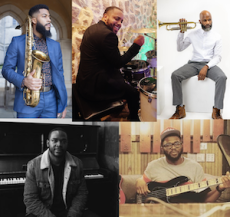
CHARLES WILSON QUINTET
Charles Wilson – Drums
Hope Udobi – Piano
Theljon Allen – Trumpet
Elijah Easton -sax
Mike Saunders – bass
Charles “Charlie” Wilson is a drummer, pianist and bass guitar player. He started playing music at the age of 5, where he began taking lessons taught by Orlando Cotto at Nathan Carter’s School of Music in Baltimore. He attended Archbishop Curley High School under a music scholarship where he won several awards such as the North Texas Jazz Festival Outstanding Soloist Award and the Louis Armstrong Jazz Award. As a teen working under the City’s Youth Works Program, he was assigned at Paul L. Dunbar High School’s Music Program where he worked under the leadership of one of the greatest educators and musicians of all times, Charles Funn.
Actual Show Times:
Streaming: Wed, July 6, 7:30 PM | $10 + $1.70 fee
Live: Wed, July 6, 7:30 PM | $20 – $25 + $2.40 – $2.76 fee
More Posts: adventure,album,bass,club,drums,genius,jazz,museum,music,piano,preserving,restaurant,saxophone,travel,trumpet
Daily Dose Of Jazz…
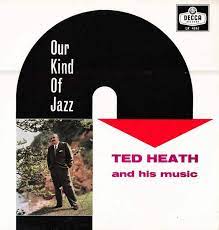
Eddie Blair was born into a musical family in Johnstone, Renfrewshire, Scotland on June 25, 1927. His father played cornet and violin and as the ten year old took after his father picking up the cornet. Playing with the Johnstone Silver Band gave him the musical grounding that facilitated dance band work before he joined the Royal Signals in 1945.
After demobilization in 1948 Blair attended Glasgow College of Technology, playing with jazz and dance bands in the evenings. He got his first brief taste of London, England with the Ken Mackintosh Band before returning to college. By 1951 his work with Mackintosh and Glasgow pianist George Scott Henderson, whose quintet won the runner-up 1949 Melody Maker ‘All Britain’ contest, had come to the notice of Johnny Dankworth, who invited Blair to replace the Germany-bound Deuchar.
After four years with Dankworth’s Seven and Orchestra, Eddie joined Ted Heath for 11 years, recording regularly and touring the US in 1956 but also recording with Johnny Keating, the Swinging Scots big band, Vic Lewis, Tubby Hayes, Stan Tracey and Ronnie Scott.
Along with Jimmy Deuchar and Aberdonian Bobby Pratt they formed the all-Scottish trumpet section on Hayes’ Jazz for Moderns and his absolute dependability made him a natural for session work. TV programs including The Avengers, Jimmy Rushing, Sacha Distel, blues band Savoy Brown and Mike Oldfield’s sister, Sally all figured in his performing and subsequent session recordings.
At sixty-five in 1992, he retired to concentrate on skiing and golf. Trumpeter Eddie Blair, who in the late 1940s and 1950s became absorbed into the London jazz scene and whose style influenced Deuchar and Kenny Wheeler, transitioned on Boxer Day, December 26, 2020 at age 93 in Rustington, West Sussex, England.

More Posts: history,instrumental,jazz,music,trumpet
Daily Dose Of Jazz…
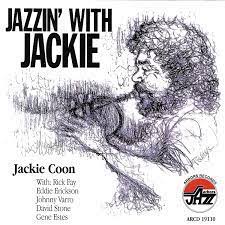
Jackie Coon was born in Beatrice, Nebraska on June 21, 1929 and grew up in Southern California. He was inspired to play trumpet after hearing Louis Armstrong’s West End Blues. He spent a few months with Jack Teagarden’s band and had gigs with Charlie Barnet, Louis Prima, and Earl Hines.
Making his recording debut with Barney Bigard in 1957 and he also played the mellophone on Red Nichols’ version of Battle Hymn of the Republic. Jackie’s decision to stay in California cost him the fame that eluded him, but he worked at Disneyland for nine years, and performed regularly in local clubs and jazz festivals.
It was until 1986 that Coon led his first record session for Sea Breeze. Since 1991 he has recorded fairly often for Arbors. Trumpeter, flügelhornist and cornetist Jackie Coon has become less active in his Eighties.
More Posts: bandleader,cornet,flugelhorn,history,instrumental,jazz,music,trumpet