

Daily Dose Of Jazz…
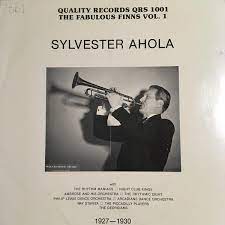
Sylvester Ahola was born on May 24, 1902 in Gloucester, Massachusetts. His parents, Sophia and John Ahola, were born in Finland. He became most popular in England rather than the United States.
He first began performing with Frank Ward and His Orchestra. In 1925 he started playing with Paul Specht and His Orchestra, with whom he did a two-month-long tour of England that following year. For the next couple of years he performed with bands like The California Ramblers and Adrian Rollini and his band.
1927 saw Ahola moving to England and landing a job playing with the Savoy Orpheans. He went on to gig with Bert Firman and Bert Ambrose. The British Musicians’ Union, unhappy to see a foreigner land so many jobs and attain so much success, effectively prohibited him from playing with anyone other than Bert Ambrose. This forced him to eventually leave in 1931 and return to New York City.
Throughout the rest of his career he never again achieved the level of success he had enjoyed during his time in England. Trumpeter and cornetist Sylvester Ahola, also known as Hooley, transitioned on February 13, 1995.

More Posts: bandleader,cornet,history,instrumental,jazz,music,trumpet
The Quarantined Jazz Voyager
Contrary to the announcement that the pandemic is over and the unmasking the country has clearly exhibited, a variant is still present and this Jazz Voyager is getting out remains distant from crowds and enclosed spaces. So we will continue to listen to great music.
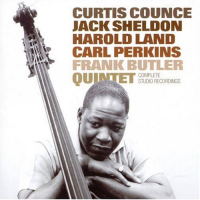
My selection this week is the Complete Studio Recordings, a two compact disc set whose songs were recorded between 1956 and 1958 by the Curtis Counce Quintet composed of Counce, Jack Sheldon, Harold Land, Carl Perkins and Frank Butler went into the studio of Contemporary Records and recorded twenty-four songs. Though the group was short~lived, their impact produced a powerhouse two-disc set of music comprising the main recordings on the Contemporary label.
The group’s expressed purpose was to develop a West Coast answer to the soulful, hard-bop East Coast sound. Each of the musicians was among the most gifted on his instrument, yet the focus was always on a collaborative result that would reflect undiscovered possibilities within a familiar post-bop idiom. Seldom does a group of musicians come together and play so seamlessly that they sound like one voice speaking. The contribution of each of the five principals, therefore, invites close scrutiny.
The beauty of the recorded disc is that it is a lasting tribute to the musicians who performed on this recording. Lester Koenig at Contemporary Records was known for extremely high audio standards and turned out some of the best-sounding records of the day thanks to the expertise of engineer Roy DuNann. The audio on these Contemporary dates is rich in depth and detailing, allowing the listener to pick out each of the subordinate motifs and subtle moving harmonies. The engineering created a naturally ambient soundscape inviting the listener to partake of the worthy.
The caveat is that this music appeared on previously released albums by Curtis Counce and this is an opportunity to pick up the excellence of 24 tracks of music in a one~stop shop. This represents African-American indigenous art of the highest order. Released by Gambit Records in 2007 and definitely one for the collector.
Track Listing | 150:00+
Disc 1- Landslide (Harold Land) ~ 8:37
- Time After Time (Sammy Cahn/Jule Styne) ~ 6:32
- Mia (Carl Perkins) ~ 4:55
- Sarah (Jack Sheldon) ~ 11:38
- Fifth For Frank (Gerald Wiggins/Cal Tjader) ~ 7:14
- Big Foot (Charlie Parker) ~ 9:07
- Sonar (Kenny Clarke/Gerald Wiggins) ~ 7:28
- Stranger In Paradise (Robert Wright/George Forrest) ~ 7:04
- Woody’n You (Dizzy Gillespie) ~ 6:18
- Pink Lady (Jack Sheldon) ~ 4:41
- Councelation (Curtis Counce) ~ 6:05
- Love Walked In (George Gershwin/Ira Gershwin) ~ 4:56
- Too Close For Comfort (Larry Holofcener) ~ 5:38
- How Deep Is The Ocean (Irving Berlin) ~ 6:37
- Complete (Curtis Counce) ~ 5:52
- Nica’s Dream (Horace Silver) ~ 8:00
- How Long Has This Been Going On (George Gershwin/Ira Gerswin) ~ 3:18
- Mean To Me (Fred E. Ahlert/Roy Turk) ~ 4:31
- I Can’t Get Started (Vernon Duke/Ira Gershwin) ~ 8:01
- Larue (Clifford Brown) ~ 5:04
- Carl’s Blues (Carl Perkins) ~ 5:54
- Night In Tunisia (Dizzy Gillespie/Frank Paparelli) ~ 8:17
- Love Walked In (George Gershwin/Ira Gershwin) ~ 2:55
- Sophisticated Lady (Duke Ellington) ~ 4:10
- Fifth For Frank (Gerald Wiggins/Cal Tjader) ~ 1:56
- The Butler Did It (Frank Butler) ~ 4:39
Personnel
- Jack Sheldon ~ trumpet
- Harold Land ~ tenor saxophone
- Carl Perkins ~ piano
- Curtis Counce ~ bass
- Frank Butler ~ drums
- Gerald Wilson ~ trumpet (replaces Sheldon on three tracks of disc 2)

More Posts: adventure,album,bass,club,drums,genius,jazz,museum,music,piano,preserving,restaurant,saxophone,travel,trumpet
Daily Dose Of Jazz…
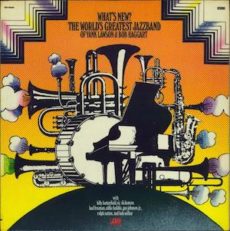
John Rhea “Yank” Lawson was born May 3, 1911 in Trenton, Missouri. He started playing music on saxophones and piano before settling on the trumpet as a teenager. He played in the University of Missouri Dance Band, and was soon offered a job with Slatz Randall’s group, with whom he made his recording debut on Mom in 1932. Dropping out of college he had a stint with Wingy Manone before being hired to join Ben Pollack in late 1933.
From 1933 to 1935 Yank worked in the Pollack orchestra, then became a founding member of the Bob Crosby Orchestra. He later worked with Benny Goodman and Tommy Dorsey, but also worked with Crosby again in 1941~1942. Later in the decade he became a studio musician leading his own Dixieland sessions.
By the 1950s he and Bob Haggart created the Lawson-Haggart band and they worked together in 1968 to form the World’s Greatest Jazz Band, a Dixieland group which performed for the next ten years. He recorded for Atlantic, Audiophile, Decca and Jazzology.
Trumpeter Yank Lawson, best known for Dixieland and swing music, transitioned on February 18, 1995 in Indianapolis, Indiana.

More Posts: bandleader,history,instrumental,jazz,music,trumpet
Requisites
Miles Davis In Europe ~ Miles Davis | By Eddie Carter
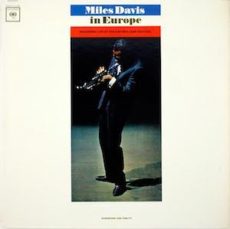
This morning’s choice from the library is a 1964 live album by Miles Davis that’s an overlooked gem, in my opinion, Miles Davis In Europe (Columbia CL 2183/CS 8983). It documents the trumpeter in concert at the 1963 Antibes International Jazz Festival during a successful European tour that was also broadcast over RTF (Radiodiffusion-Télévision Française). He’s joined on stage by George Coleman on tenor sax, Herbie Hancock on piano, Ron Carter on bass, and Tony Williams on drums who also appeared on Seven Steps To Heaven recorded a few months earlier. My copy used in this report is the original US Mono album and Side One opens with the introduction of the quintet by Master of Ceremonies, André Francis.
Autumn Leaves by Joseph Kosma, Johnny Mercer, and Jacques Prévert opens with Miles’ muted introduction and excellent support by the rhythm section. They begin with a deceptively easy melody; he then picks up the pace on the opening chorus with a carefree swing. George steps up next with a buoyant statement that cooks, then Herbie takes flight for a scintillating interpretation. Ron walks with assurance briefly on the closer ahead of the group’s ending theme. The leader’s Milestones is off to the races on the quintet’s speedy melody. Davis soars into the stratosphere on the lead solo. Coleman shows he’s equally adept for speed on the second statement, and Hancock closes with a highly energetic performance leading to the group’s vigorous ending.
The quintet turns up the temperature a little more on Joshua by Victor Feldman with a torrid opening chorus. Miles takes off like a speedy gazelle on the first statement. George comes in next, dispensing a fierce intensity on the second reading, then Herbie goes on a high-spirited flight in the closer preceding the ensemble’s lively summation. Side Two gets underway with Miles returning to the mute for Cole Porter’s All of You. It first appeared in the Broadway musical, Silk Stockings (1955). He and the trio begin the song with an attractive melody. Davis starts the solos with a charmingly articulate interpretation. Coleman offers some cheerful notes in the second performance. Hancock takes the final solo swinging easily into the trumpeter’s closing chorus and soft climax.
Walkin’ by Richard Carpenter opens with a quick melody and a furious opening statement by Miles. Tony takes the stage next and sparkles on an energetic interpretation. George swings with a fiery flavor in the third reading and Herbie closes the solos with a thoroughly entertaining performance leading to the theme’s reprise and finish. Miles Davis In Europe was produced by Teo Macero and RTF was behind the dials for the broadcast recording. The sound quality is superb, placing the listener in the festival audience to enjoy the quintet’s set. Everyone is in top form throughout, this album captures the quintet’s fire during their performance, and the music cooks from start to finish. If you’re in the mood for some swinging live jazz, I offer for your consideration, Miles Davis In Europe. It’s worthy of wider recognition and makes a perfect complement to the group’s other live albums, My Funny Valentine and ‘Four’ & More!
~ ‘Four’ & More (Columbia CL 2453/CS 9253), My Funny Valentine (Columbia CL 2306/CS 9106), Seven Steps To Heaven (Columbia CL 2051/CS 8851) – Source: Discogs.com ~ Autumn Leaves – Source: JazzStandards.com ~ All of You – Source: Wikipedia.org © 2022 by Edward Thomas Carter
More Posts: choice,classic,collectible,collector,history,instrumental,jazz,music,trumpet
Requisites
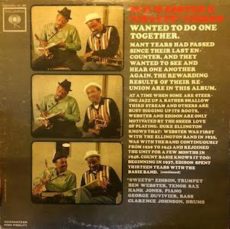
Wanted To Do One Together ~ Ben Webster and Sweets Edison | By Eddie Carter
Benjamin Francis Webster and Harry “Sweets” Edison were two of jazz’s most beloved and respected musicians. Ben was affectionately known as “The Brute” for his sometimes coarse, harsh, or rough sound by his Ellington bandmates. However, he could also express deep feelings on any ballad or standard with a quiet intensity that always amazed fans listening to one of his albums or during his live performances. Webster was also an essential part of Duke Ellington’s orchestra before having a successful solo career. Johnny Hodges was a huge influence on Ben, and he credits the altoist with teaching him how to play the saxophone.
Harry was one of the most sought-after musicians in jazz and became a proficient trumpet accompanist and soloist for nearly twenty-five years. “Sweets” performed with Count Basie, toured with the Jazz at The Philharmonic All-Stars, and led his own orchestra. He also played in bands led by Gil Fuller, Dizzy Gillespie, Quincy Jones, Buddy Rich, and Shorty Rogers. Lester Young gave him the nickname “Sweets”, and his artistic proficiency and willingness to develop as jazz itself progressed made him one of the best trumpet players ever. Edison also possessed a bright, buoyant sound that could also be soft-spoken and serene.
In 1962, the two friends wanted to record an album together. The joyous result of their collaboration is Wanted To Do One Together (Columbia CL 1891/CS 8691), this morning’s choice from the library. The front line is fortified by Hank Jones on piano, George Duvivier on bass, and Clarence Johnson on drums. My copy used in this report is the original Mono album. Ben Webster’s Better Go opens Side One with a bouncy, upbeat melody by both horns. “Sweets” is off and running with an exhilarating muted performance. George delivers an enjoyable statement next, then Ben provides some enchantingly melodic lines on the third reading. Hank injects some vigorous passion into the finale ahead of the reprise and close.
Up next is George and Ira Gershwin’s evergreen from the musical, Funny Face (1928), How Long Has This Been Going On? Ben makes this song his own as if the duo wrote it, especially for him. After a soft duet introduction by the pianist and tenor man, the ensemble states the theme. As the sole horn and featured soloist, Ben tells an intimate story of delicacy and sensitivity in a tender performance. The trio backs him with elegant groundwork into a dainty climax. Harry Edison’s Kitty strolls casually into view on the ensemble’s mischievous theme. “Sweets” switches to a mute for the easy-going opening statement, then Ben displays a cheerfully playful personality next. Hank follows with a leisurely walk on the closing chorus that sends the kitty sauntering out of the room as the first side ends.
My Romance by Richard Rodgers and Lorenz Hart begins Side Two with a lovely introduction by Hank. Ben, George, and Clarence join him for a respectfully polite and nostalgic melody of sensual beauty. The saxophonist continues with a pretty performance that’s so deeply moving, even if you’re intimately acquainted with this song, you’ll feel as if you’re hearing it for the very first time. The beat moves back to mid tempo on the Ben Webster original, Did You Call Her Today? After the rhythm section’s introduction, both horns deliver the melody with a relaxed attitude. “Sweets” opens with a cheerfully pleasant performance. Ben keeps the beat alive with flawless execution in the next reading. Hank swings smoothly on the finale preceding the quintet’s perky ending.
Embraceable You by George and Ira Gershwin is one of their prettiest songs from the Broadway musical, Girl Crazy (1930). “Sweets” is the only horn featured here and his opening chorus with Hank is an oasis of calm and serenity. George and Clarence come in to complete the melody, then “Sweets” beautifully renders the song’s only solo into a tenderhearted ending. The album was produced by Mike Berniker and recorded at Columbia 30th Street Studio. The sound quality is absolutely amazing with a stunning soundstage surrounding your sweet spot. If you’re a fan of Ben Webster or Harry “Sweets” Edison, I offer for your consideration Wanted To Do One Together. It’s an album with tight musicianship and marvelous music that belongs in every jazz library and pays big dividends with every listen!
~ My Romance, Embraceable You – Source: JazzStandards.com ~ How Long Has This Been Going On? – Source: Wikipedia.org © 2022 by Edward Thomas Carter
More Posts: choice,classic,collectible,collector,history,instrumental,jazz,music,saxophone,trumpet