

Daily Dose Of Jazz…
Bob Shoffner was born on April 4, 1900 in St. Louis, Missouri. Growing up he played drums and bugle before settling on trumpet at age eleven. Playing trumpet in a military band, he served in the U.S. Army from 1917-1919, and after his discharge he played with Charlie Creath and Tommy Parker in territory bands.
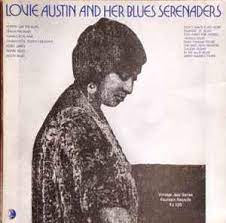
Relocating to Chicago, Illinois in 1921, Bob played with John H. Wickcliffe, Everett Robbins, and Mae Brady. He returned to St. Louis, served briefly under Creath before heading back to Chicago to play with Honore Dutrey. Then, in 1924,he replaced Louis Armstrong in King Oliver’s Creole Jazzband, playing with Oliver until 1927. He went on to spend time with Dave Peyton and Lottie Hightower during this time as well, and recorded with Lovie Austin, Jimmy O’Bryant, Ida Cox, and Luis Russell.
Shoffner suffered a lip ailment in 1927, but returned after a few months to hit with Charles Elgar in 1928, Erskine Tate, Jerome Carrington, McKinney’s Cotton Pickers in 1931, and Frankie Jaxon in ‘32. A move to New York City in 1934, had him with Fess Williams, Fletcher Henderson, and Hot Lips Page towards the end of the decade..
Around 1940 he returned once more to Chicago and took a job working for the state but recorded with Richard M. Jones in the middle of the 1940s. Taking a hiatus from music until 1957he came back to play with Franz Jackson’s Original Jazz All-Stars from 1957 to 1963.
Health concerns forced him into semi-retirement after this time. Trumpeter Bob Shoffner transitioned on March 5, 1983.
Requisites
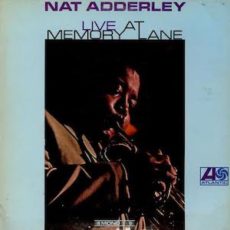
Live at Memory Lane ~ Nat Adderley | By Eddie Carter
This morning’s choice from the library is one of my favorite records that always takes me back to my childhood each time it’s on the turntable. Live at Memory Lane (Atlantic 1474/SD 1474) by Nat Adderley is a 1966 release recorded on Halloween night before an enthusiastic audience. Nat is featured on trumpet exclusively with a stellar supporting cast including his brother Cannonball’s rhythm section. Joe Henderson (tracks: A2 to B3) on tenor sax, Joe Zawinul on piano, Victor Gaskin on bass, and Roy McCurdy on drums complete the ensemble. I was thirteen when I first heard it at Record Rendezvous in Cleveland, Ohio and it still delivers all treats and no tricks. My copy used in this report is the original US Mono album.
Side One starts with On My Journey Now, an original by Nat Adderley endowed with the spirit of a sanctified church song. The leader kicks off the melody with a lively energy advancing to an uplifting opening statement. Zawinul follows with an extremely funky performance that’s sure to get your foot stomping to the rhythm section’s contagious beat preceding Nat leading the congregation out. Adderley’s second composition, Fun, is exactly that. It first appeared on Mercy, Mercy, Mercy (1967) with the trio anchoring both brothers. The group heats up the opening chorus, then Joe steps up first to cook with a fiery passion. Nat speaks with bright and brassy enthusiasm next. Zawinul follows with a feisty attack on the closer before the ensemble’s theme comes to a standstill.
Good Old Summertime by George Evans and Ren Shields is a pretty song from Tin Pan Alley. Nat begins the mid tempo melody on mute accompanied by the trio, then continues floating like a cloud over a picturesque landscape with a discretely rich tone. Henderson is equally enchanting on the second statement, and Joe unfolds a simply gorgeous interpretation ahead of Nat’s tender muted climax. Side Two opens with the first of two from Joe Zawinul’s pen, Lavender Woman. Nat begins with a brief introduction, then picks up the pace for the ensemble’s theme. Henderson takes the lead and swings adventurously. Adderley comes after him and perks up our ears on the second solo. Zawinul soars to great heights on an imaginatively conceived and executed finale into the theme’s return.
Painted Desert is simply breathtaking in its lyrical beauty and the ensemble opens with a gorgeous theme. Henderson is in the spotlight first and delivers an exquisitely beautiful reading. Adderley takes the reins next for an emotionally charged interpretation. Zawinul approaches the finish line with a degree of sensitivity that segues into a vivacious presentation, then the quintet reassembles for a final word. Theme by Nat Adderley and Joe Zawinul brings the set and album to an upbeat close. The group takes off on the opening chorus and Henderson, Adderley, and Gaskin (in his only solo) each take a turn to cook. Nat adds the exclamation mark by acknowledging his bandmates and thanking the audience during the closing chorus.
Nesuhi Ertegun supervised Live at Memory Lane and Wally Heider was the recording engineer for the ensemble’s performance. The sound quality is excellent for a fifty-five-year-old release surrounding your sweet spot with great music that’s a fantastic listen. This was Nat’s first live album leading his own group and I wish he’d recorded more as a leader. The quintet swings like crazy with superb musicianship that makes the listener feel he or she is part of the audience enjoying the music. If you’re a fan of live jazz, just becoming acquainted with the music of Nat Adderley, or only know of his work with Cannonball, I invite you to check out Live at Memory Lane on your next viny hunt. It’s a thoroughly enjoyable album deserving of reaching a wider audience!
~ Mercy, Mercy, Mercy (Capitol Records T 2663/ST 2663) – Source: Discogs.com ~ In The Good Old Summertime – Source: Wikipedia.org © 2022 by Edward Thomas Carter

More Posts: choice,classic,collectible,collector,history,instrumental,jazz,music,trumpet
Daily Dose Of Jazz…
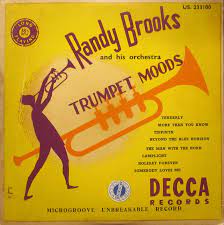
Randolph E. Brooks was born on March 28, 1917 in Sanford, Maine and began on trumpet at age six. By 11 he was discovered by Rudy Vallee and appeared on his Fleischman Hour radio show. He became a permanent member where he played thrilling trumpet solos, but was not allowed to play with the brass section of the band. By the time he was eighteen he was working with Jerry Blane for an entire summer in western New Jersey, followed by Gene Kardos and then Ruby Newman at the Rainbow Room in New York City.
Hired by Hal Kemp, he cut his first records for the Victor label in 1939. After Kemp’s death late in 1940, he stayed with the band when Art Jarrett took leadership. But by 1942 he moved on to a brief relationship with Claude Thornhill, followed by Bob Allen, but within a year he was playing with Les Brown before founding his own band in early 1945.
John Benson Brooks, who was not related, contributed arrangements to the ensemble that included Stan Getz in 1946. Among his hits for Decca Records were Tenderly, Harlem Nocturne, and The Man With The Horn, but unfortunately his swing-based style and large ensemble were out of step with the times, and his success eroded toward the end of the decade.
He married singer and bandleader Ina Ray Hutton and moved to Los Angeles, California where he suffered a stroke and was unable to continue as a musician. Trumpeter and bandleader Randy Brooks transitioned at the age of 49 of smoke inhalation in a fire at his Sanford, Maine apartment.on March 21, 1967.

More Posts: bandleader,history,instrumental,jazz,music,trumpet
Daily Dose Of Jazz…
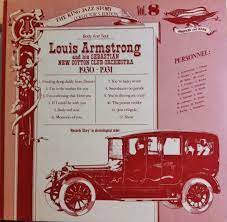
George Robert Orendorff was born on March 18, 1906 in Atlanta, Georgia but when he was nine years old his family moved to Chicago, Illinois. His early musical years were spent learning the guitar before picking up cornet and spending his high school days with fellow students Eddie South, Wallace Bishop and Lionel Hampton. He began his career at 17, playing in Chicago dance bands, one of them led by Detroit Shannon.
Following a 1925 tour with the Helen Dewey Show, the revue dumped him in Los Angeles, California where he played with Paul Howard from 1925 to 1930. He then played with Les Hite for most of the 1930s and recorded with Louis Armstrong from 1930 to 1931. In the 1940s he accompanied Ceele Burke, and after his WWII army service, he became a post officer and an official in the American Federation of Musicians. George also recorded on the West Coast Jazz and Rhythm and Blues scene and continued to play with Les Hite.
Later in his career he worked with Maxwell Davis, Ike Lloyd, and T-Bone Walker among others. Trumpeter George Orendorff transitioned on June 28, 1984 in Los Angeles.
Daily Dose Of Jazz…
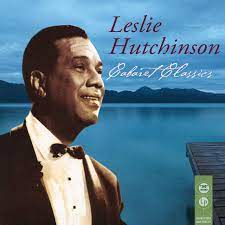
Jiver Hutchinson was born Leslie George Hutchinson on March 16, 1906 in Kingston, Jamaica. He played in Bertie King’s band in Jamaica in the 1930s, then moved to England, where he played with Happy Blake’s Cuba Club Band. By 1936 he was a part of Leslie Thompson’s Emperors of Jazz and two years later he was performing with Ken “Snakehips” Johnson, before joining Geraldo’s band in 1939.
He led his own ensemble from 1944 to 1950, featuring many of the musicians from Thompson’s band. His ensemble toured throughout the United Kingdom and Europe, and in 1945 played concerts in India.
Recording with his ensemble in 1947, he returned to play with Geraldo after the group’s dissolution, and recorded with Mary Lou Williams in 1952. During the Fifties he worked in television on the Benny Hill Show and Make Mine Music.
Trumpeter and bandleader Jiver Hutchinson was killed in a car crash in Weeting, England while on tour with his band on November 22, 1959.
More Posts: bandleader,history,instrumental,jazz,music,trumpet