

Daily Dose Of Jazz…
Edward Louis Smith was born on May 20, 1931 in Memphis, Tennessee. After graduating from Tennessee State University he attended graduate school at the University of Michigan. While studying at the University of Michigan, he played with visiting musicians such as Dizzy Gillespie, Miles Davis, Thad Jones and Billy Mitchell.
He went on to play with Sonny Stitt, Count Basie, Al McKibbon, Cannonball Adderley, Percy Heath, Philly Joe Jones, Lou Donaldson, Donald Byrd, Kenny Dorham and Zoot Sims. Deciding to forgo being a full-time musician to take a job as a director of Atlanta’s Booker T. Washington High School, where he recorded two albums for Blue Note.
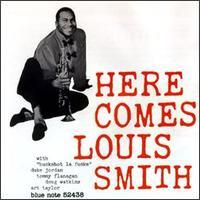
The first, Here Comes Louis Smith, originally recorded for the Boston-based Transition Records, featured Cannonball Adderley, then under contract to Mercury, played under the pseudonym Buckshot La Funke, Tommy Flanagan, Duke Jordan, Art Taylor and Doug Watkins. Replacing Donald Byrd for Horace Silver’s Live at the Newport 1958 set, and his playing was one of his best efforts and was described by one critic as monstrous.
He was a prolific composer and successful band director leaving Booker T. Washington to become director of the Jazz Ensemble at the University of Michigan and a teacher in Ann Arbor’s public school system. He would later record for the SteepleChase label.
Suffering a stroke in 2006, he enjoyed live jazz around the Detroit/Ann Arbor area, but did not return to performing. Trumpeter Louis Smith passed away on August 20, 2016 at age 85.

More Posts: band director,bandleader,composer,history,instrumental,jazz,music,tuba
Daily Dose Of Jazz…
Walter Sylvester Page was born on February 9, 1900 in Gallatin, Missouri on to parents Edward and Blanche Page. Showing a love for music as a child, in 1910 with his mother moved to Kansas City, Missouri and exposed him to folksongs and spirituals, a critical foundation for developing his love of music. He gained his first musical experience as a bass drum and bass horn player in the brass bands of his neighborhood. Under the direction of Major N. Clark Smith, he took up the string bass in his time at Lincoln High School. During that time he also drew inspiration from bassist Wellman Braud, who he had the opportunity to see when he came to town with John Wycliffe.
After completing high school, he went on to study to become a music teacher at the University of Kansas at Lawrence. In college,Walter completed a three-year course in music in one year, in addition to taking a three-year course on gas engines. Between the years 1918 and 1923, he moonlighted as a tuba, bass saxophone, and string bass player with the Bennie Moten Orchestra. In 1923 he left Moten and began an engagement with Billy King’s Road Show, and with Jimmy Rushing and Count Basie, toured the Theater Owners’ Booking Association (TOBA) circuit across the United States.
Walter Page and the Blue Devils was a territory band founded in 1925, based out of the Oklahoma City~Wichita, Kansas area that included Basie, Rushing, Buster Smith, Lester Young, and Hot Lips Page. By 1929 the Blue Devils faced defections of key players, booking problems and musicians’ union conflict, he relinquished control to James Simpson and joined Moten’s band in 1931, staying until 1934. After his second stint with Moten, he moved to St. Louis, Missouri to play with the Jeter-Pillars band. Following the death of Moten in 1935, however, Basie took over the former Moten Band, which Page rejoined.
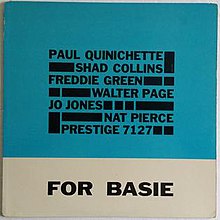
Staying with the Count Basie Orchestra from 1935 to 1942, Walter was an integral part of what came to be called the “All-American Rhythm Section. Together with drummer Jo Jones, guitarist Freddie Green, and pianist Basie, the rhythm section pioneered the “Basie Sound”, a style in which Page, as bass player, clearly established the beat, allowing his band mates to complement more freely. Until this point, the rhythm of a jazz band was traditionally felt in the pianist’s left hand and the kick of the bass drum on all four beats. In a sense, the classic Basie rhythm section were liberators.
After his first departure from the Count Basie Orchestra, Walter worked with various small groups around Kansas City. He returned to the Basie Band in 1946 for three more years. Bassist and multi-instrumentalist Walter Page, best known for his groundbreaking work with Walter Page’s Blue Devils and the Count Basie Orchestra, passed away of kidney ailment and pneumonia at Bellevue Hospital on December 20, 1957 in New York City.

More Posts: bandleader,bass,bass horn,bass saxophone,drums,history,instrumental,jazz,music,tuba
Daily Dose Of Jazz…
Bob Stewart was born in Sioux Falls, South Dakota on February 3, 1945. He received his Bachelor of Music Education degree from the Philadelphia College of the Performing Arts and his master’s degree in education from Lehman College Graduate School.
Stewart taught music in Pennsylvania public schools and at the Fiorello H. LaGuardia High School of Music & Art and Performing Arts in New York City. He is now a professor at the Juilliard School and is a distinguished lecturer at Lehman College.
Stewart has toured and recorded with such artists as Charles Mingus, Gil Evans, Carla Bley, Muhal Richard Abrams, David Murray, Taj Mahal, Dizzy Gillespie, McCoy Tyner, Freddie Hubbard, Don Cherry, Nicholas Payton, Wynton Marsalis, Charlie Haden, Lester Bowie, Bill Frisell and many others in the United States, Europe, and Eastern Asia.
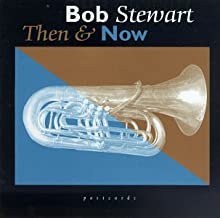
He was a frequent collaborator with saxophonist Arthur Blythe from the 1970s into the early 2000s, often taking the place of the string bass that traditionally supports a jazz ensemble. In their review of Blythe’s album Lenox Avenue Breakdown, the editors of The Penguin Guide to Jazz called Stewart’s title track solo “one of the few genuinely important tuba statements in jazz. Tubist Bob Stewart continues to be a part of the jazz scene.
More Posts: bandleader,history,instrumental,jazz,music,tuba
Daily Dose Of Jazz…
Jim Lanigan was born on January 30, 1902 in Chicago, Illinois. Learning piano and violin as a child, he played piano and drums in the Austin High School Blue Friars before specializing on bass and tuba.
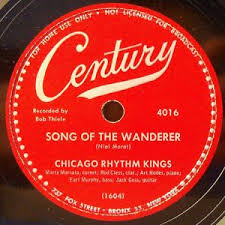
A member of the Austin High Gang, he played with Husk O’Hare in1925), the Mound City Blue Blowers and Art Kassel from 1926 to 1927, the Chicago Rhythm Kings, the Jungle Kings, and the 1927 McKenzie and Condon’s Chicagoans recordings.
From 1927 to 1931 he was with Ted Fio Rito and worked in orchestras for radio, including NBC Chicago. Performing sideman duties in the 1930s and 1940s with Jimmy McPartland, Bud Jacobson’s Jungle Kings, Bud Freeman, and Danny Alvin, he began to concentrate more on music outside of jazz at that time. He played with the Chicago Symphony Orchestra from 1937 to 1948, and did extensive work as a studio musician.
Bassist and tubist Jim Lanigan, who never recorded as a leader, played reunion gigs for the Austin High Gang, passed away on April 9, 1983.

More Posts: history,instrumental,jazz,music,tuba
Daily Dose Of Jazz…
Tommy Johnson was born John Thomas Johnson on January 7, 1935 in Los Angeles, California. He had a musical upbringing as his father was a baritone soloist in the choir at the Angelus Temple in Echo Park.
He attended the University of Southern California Thornton School of Music and received a bachelor’s degree in music in 1956. He played his first film in 1958, the score for Al Capone and went on to become Hollywood’s first-call tuba player.
Known mostly for playing for television series and commercials, he also was a prolific player in film scores such as Jaws, The Godfather, the Indiana Jones series, the Star Trek film series, The Lion King, Titanic, and over another 120 film scores, working wth the likes of John Williams, James Horner, and Alan Silvestri..
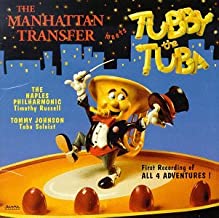
He ventured into playing jazz backing such artists as Frank Sinatra, The Manhattan Transfer and performing with the American Jazz Philharmonic,, as well as rock and roll and pop artists like Weird Al Yankovic and Elvis Presley.
As an educator he taught junior high school music in the Los Angeles Unified School District for nearly 20 years, but for most of his career, he taught advanced tuba players in private lessons and at USC and UCLA.
On October 16, 2006, tubist Tommy Johnson passed away from complications of cancer and kidney failure at the UCLA Medical Center in Los Angeles at the age of 71.
More Posts: history,instrumental,jazz,music,tuba