

Daily Dose Of Jazz…
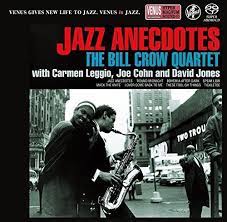
William Orval Crow was born December 27, 1927 in Othello, Washington but spent his childhood growing up in Kirkland, Washington, taking up the trumpet in fourth grade. When he joined the Army in 1946, he started to play brass instruments, remaining in the army until 1949. After leaving the Army, he played drums and trombone while a student at the University of Washington.
In 1950, Bill moved to New York City and within two years as a double bassist, he played with Teddy Charles and was with Stan Getz from October 1952 to the following April. He was part of Gerry Mulligan’s groups during the mid to late 1950s.
Crow joined the house band at Eddie Condon’s club in 1965 and then played with Walter Norris’s small group, which was one of the house bands at the Playboy Club in New York City in the mid~Sixties to early Seventies. From 1975 into the late 1990s he worked in theater orchestras on Broadway, where he sometimes played the tuba.
He authored a book called Jazz Anecdotes that was published by Oxford University Press in 1991. His autobiography, From Birdland to Broadway, was released by the same publisher two years later. Both were also the titles of his two albums as a leader.
As a sideman, he recorded 70 albums with Gerry Mulligan, Stan Getz, Zoot Sims, Bob Brookmeyer, Al Cohn, Clark Terry, Marian McPartland, J. J. Johnson, Al Haig, Jimmy Cleveland, Milt Jackson, Benny Goodman, Mose Allison, Jimmy Raney, Sal Salvador, Don Elliott, Teddy Charles, Manny Albam, Joe Morello, Bob Wilber, Eddie Bert, Jay McShann, Bob Dorough, Barbara Lea, Dick Sudhalter, Phil Woods, Dick Sudhalter, Ronnell Bright, Art Simmons, Rich Pearle, Spike Robinson, Claude Williamson, and Michelle Leblanc. Bassist Bill Crow continues to perform at the age of 92.
Daily Dose Of Jazz…
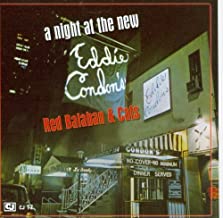
Red Balaban was born Leonard Balaban on December 22, 1929 in Chicago, Illinois. Moving the family to New York, he completed his early education at the Ethical Culture School. After graduating from Milford Academy in Connecticut, he graduated from Brown University.
Moving south to the panhandle, he raised breeding cattle on a farm in Bonifay, Florida and as a musician, he was a sideman, bandleader, and club owner. He played in regional ensembles from the 1950s, Red went on to hold a regular gig from 1966 at the Dixieland jazz club Your Father’s Mustache in New York City.
Balaban worked extensively as a sideman, for musicians such as Wild Bill Davison, Eddie Condon, Gene Krupa, Dick Wellstood, and Kenny Davern. He co-led Eddie Condon’s house band with Ed Polcer from 1975, and noted musicians in this outfit included Vic Dickenson, Warren Vache, and Connie Kay, before the club closed in the mid-1980s.
Tubist and sousaphonist Red Balaban, who also played banjo, stand-up bass, slide trombone, ukulele, and rhythm guitar, passed away after a brief illness seven days past his 84th birthday on December 29, 2013 in Milford, Connecticut.
More Posts: banjo,bass,guitar,history,instrumental,jazz,music,slide trombone,sousaphone,tuba,ukulele
Daily Dose Of Jazz…
John Lamb was born in Vero Beach, Florida on November 29, 1933 and grew up as a child who loved playing music, specializing in the tuba. He left high school to join the United States Air Force as a musician for their military band. Stationed in Texas and then Montana, the long winters left him with ample time to practice. He replaced the regular string bassist in 1951. He When the band’s usual string bass player was unavailable for a gig in 1951, the bandmaster asked Lamb if he could play the bass; Lamb immediately said yes, and before long became the band’s new string bassist.
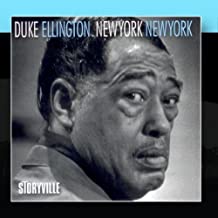
Lamb joined Duke Ellington’s orchestra in 1964, and toured with them for three years. Lamb was more of a fan of Miles Davis and Red Garland when he was with Ellington, In 1966 Lamb performed with Ellington and Sam Woodyard for artist Joan Miró at the Fondation Maeght in Saint-Paul-de-Vence.
A later move to St. Petersburg, Florida saw him teaching music in public schools as well as St. Petersburg College. John was awarded the Jazz Club of Sarasota’s Satchmo Award for his service to jazz. Double bassist John Lamb, who recorded with the Duke Ellington Orchestra until 1975, continues to perform.
Daily Dose Of Jazz…
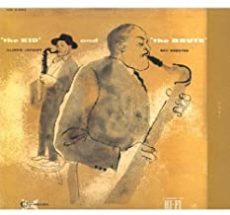
Albert Bennington Lucas was born on November 16, 1912 in Brantford, Ontario, Canada and took piano lessons as a child from his mother, Francis Bradley Lucas, a concert pianist. By the age of twelve, he had switched to bass and tuba. After his move to New York City in 1933, he played with Kaiser Marshall before joining the Royal Sunset Orchestra, where he played until 1942.
During the 1940s Albert appeared on record with Hot Lips Page, Coleman Hawkins, Eddie Heywood, Duke Ellington, Mary Lou Williams, James P. Johnson, J.J. Johnson, Ben Webster, Erroll Garner, and Eddie South.
Throughout his career he toured and recorded with Illinois Jacquet from 1947–53, recording in Detroit with Jacquet’s all-star band which included Sonny Stitt, Leo Parker, Sir Charles Thompson, Maurice Simon and Shadow Wilson before returning to play with Heywood again from 1954–56. He also recorded in the 1950s with Ruby Braff, Charlie Byrd, Teddy Wilson, Bill Doggett, Dexter Gordon, Oliver Nelson.
Working primarily as a studio musician in his last two decades, backing up groups at Apollo Theater performances, he played jazz only occasionally. Double-bassist Albert Lucas passed away on June 19, 1983, in New York City.
Daily Dose Of Jazz…
Bill Barber was born John William Barber on May 21, 1920 in Hornell, New York. He started playing tuba in high school and studied at the Juilliard School of Music. After graduating, he traveled west to Kansas City, Missouri, where he played with the Kansas City Philharmonic and various ballet and theatre orchestras.
Joining the United States Army in 1942, he played in Patton’s 7th army band for three years. After the war, he started playing jazz, joining Claude Thornhill’s big band where he became friends with trombonist Al Langstaff, pianist Gil Evans and saxophone player Gerry Mulligan in 1947. Barber was one of the first tuba players to play in a modern jazz style, playing solos and participating in intricate ensemble pieces.
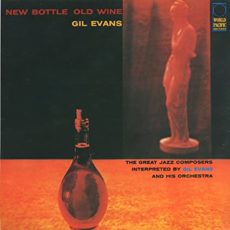
Barber became a founding member of Miles Davis’s nonet in 1949 in what became known as the Birth of the Cool recording sessions. He then worked in the theatre pit orchestras of The King and I, Paradiso, and the City Center Ballet. He joined up with Davis and Gil Evans in the late 1950s to record the albums Sketches of Spain, Miles Ahead and Porgy and Bess. Barber also played tuba on John Coltrane’s album Africa/Brass released in 1961.
Completing a master’s degree from the Manhattan School of Music and became an elementary school music teacher at Copiague, New York. He continued to play where possible including with the Goldman Band. In 1992, he recorded and toured with a nonet led by Gerry Mulligan, reworking material from Birth of the Cool.
From 1998 to 2004 he was part of The Seatbelts, New York musicians who played the music of the Japanese anime Cowboy Bebop. Over the course of his career, he recorded with Art Blakey, Bob Brookmeyer, Kenny Burrell, John Coltrane, Miles Davis, Gil Evans, Urbie Green, Gigi Gryce, Slide Hampton, and Pete Rugolo. Tubist Bill Barber, who was also known as Billy Barber, passed away from heart failure on June 18, 2007 in Bronxville, New York.

More Posts: history,instrumental,jazz,music,tuba