

Daily Dose Of Jazz…
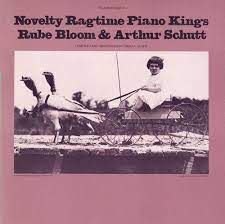
Reuben Bloom was born April 24, 1902 in New York City, New York to Jewish parents. During the 1920s he wrote many novelty piano solos, recorded for the Aeolian Company’s Duo-Art reproducing piano system various titles including his Spring Fever. His first hit came in 1927 with Soliloquy; his last was Here’s to My Lady in 1952, which he wrote with Johnny Mercer. In 1928, he made a number of records with Joe Venuti’s Blue Four for OKeh, including five songs he sang, as well as played piano.
He formed and led a number of bands during his career, most notably Rube Bloom and His Bayou Boys, which recorded three records in 1930. The Bayou Boys consisted of Benny Goodman, Adrian Rollini, Tommy Dorsey, Mannie Klein and Frankie Trumbauer in the Sioux City Six.
His I Can’t Face the Music, Day In Day Out, Fools Rush In (Where Angels Fear To Tread) and Give Me The Simple Life has become a part of the Great American Songbook and jazz standards.
During his career, he worked with many well-known performers, including those mentioned above and Ruth Etting, Stan Kenton, Jimmy Dorsey and collaborated with a wide number of lyricists, such as Ted Koehler, and Mitchell Parish.
Pianist, arranger, bandleader, recording artist, vocalist, and author Rube Bloom published several books on piano method before he transitioned on March 30, 1976 in his home city.
More Posts: arranger,author,bandleader,composer,history,instrumental,jazz,music,piano,vocal
Three Wishes
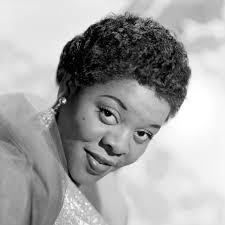
More girl talk commenced where Nica was able to ask Dinah Washington what her three wishes would be if she was given them. Her reply was:
-
-
“Honey, if I told you, you’d faint! Well, all right. I wish I had three little girls ~ triplets.”
-
“Health and happiness for my two boys that I have. The last one is private.”
-

More Posts: history,instrumental,jazz,music,pannonica,three,vocal,wishes

Daily Dose Of Jazz…
Esther Miller was born on April 12, 1968 and raised in the east coastal motor city of Port Elizabeth, South Africa. It is here that she sang in church and school choirs and raided the family Nat King Cole albums for early inspiration.
Leaving Port Elizabeth to study medicine at Cape Town University, she soon gave in to the lure of jazz. Esther started her professional career as the vocalist with Gerry Spencer’s Jazz Cyclone, one of the leading bands on the South African jazz circuit at the time.
During this early apprenticeship Miller worked with some excellent players on both sides of the pond, Herb Ellis, Alan Skidmore, Johnny Fourie, Errol and Alvin Dyers, Winston Mankunku and Ezra Ngkukana, to name but a few.
Esther has honed her technique with classical singing lessons and delved into jazz history, gleaning inspiration from Sarah Vaughan, Billie Holiday, Shirley Horn, Blossom Dearie, Frank Sinatra, and of course, Nat King Cole.
She performed in South African jazz festivals, concert halls and jazz clubs before settling in the United Kingdom for 10 years. There she performed and recorded with some excellent musicians including Steve Melling, Steve Waterman, Zoltan Dekany, Karen Sharp, among others.
Possessing an outstanding technique and sensitive interpretation, with a half dozen albums under her belt, vocalist Esther Miller has moved to Denmark where she continues to add to her repertoire as she explores the Scandinavian jazz scene.
More Posts: bandleader,history,instrumental,jazz,music,vocal
Review: Nicole Henry | Time To Love Again
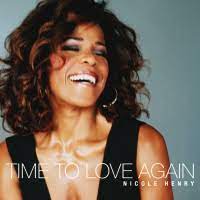
There is nothing more explosive or exciting than being a part of the audience when Nicole Henry takes the stage to give us a part of her. For the initiate, be clear, I take nothing from her recordings, but they are merely a great introduction to the strength and boldness of her performance. Always in command, be it stage or studio, she interprets every song with passion. Last night was one of those nights where one felt the electricity surging throughout the room as she unveiled her latest release, Time To Love Again. To say I was engaged and enthralled is an understatement!
Choosing nine songs to cover from across the decades and musical landscape, she tapped Anthony Newley & Leslie Bricusse, David Nichtern, Sade, Buffy St. Marie, James Taylor, Joan Armatrading, Dimitri Tiomkin & Ned Washington, Richard Rodgers & Lorenz Hart, and Stevie Wonder to be her muses. Once again Nicole emerges triumphant, illuminating another facet of her immense talent. Here she blends rock, R&B and jazz standards, taking us on a spiritual journey to soothe our savage beast and releases us calmly back into the world with grace.
Those of us who came of age during the original release of these songs, will instantly recognize their purveyor, be it Nina Simone, Maria Muldaur, Elvis Presley, Johnny Mathis, Roberta Flack or Newley. Regardless of the version that stokes your memory, there is no comparison as her individuality remains above reproach and the roar of applause. Feeling Good introduces the album as it opens your heart. In between she imbues us with wonderful arrangements of Midnight At The Oasis, Your Smiling Face, and I Didn’t Know What Time It Was. The lineup is impeccable as she continues with Is It A Crime, Until It’s Time For You To Go, Wild As The Wind and Love and Affection. As the set is near completion, Nicole leaves us Overjoyed with the experience of her. For those of us who have forsaken the beat in our chest for other pastures, this is a modest reminder to unlock our hearts and embrace it’s Time To Love Again.
If you fall in love with her on record, leave the world behind, submerge yourself in the music and take serious stock of this lady who transcends that very high bar set years ago. She will make you dance and shout and move your body to the groove, or simply sit and ponder the lyrics as you hear it through a different filter. She will evoke emotions you’ve forgotten and erupt memories you hold close. These select composers and lyricists have added to the canon of great American songs, and it is evident that her innovative arrangements and delivery bestows upon her the privilege to stand shoulder to shoulder with her peers. I implore you to see Nicole Henry live and be amazed by this beautiful force of nature.
carl anthony | notorious jazz | 3.12.22
Give A Gift Of Jazz ~ Share 
#preserving genius
More Posts: bandleader,history,instrumental,jazz,music,review,vocal
The Quarantined Jazz Voyager
As the Jazz Voyager continue to remain masked and socially distant, I have ventured out to a couple of events. I am, however, not surprised by the number of people who are unmasked and congregating as if the pandemic is over. This virus keeps mutating and though you may only get mildly ill, you will be ill and it will take a toll on your body, so protect yourself and others.
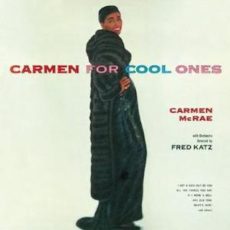
This week I am pulling out a classic album that shows this vocalist at her best delivering twelve compositions that were recorded on two separate occasions, December 5 & 16, 1957 in Los Angeles, California titled Carmen for Cool Ones. Released in 1958 by Carmen McRae on the Decca Records label, the sessions were arranged and directed by cellist Fred Katz.
The liner notes were scribed by Benny Golson and Burt Korall, and the photographs were taken by Wendy Hilty.
Track Listing | 36:15
- All the Things You Are (Oscar Hammerstein II, Jerome Kern) ~ 2:26
- A Shoulder to Cry On (Chuck Darwin, Paulette Girard) ~ 3:53
- Any Old Time (Artie Shaw) ~ 3:10
- Weak for the Man (Jeanne Burns) ~ 4:08
- What’s New? (Johnny Burke, Bob Haggart) ~ 2:29
- I Get a Kick Out of You (Cole Porter) ~ 2:15
- What Can I Say After I Say I’m Sorry? (Walter Donaldson, Abe Lyman) ~ 1:47
- Without a Word of Warning (Mack Gordon, Harry Revel) ~ 3:20
- You Are Mine (Ted Snyder, Sam Lewis, Joe Young) ~ 1:55
- If I Were a Bell” (Frank Loesser) ~ 3:27
- The Night We Called It a Day (Tom Adair, Matt Dennis) ~ 4:27
- I Remember Clifford (Benny Golson, Jon Hendricks) ~ 2:58
- Carmen McRae ~ vocals
- Fred Katz ~ arranger, conductor, cello
- Ike Isaacs ~ double bass (except track 6)
- Specs Wright ~ drums (exc. track 6)
- Harry Klee ~ flute solo
- George W. Smith ~ clarinet
- Justin Gordon, Mahlon Clark ~ bass clarinet
- Buddy Collette ~ flute, alto saxophone
- George W. Smith ~ clarinet
- Justin Gordon ~ bass clarinet
- Warren Webb oboe
- Joe Marino ~ piano
- Joseph R. Gibbons ~ guitar
- Thirteen unknown string players
- Joe Marino, John T. Williams ~ piano, celeste
- Larry Bunker, Frank Flynn ~ vibraphone, marimba
- Pete Candoli, Ray Linn ~ trumpet
- Vincent DeRosa ~ French horn
- Bob Enevoldsen, Milt Bernhart ~ trombone
- Tommy Johnson ~ tuba
- Calvin Jackson ~ piano
- Billy Bean ~ guitar
- Red Mitchell ~ double bass
- Larry Bunker ~ drums

More Posts: adventure,album,club,genius,jazz,museum,music,preserving,restaurant,travel,vocal