

Daily Dose Of Jazz…
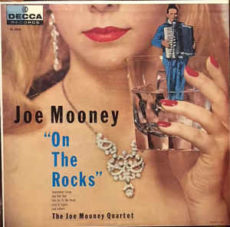
Joe Mooney was born in Paterson, New Jersey on March 14, 1911 and went blind when he was around 10 years of age. His first job, at age 12, was playing the piano for requests called in to a local radio station. He and his brother, Dan, played together on radio broadcasts in the late 1920s, and recorded between 1929 and 1931 as the Sunshine Boys and the Melotone Boys, both sang while Joe accompanied on piano. They continued performing together on WLW in Cincinnati, Ohio until 1936, after which time Dan Mooney left the music industry.
In 1937, he began working as a pianist and arranger for Frank Dailey, a role he reprised with Buddy Rogers in 1938. Through the early 1940s, Joe arranged for Paul Whiteman, Vincent Lopez, Larry Clinton, Les Brown, and The Modernaires. Putting together his own quartet in 1943, he sang and played the accordion with accompaniment on guitar, bass, and clarinet.
In the last half of the 1940s his group experienced considerable success in the United States. By 1946, a newspaper columnist wrote that Mooney’s music “has the most cynical hot jazz critics describing it in joyous terms, such as exciting, new, the best thing since Ellington, and as new to jazz as the first Dixieland jazz band was when it first arrived”. As for Mooney himself, the columnist wrote that he “played in virtuoso fashion … a fellow who knows not only his instrument, but jazz music, both to just about the ultimate degree.”
In the 1950s, Mooney sang with the Sauter-Finegan Orchestra and played with Johnny Smith in 1953. After moving to Florida in 1954 he concentrated more on the organ and recorded in 1956. 1963 saw a group of friends form a company to produce a record, Joe Mooney and His Friends. He recorded again in the middle Sixties. Accordionist, organist, and vocalist Joe Mooney passed away after a stroke at age 64, on May 12, 1975, in Fort Lauderdale, Florida.

More Posts: accordion,bandleader,history,instrumental,jazz,music,organ,vocal
Three Wishes
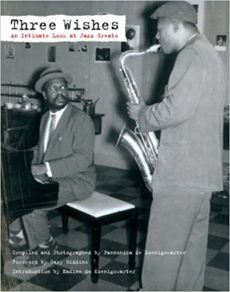
The question of three wishes arose when Pannonica asked Sonny Nevius of his:
- “To have my wife and baby to be, like, happy. Very happy. As happy as could be.”
- “For my music career to be just like moving up ~ up tot he top, man! As far as I could go. But to be the same Sonny, man, all the time.”
- “Just to be able to live relaxed, like, contented, you know, with my family, in my own home and forget about the world. That’d be my three wishes..”
*Excerpt from Three Wishes: An Intimate Look at Jazz Greats ~ Compiled and Photographed by Pannonica de Koenigswarter

More Posts: baroness,history,instrumental,jazz,music,pannonica,three,vocal,wishes
Daily Dose Of Jazz…
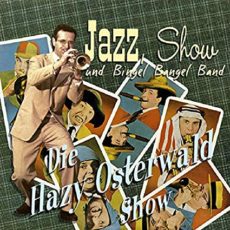
Hazy Osterwald was born Rolf Osterwald on February 18, 1922 in Bern, Switzerland. He began his career as a pianist, arranged for Fred Böhler in the late 1930s and joined him as a trumpeter in 1941. Around this time he also worked with Edmond Cohanier, Philippe Brun, Bob Huber, Eddie Brunner and Teddy Stauffer.
Hazy led his own ensemble starting in 1944, recording through the 1970s, with sidemen including Ernst Höllerhagen and Werner Dies. In the late 1940s he recorded with Gil Cuppini and played at the Paris Jazz Fair with Sidney Bechet and Charlie Parker. Trumpeter, vibraphonist, vocalist and bandleader Hazy Osterwald passed away on February 26, 2012 in Lucerne Switzerland.
More Posts: bandleader,history,instrumental,jazz,music,trumpet,vibraphone,vocal
Three Wishes
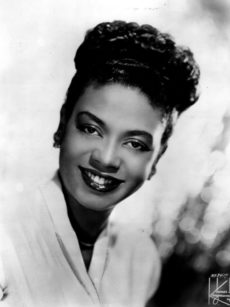
The Baronnes inquired of Hazel Scott if she had three wishes what would they be, and she responded:
- “For more people to really be unafraid of the truth~beginning with myself.”
- “For real freedom from fear of reprisals because of the fact that I am as God made me: different.”
- “For more love and patience: between us all and for us all.”
*Excerpt from Three Wishes: An Intimate Look at Jazz Greats ~ Compiled and Photographed by Pannonica de Koenigswarter
More Posts: baroness,history,instrumental,jazz,music,pannonica,piano,three,vocal,wishes
Daily Dose Of Jazz…
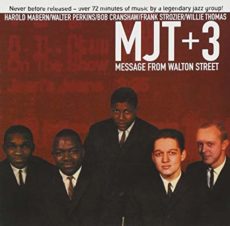
Walter “Baby Sweets” Perkins was born on February 10, 1932 in Chicago, Illinois. Starting out in his hometown, he began his professional career drumming with Ahmad Jamal in 1956–57. He recorded as a leader for Argo Records in 1957 under the name MJT+3 with trumpeter Paul Serrano, Nicky Hill on tenor saxophone, Muhal Richard Abrams on piano, and bassist Bob Cranshaw.
1959 witnessed the regrouping under the same name with Willie Thomas on trumpet, Frank Strozier on alto saxophone, pianist Harold Mabern, and Cranshaw on bass. They recorded four albums for Vee-Jay in 1959 and 1960 and played in Chicago until 1962 when Walter made his move to New York City.
Perkins played with Sonny Rollins in 1962 and accompanied Carmen McRae in 1962–63. By 1964 he was playing with Art Farmer and Teddy Wilson, however, following this he recorded with Rahsaan Roland Kirk, George Shearing, Gene Ammons, Charles Mingus, Billy Taylor, Etta James, J.J. Johnson, Johnny Coles, Booker Ervin, Jaki Byard, Lucky Thompson, Pat Martino, Sonny Stitt, Sonny Criss, Ray Bryant, Duke Pearson, Bobby Timmons, and Charles Earland. And that’s the shortlist as he recorded some 44 albums throughout his career as a sideman.
Drummer Walter Perkins passed away on February 14, 2004 in Queens, New York.
More Posts: bandleader,history,instrumental,jazz,music,vocal