


Daily Dose Of Jazz…
On February 8, 1947 Kerrie Agnes Biddell was born in the inner-city community of Kings Cross in Sydney, New South Wales, Australia. An only child two pianist parents, her mother an accomplished jazz pianist and her father a part-time pianist, she attended St. Vincent’s Convent at the age of six, soon after her father left her mother. In 1962, she suffered a collapsed lung and rheumatoid arthritis, the latter of which affected her piano playing, so she decided to become a singer.
At twenty, Kerrie sang background vocals for Dusty Springfield and impressed, Springfield suggested she become a lead singer. She joined a local band, The Echoes, then in 1968, The Affair. With her added voice the group was able to cover various musical styles, such as soul, funk, and pop compositions. In 1969, they competed and won the national competition Hoadley’s Battle of the Sounds in the vocal-group category. The prize was a trip to London, England, the group relocated in mid-1970, only to disband months later. Before disbanding, they recorded Sly and the Family Stone’s Sing a Simple Song, which would become one of Biddell’s signature songs.
Returning to Australia she toured with the Daly-Wilson Big Band, performing swing music. In between her stint with Wilson, she toured with Dudley Moore, Cilla Black, and Buddy Rich. In 1972, married to former alto saxophonist for Sounds Incorporated David Glyde, they moved to Canada and her career as a session singer began soon after. She and her husband toured in the United States, including clubs in Las Vegas. Offered a three-year six-figure contract with the MGM Grand Hotel and Casino, but declined and moved back to Australia, enrolling in the Sydney Conservatorium of Music.
Moving on to a solo career, her first album won two ARIA awards, she sang on hundreds of jingles, television shows and film scores, and joined the faculty of the Jazz Diploma course at the Conservatorium. She wrote a one-woman show, Legends, which later included June Bronhill, Lorrae Desmond, Toni Lamond, and Jeanne Little. In 2001, due to poor health, she retired from performing but continued her teaching career. On 4 September 2014, jazz and session singer and vocal teacher Kerrie Biddell passed away from a stroke on September 5, 2014. She was 67.
More Posts: bandleader,history,instrumental,jazz,music,vocal
Three Wishes
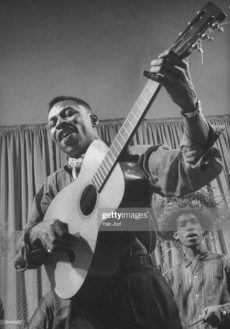
Johnny Barracuda was asked by Nica what his three wishes would be, he told her:
- “I’d like to have my own club in Mexico City.”
- “That the club’d make enough money so I could sustain my family.”
- “Good health to fulfill the former.”
*Excerpt from Three Wishes: An Intimate Look at Jazz Greats ~ Compiled and Photographed by Pannonica de Koenigswarter

More Posts: baroness,history,instrumental,jazz,music,pannonica,three,vocal,wishes
Daily Dose Of Jazz…
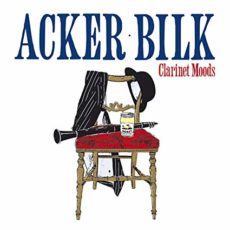
Known professionally as Acker Bilk, Bernard Stanley Bilk MBE was born in Pensford, Somerset on January 28, 1929. He earned the nickname “Acker” from the Somerset slang for friend or mate. His parents tried to teach him the piano but, as a boy, he found it restricted his love of outdoor activities, including football. He lost two front teeth in a school fight and half a finger in a sledding accident, both of which he said affected his eventual clarinet style.
Leaving school Bilk worked at a cigarette factory in Bristol, then three years with the Royal Engineers in the Suez Canal Zone. While there he learned to play the clarinet after his sapper friend, John A. Britten, gave him one bought at a bazaar. He later borrowed a better instrument from the army and kept it after demobilization and played with friends on the Bristol jazz circuit and in 1951 moved to London to play with Ken Colyer’s band. Disliking London he returned west and formed his own band in Pensford called the Chew Valley Jazzmen, which was renamed the Bristol Paramount Jazz Band when they moved to London in 1951. Booked for a six-week gig in Düsseldorf, Germany, the band developed their distinctive style complete with striped-waistcoats and bowler hats.
His return from Germany, Acker based himself in Plaistow, London, and his band played the London jazz clubs. It was here he became part of the late 1950s trad jazz boom in the United Kingdom. They had an eleven chart hit singles in the Sixties, played the Royal Variety Performance, and became an internationally known musician in 1962 when he added a string ensemble on one of his albums that won him an audience outside the UK. His composition Stranger on the Shore was used in a British television series of the same name. He went on to record it as the title track of a new album and the single stayed on the charts for 55 weeks.
He appeared in two theatrical motion pictures, recorded a series of albums in Britain that were also released successfully in the United States on the Atlantic Records subsidiary Atco, however, his success tapered off when British rock and roll made its big international impact beginning in 1964. In the cabaret circuit, he had a couple of more hits, continued to tour, appointed MBE in 2001 and was awarded the BBC Jazz Awards’ Gold Award.
Clarinetist and vocalist Acker Bilk, known for his breathy, vibrato-rich, lower-register style, passed away in Bath, Somerset, on November 2, 2014, at the age of 85.

More Posts: bandleader,clarinet,history,instrumental,jazz,musical,vocal
Three Wishes
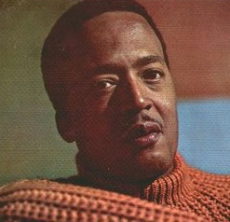
Earl Coleman’s response to Nica’s question of three wishes reflected his feelings on the state of jazz in America was:
- “To work with conscientiousness…”
- “Preferably in Europe.”
*Excerpt from Three Wishes: An Intimate Look at Jazz Greats – Compiled and Photographed by Pannonica de Koenigswarter
More Posts: baroness,history,instrumental,jazz,music,pannonica,three,vocal,wishes
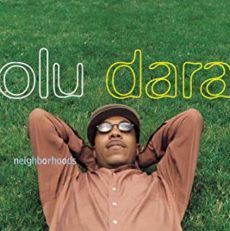
Daily Dose Of Jazz…
Olu Dara was born Charles Jones III on January 12, 1941 in Natchez, Mississippi. After moving to New York City In 1963, he changed his name to Olu Dara, which means “God Is Good” in the Yoruba language. In the Seventies and Eighties, he played alongside David Murray, Henry Threadgill, Hamiet Bluiett, Don Pullen, Charles Brackeen, James Blood Ulmer, and Cassandra Wilson. He formed two bands, the Okra Orchestra and the Natchezsippi Dance Band.
His first album, In the World: From Natchez to New York, released in 1998, revealed another aspect of his musical personality: the leader and singer of a band immersed in African-American tradition, playing an eclectic mix of blues, jazz, and storytelling, with tinges of funk, African popular music, and reggae. His second album Neighborhoods, with guest appearances by Dr. John and Cassandra Wilson, followed in a similar vein.
Dara played on the 1994 album Illmatic, on the song Dance, and he sang on the 2004 song Bridging the Gap, all by his son, rapper Nas. Besides recording two albums as a leader, cornetist, guitarist and singer Olu Dara has recorded fifty-four as a sideman with the likes of Doug Carn, Oliver Lake, Julius Hemphill, Nona Hendryx, The Be Good Tanyas, Rickie Lee Jones, Terumasa Hino, Jack McDuff, Dirty Dozen Brass Band, and James Newton, among others.
More Posts: bandleader,cornet,guitar,history,instrumental,jazz,music,vocal