

Daily Dose Of Jazz…
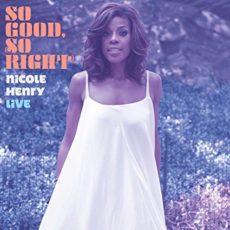
Nicole Henry was born on March 17, 1974 in Philadelphia, Pennsylvania and grew up in a musical family in Bucks County, Pennsylvania. She pursued the arts from a young age, singing in school and church, and studying cello and ballet, ultimately graduating from the University of Miami. Her musical inspirations were Dinah Washington and Sarah Vaughan.
Launching her career as an entertainer was successful both as singer and actress. Early on Nicole appeared in commercial acting roles and voiceover assignments. Her passion for singing was recognized when the Miami New Times named her Best Solo Musician 2002.
In 2004, Henry released her debut recording, The Nearness of You, on Banister Records. Though she reached #1 in Japan with Teach Me Tonight and was named HMV Japan’s Best Vocal Jazz Album of 2005, her sophomore project didn’t arrive until four years later. The Very Thought Of You reached #7 on Billboard’s jazz chart. Followed by her 2009 Teach Me Tonight, 2011’s Embraceable and a live recording in Japan Set For The Season in 2012.
In 2013 Nicole released So Good, So Right: Nicole Henry Live with new renditions of Seventies hits and has since released a single and an EP. She has had the honor to perform the National Anthem at several sporting event, solo for the candlelight service of Nine Lessons and Carols at St. George’s Episcopal Church in Manhattan and took home the Soul Train award for Best Traditional Jazz Performance. Vocalist Nicole Henry continues to perform, record and tour.

More Posts: vocal
Daily Dose Of Jazz…
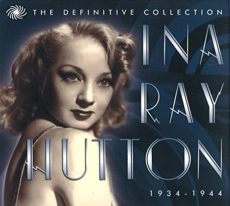
Ina Ray Hutton was born Odessa Cowan on March 13, 1916 in Chicago, Illinois. She began dancing and singing in stage revues at the age of eight and by the age of 13, Odessa was considered so advanced that she skipped eighth grade and went straight to high school at Hyde Park High School.
By the time she was 18 years old, Odessa became Ina Ray Hutton for the stage and was already a seasoned performer, having starred in Gus Edwards’ revue Future Stars Troupe at the Palace Theater, Lew Leslie’s Clowns in Clover. On Broadway she performed in George White’s revues: Melody, Never Had An Education, and “Scandals”, and then went onto The Ziegfeld Follies.
In 1934, she was approached by Irving Mills and vaudeville agent Alex Hyde to lead an all-girl orchestra, The Melodears, featuring trumpeters Frances Klein and Mardell “Owen” Winstead, pianist Ruth Lowe Sandler, saxophonist Jane Cullum, guitarist Marian Gange,and trombonist Alyse Wells during its existence. Hutton and her Melodears were one of the first all-girl bands to be filmed for Paramount shorts, including Accent on Girls and Swing Hutton Swing, as well as Hollywood feature films.
The group disbanded in 1939 and the following year she led an all-male orchestra that was featured in the 1944 film Ever Since Venus. This group disbanded in 1949. During the 1950s, she returned to the all-girl format for a variety television program, The Ina Ray Hutton Show, which ran from 1951 to 1956 on Paramount Television Network’s flagship station KTLA in Los Angeles, California.
Vocalist and bandleader Ina Ray Hutton retired from music in 1968 and passed away in Ventura, California on February 19, 1984 of complications from diabetes, at the age of 67.
Sponsored By

Voices From The Community

#preserving genius
More Posts: vocal
Daily Dose Of Jazz…
Layla Angulo was born on March 12, 1976 in Seattle, Washington into a long line of artists and musicians, and started playing the piano at age 6, the saxophone at age 10 and began performing in jazz clubs while high school. After graduation, she played in various funk, jazz, pop, and salsa groups. She performed as the horn section leader of various salsa bands around the Northwest and developed the idea to write her own music soon after.
By her early 20’s, Layla was living in Santiago de Compostela, Spain where she began building her Latin jazz career, performing her new music with Spanish and Cuban musicians. Following this stint in Europe she returned to the States, she recorded Live at the Triple Door in 2005 with a thirteen piece orchestra and performing original music. This jumped her career, garnered her two Honorable Mentions awards in the International Songwriting Competition and catapulted Costa Rican singer, Carlos Cascante, who became the singer for the Spanish Harlem Orchestra.
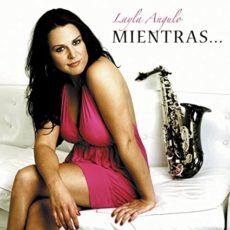
Her sophomore project and her first studio recording was titled Mientras where she wrote for her voice and enlisted a line up of all-star musicians including Oscar Stagnaro, Arturo O’Farrill, and Orlando “Maraca” Valle. Her third release TriAngulo combines the talents of New York’s top salsa, bachata and merengue musicians.
Angulo, who professionally goes by Layla, moved to New York City and toured with reggaeton superstar Don Omar, has toured with Tito Puente Jr., Beyonce’s horn players the Sugarhorns and played with many other Grammy award winning artists.
She is one of the only female saxophone players/singers/band directors in the world of Latin music today. Saxophonist, composer, singer and band director has won several songwriting competitions and continues to perform, record and tour.
Sponsored By

www.whatissuitetabu.com
#preserving genius
Review: Sweet Lu Olutosin ~ Meet Me At The Crossroads
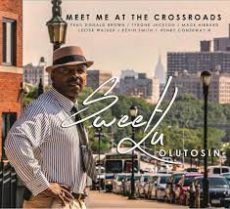
Meet Me At The Crossroads immediately conjured up the myth of Robert Johnson, who stood at that famed intersection awaiting the sale of his soul to the devil. However, experience has taught me not to merely accept the obvious and with Lutalo Olutosin this is far from that legendary tale. Upon listening, the avid jazz devotee will quickly recognize the appropriateness of the title. What is gifted here is more of a convergence than a meeting. This is not a random gathering of songs but a carefully considered compendium. If there is any convention connected to this body of work, it is that this project has touched the soul of wisdom and versatility.
History meets style that goes well beyond this vocalist’s sense of fashion, though he continually pays homage to a time when musicians dressed to kill. The style of which I speak is his choice of compositions and the myriad of genres he presents as he travels through music’s evolution during the last century.
Affectionately known by his stage moniker Sweet Lu, he dives right in with the pacesetter Still Swingin’ that says it all for the tempo but leaves something to be desired in the story as he recognizes the past and reiterates that it ain’t over yet. He immediately switches gears and drops down to an outpouring of love that would melt any heart with a soulful rendition a la Eddie Levert on Love You More Than You Ever Know. I was immediately taken with a Roy Ayers like arrangement of How They Do That telling our stories of great determination and triumph over adversity.
Walking the wooden planks laid end to end across the backwater at the edge of the swamp, Lu’s vocal version of Intimacy of the Blues takes us to a juke joint envisioned in an atmosphere of an Ernie Barnes painting or Harpo’s Place as he belts out Sister Sadie’s Blues and how she turns a head and a heart. It is evident Sadie has been around a few joints in her life and one can imagine the crowd bumping and grinding through a hot and sticky night and singing and hand-clapping to a fervor pitch in church. Skin Game eradicates the lines of color and evens the playing field for humanity’s acceptance of each other. One unlucky traveler is set on the straight and narrow because Granny said it and nobody’s word is more trusting than hers.
Dancea Swing A Nova moves easily through a dream world of a dancer who woos a young man and teaches him about life with a bossa rhythm. Lu bravely embraces the classic Lou Rawl’s tune You’ll Never Find and intuitively arranges it to make it his own, adding a little more jazz to this rhythm and blues mix. Tunji Baby is a mid-tempo groove that hurts so bad with the pain of desire but everything about her is tantalizingly sexy and exquisitely distressful but he refuses to give it up. Where I come from we call that love and happy to be in it.
If one is responsible for his craft then he must delve into the classics and for this outing Sweet Lu respectfully delves into the catalogue of tenor great Joe Henderson and retrieves Recorda Me, pens lyrics, sings and scats his way across the charts of Don’t Forget To Remember. This is just one of the six songs he composed and or penned lyrics for on this project, adding the talents of Kevin Mahogany, Al Kooper, Antonio Ciacca, along with the venerable Kenny Gamble and Leon Huff. And for those listeners who enjoy singing, he reprises two sing along tracks of Skin Game and How They Do That.
Let us not be bereft of our responsibility to acknowledge his powerhouse assemblage of musicians that reflects Atlanta’s finest with pianist Tyrone Jackson and Marty Kearns, trumpeter Lester Walker, saxophonist Mace Hibbard, bassist Kevin Smith, drummer Henry Conerway III, and legendary jazz pianist Donald Brown. Adding a little spice to the mix is vocalist Crystal Mone’t who we hear in all her splendor on How They Do That, Skin Game and You’ll Never Find. Not limiting his musicians to simply add their instrumental thoughts to the musical conversation, he collaborated with Tyrone, Antonio, Donald and also enlists the talents of Dwight Andrews to bring fresh arrangements to those borrowed songs and his original compositions.
To call Sweet Lu a griot is an understatement. He is a wise sage imparting age old lessons by deftly infusing our cultural history and family values utilizing a tapestry of blues, gospel and jazz that are pure entertainment from beginning to end. The messages are all too familiar but like that loving elder we all grew up with, he delivers them in different ways for a new generation. There is more here that meets the ear and the eye, so take a listen and your perspective on life may be altered.
carl anthony | notorious jazz | march 5, 2017
Give A Gift Of Jazz ~ Share
#preserving genius
More Posts: bandleader,composer,history,instrumental,jazz,music,vocal
Daily Dose Of Jazz…
Jacqui Dankworth was born on February 5, 1963 in Northampton, Northamptonshire, England to Cleo Laine and John Dankworth. She attended St. Christopher School in Hertfordshire and is an alumna and fellow of Guildhall School of Music & Drama.
Her vocal talents led her to work as an actress with the Royal Shakespeare Company, the Royal National Theatre, and in West End Theatre. She played Cinderella in the musical Into the Woods and appeared the film Shoreditch, singing the song My Man by Billie Holiday.
In 2003, Jacqui released her first album, As the Sun Shines Down on Me on the Candid Records label. This album brought her to the attention of Michael Parkinson and BBC Radio 2, and she began appearing regularly on air throughout that year. She was featured on Courtney Pine’s album Devotion, and performed with Pine at the Royal Festival Hall as part of the London Jazz Festival.
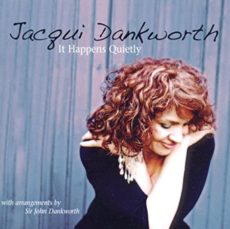
She followed the success of As the Sun Shines Down on Me with the 2004 release, Detour Ahead. She has followed these two releases by recording Back to You, It Happens Quietly and Live To Love. Vocalist Jacqui Dankworth continues to perform, record and tour.
Sponsored By
www.whatissuitetabu.com
#preserving genius
More Posts: vocal