

Daily Dose Of Jazz…
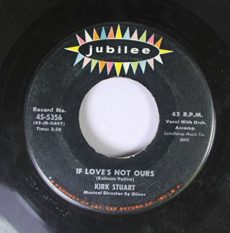
Kirk Stuart was born Charles Kincheloe Stuart on April 13, 1934 in Charleston, West Virginia. He studied at a conservatory before accompanying singers such as Billie Holiday in 1956, Della Reese from 1957–59 and for another two years with Sarah Vaughan beginning in 1961. He also arranged and conducted for these singers.
Stuart led his own unit in Los Angeles, California later in the 1960s, and recorded with Al Grey and once more with Reese along with a few 45 rpm records as a leader on the Josie and Jubilee labels during the decade. In later years he led ensembles in Las Vegas, and accompanied Joe Williams at the Smithsonian Institution in 1982.
Pianist, vocalist and educator Kirk Stuart, who taught at Howard University, passed away during spleen surgery on December 17, 1982.
Sponsored By


#preserving genius
Daily Dose Of Jazz…
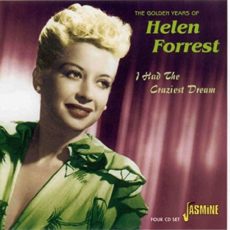
Helen Forrest was born Helen Fogel in Atlantic City, New Jersey on April 12, 1917. Raised in a single parent household with three older brothers, the family relocated to Brooklyn while she was in her teens. Her mother remarried and with the new husband turned the family home into a brothel, which nearly saw her raped by her stepfather. This resulted in her living with her piano teacher who recognized her singing potential. Soon she dropped out of high school and pursued a singing career.
Returning to Atlantic City she began singing with her brother Ed’s band, soon after returning to New York City. By the age of 17 she was singing for WNEW and WCBS where she was known as Bonnie Blue and The Blue Lady of Song. Eventually she found a two year gig singing at the Madrillon Club, in Washington, D.C. This led to her joining Artie Shaw in 1938 and shared vocal duties with Billie Holiday. Two of Helen’s biggest hits with Shaw were They Say and All the Things You Are. With Shaw she became a national favorite until the band broke up in 1939
Forrest then joined Benny Goodman in December 1939 and recorded, among other hit songs The Man I Love, just one of 55 studio recordings with Goodman. But being a difficult man to work with in August 1941, she quit the orchestra to avoid having a nervous breakdown. Her departure led her to briefly recorded with Nat King Cole and Lionel Hampton.
In 1941, she approached Harry James, auditioned and was voted in by the band. It was with this band that she got the opportunity to sing verses as opposed to choruses in the middle of an instrumental. Her most popular numbers, 1941’s I Don’t Want to Walk Without You and I Had the Craziest Dream in 1942, preceded her appearance with the James Band in the Hollywood film Springtime in the Rockies, starring Betty Grable. In 1942 and 1943, Helen Forrest was voted the best female vocalist in the United States in the Down Beat poll.
Forrest left Harry James in late 1943 and embarked on a solo career, signed a recording contract with Decca and co-starred with Dick Haymes on a CBS radio show from 1944 to 1947. She recorded with Haymes and 10 songs reached the Top Ten including Long Ago and Far Away, It Had To Be You and I’m Always Chasing Rainbows. By the end of the Forties she was headlining theaters and clubs.
The Fifties saw Helen rejoining Harry james and recording a new swing album titled Harry James in Hi-Fi, which became a bestseller. By the end of the 1950s, her solo career waned as rock’n’roll became increasingly popular. She would go on to have a stint with the startup Bell Records, sang with Tommy Dorsey’s orchestra, in the early 1960s and continue to make occasional records and perform in concerts. By the 1970s and 1980s, she was performing in supper clubs on big band nostalgia tours, doing a television reunion of herself, James, and Haymes on The Merv Griffin Show.
In 1980 she suffered a stroke, but recovered to resume performing and recording. She wrote an autobiography, I Had the Craziest Dream, and in 1983, Helen released her final album, entitled Now and Forever. She continued singing until the early 1990s when rheumatoid arthritis began to affect her vocal chords and forced her into retirement. Swing vocalist Helen Forrest, who sang with three of the most popular bands of the era and earned the reputation as the voice of the name bands, passed away on July 11, 1999, from congestive heart failure in Los Angeles, California at the age of 82.
Sponsored By

#preserving genius
More Posts: vocal

Daily Dose Of Jazz…
Allan Harris was born on April 4, 1956 in Brooklyn, New York and was surrounded by music. His mother was a classical pianist, his aunt an opera singer who later turned to the blues. His aunt caught the attention of music producer Clarence Williams, who made Bessie Smith famous and he became a regular dinner guest bringing others with him like Louis Armstrong. This musical influence helped him choose the life of a musician early on especially when his mother insisted he sing Blue Velvet at school at the age of eight.
Harris has sung and recorded with Cyrus Chestnut, Bill Charlap, Eric Reed, Benny Green, Bruce Barth, Takana Miyamoto and Tommy Flanagan. He has toured Europe, Scandinavia and Israel, and has performed with the New York Voices, James Morrison, as well as a live recording with Jon Faddis and the Big Band de Lausanne. He has worked with Cassandra Wilson, Wynton Marsalis, Abbey Lincoln, Charenee Wade, Cyrille Aimée and an eight-piece band including bassist Mimi Jones.
He has recorded numerous CDs in tribute to Nat King Cole, Billy Strayhorn and the Black cowboys of the West. Allan’s recordings have featured Ray Brown, Mark Whitfield, Eric Reed, Clark Terry, Claudio Roditi and Nestor Torres. He has become Tony Bennett’s favorite new singer.
As an educator Harris is a master clinician and teacher and has taught master classes at JAS Aspen Academy working alongside Christian McBride and Loren Schoenberg, Berklee School of Music, The Jazz Vocal Coalition, City College’s Aaron Davis Hall, and Lausanne, Switzerland’s Jazz Music School, to name a few. He has sat on the Kennedy Center panel to choose the next U.S. Jazz Ambassador and has judged the Thelonious Monk Awards Vocal Competition.
Vocalist, guitarist, and songwriter Allan Harris, whose album Cross That River was widely covered for its perspective on issues of ethnicity in the American western expansion and was the subject of a 2006 story on National Public Radio program All Things Considered, continues to perform, record and tour.

#preserving genius
More Posts: vocal
Daily Dose Of Jazz…
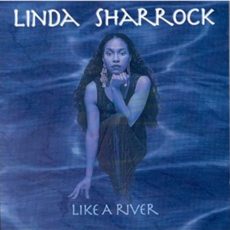
Linda Sharrock was born Linda Chambers on April 2, 1947 in Philadelphia, Pennsylvania and began singing in church choirs as a child. Interested in both folk music and jazz, she studied art while in college and became interested in avant-garde music.
She performed with Pharoah Sanders in the mid-1960s and late in 1966 she married Sonny Sharrock and professionally began using the spelling Lynda. She worked with him and Sanders into the early 1970s, as well as with Herbie Mann.
One of her best-known performances is on the 1969 Sonny Sharrock album Black Woman, released on Vortex Records. She toured Istanbul, Turkey in 1973 and recorded with Joe Bonner in 1974. After her divorce in 1978 she returned to using Linda, though she kept his surname.
A move to Vienna, Austria saw Sharrock working with Franz Koglmann, Eric Watson, and Wolfgang Puschnig well into the 1990s. She worked with ensembles such as the Pat Brothers, Red Sun, and AM4 in the 1980s, and with Harry Pepl in 1992.
Suffering a stroke in 2009 which left her partially disabled and aphasic, she briefly withdrew from the scene before returning in 2012. Since then the avant-garde and free jazz vocalist Linda Sharrock has appeared and recorded in France, Austria, the United Kingdom, the Netherlands, Slovenia, with various ensembles under the Linda Sharrock Network label.
Sponsored By

www.whatissuitetabu.com
#preserving genius
More Posts: vocal
Daily Dose Of Jazz…
Miriam Klein was born on March 27, 1937 in Basel, Switzerland and after a training at the music school in Vienna, Austria she went back to Switzerland and has been singing since 1963 in groups formed with her husband Oscar Klein. She, however, became famous when she appeared in Paris, France with Pierre Michelot, Don Byas and Art Simmons in the 1950s.
In the 1960s and 1970s she became internationally known as a singer and during this period recorded an album of Bessie Smith tunes. In 1973 the breakthrough came with the album Lady Like dedicated to Billie Holiday. She was accompanied by musicians Roy Eldridge , Dexter Gordon and Slide Hampton. She also recorded a record with Albert Nicholas.
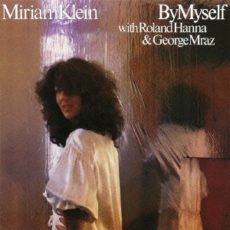
Klein worked with the Fritz Pauer Trio in 1977, with Sir Roland Hanna and George Mraz in 1978 on their album By Myself. At the Frankfurt Jazz Festival 1980 she was accompanied by Hans Kollers International Brass Company. Through 1981/82 she toured with Kenny Clarke, Hanna and Isla Eckinger.
2001 saw Miriam involved in the recording of the album My Marilyn by her son David Klein. Though she fashioned her vocal style after Billie Holiday, she found herself not copying her but singing the way Billie did but in her own way. Vocalist Miriam Klein occasionally continues to perform and record.
Sponsored By

Voices From The Community
#preserving genius
More Posts: vocal