


Daily Dose Of Jazz…
Wu Fei was born on May 12, 1977 in Beijing, China. From the age of four she began her music studies first on the guzheng and then piano the following year, practicing two to four hours everyday. At fourteen she tested into the China Conservatory of Music and studied composition before and then at Mills College in the United States.
Wu Fei, who is also a composer, vocalist and improviser, combine East with West in her approach to her music. In 2007 she released her debut solo album A Distant Youth with accompanying guitar, violin and percussion. Her sophomore project titled Yuan followed the following year.
She has recorded with Abigail Washburn Carla Kihlstedt, Helge Andres Norbakkeh and two Fred Firth albums, as well as on his soundtrack for the PBS documentary film The Happy End Problem. Her performance was highlighted in the 2009 Shan Qi music DVD and she gave a live performance on guzheng and voice at the Hermes fashion show during Paris Fashion Week. Wu Fei, avant-garde and experimental jazz musician, continues to perform, compose and record.

Put A Dose In Your Pocket
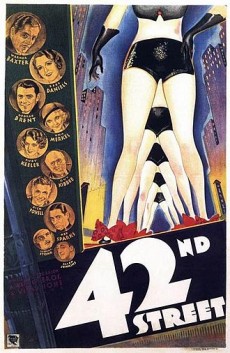
Hollywood On 52nd Street
In 1932 composer Harry Warren scored the music for the 1933 movie musical 42nd Street along with lyricist Al Dubin for Warner Brothers Studio. From the film came the classic jazz standards “Lullaby of Broadway”.
The film was nominated for a Best Picture Oscar, was selected for preservation in the U.S. National Film Registry by the Library of Congress and ranked #13 on the American Film Institute list of Best Musicals in 2006.
The Story: It is 1932, the depth of The Depression and noted Broadway producers Jones played by Robert McWade and Barry portrayed by Neal Sparks are putting on Pretty Lady, a musical starring Dorothy Brock Bebe Daniels. She is involved with wealthy Abner Dillon played by Guy Kibbee, the show’s “angel” of a financial backer, but while she is busy keeping him both hooked and at arm’s length, she is secretly seeing her old vaudeville partner, out-of-work Pat Denning.
Julian Marsh (is hired to direct, even though his doctor warns that he risks his life if he continues in his high-pressure profession; despite a long string of successes he is broke, a result of the 1929 Stock Market Crash. He must make his last show a hit, in order to have enough money to retire.
Sponsored By

www.whatissuitetabu.com
Daily Dose Of Jazz…
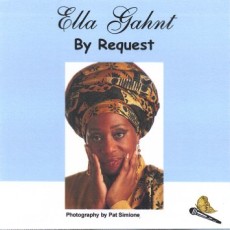
Ella Gahnt was born Ella M. Hilton on May 7, 1949 in Philadelphia, Pennsylvania. She studied piano, voice, guitar, saxophone and music theory at the Granoff and Settlement Music schools, the PCPA which is now the University of The Arts.
Turning professional at age 18, she has worked as vocalist and music copyist on recordings with Grover Washington, Jr., The Stylistics, Pieces of a Dream, Sam Reed, Roger Prieto, Tony Williams, Sam Dockery, Butch Ballard, Gerald Smith, and her own E.G. Trio/Quartet. She is the featured vocalist with the Philadelphia Legends of Jazz Orchestra and the Clef Club Big Jazz Band as well as being a founding member of the group Instruments & Voices
Jazz vocalist and arranger Ella Gahnt continues private instruction with her husband Leon Mitchell, musical director of The Philadelphia Legends of Jazz Orchestra, has been named a Jazz Ambassador in her hometown and performs at museums, clubs, colleges and jazz festivals throughout Philadelphia and the tri-state area.
Get A Dose On The Road
More Posts: vocal
Daily Dose Of Jazz…
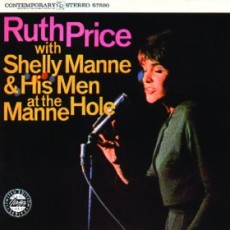
Ruth Price was born on April 27, 1938 in Phoenixville, Pennsylvania. Originally a dancer, she went to ballet school in 1952. One evening a friend took her to hear Lester Young and she was hooked and by 1954, when Charlie Ventura’s regular singer fell ill, after hearing her sing he approached her to fill the vacancy and a jazz vocalist was born. She went on to pursue work in Philadelphia, Pennsylvania and New York City as a vocalist and dancer.
Though her catalogue is relatively minimal, the vocalist is known for producing projects that are lasting. By 1955 she was in the studio recording her debut release My Name is Ruth Price: I Sing, followed by Ruth Price Sings with the Johnny Smith Quartet the next year and then with The Party’s Over in 1957.
In 1957 Ruth moved to Hollywood in 1957, and over the next several years performed recorded and toured with Mel Torme, Red Garland, John Coltrane, Philly Joe Jones, Dizzy Gillespie, Billy Taylor, Stan Getz, Sonny Stitt, Sonny Rollins, the Charles Mingus Quintet, Art Pepper, Victor Feldman, Russ Freeman and Hank Jones.
In 1961 Price recorded with Shelley Manne and His Men at the Manne Hole, recorded Live And Beautiful in ’63 and not another until 1983 with Lucky To Be Me and later toured with Harry James from 1964-1965. Her diverse repertoire includes many obscure, lesser-known gems from the Great American Songbook.
In the Nineties she never stepped far from the music and gained further renown not as a singer but as the owner of the prestigious Los Angeles nightspot The Jazz Bakery that opened in its doors in 1992 and hosted all the greats for nearly two decades until she closed them in 2009.
A talented singer whose wide expressive qualities do justice to any lyrics that she chooses to interpret made her a jazz poll winner. Highly respected for her knowledge and performances of those rare gems in American popular song, it was a natural transition to become an educator in recent years as an adjunct assistant professor at the University of California – Los Angeles in the Department of Ethnomusicology, and has taught at the Dick Grove School of Music. She continues to record and receive critical acclaim for her work.
Inspire A young Mind
More Posts: vocal
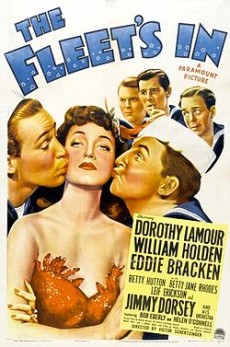
Hollywood On 52nd Street
Tangerine and I Remember You are two jazz classics that came from the talents of Victor Schertzinger, who composed the music and Johnny Mercer, who wrote the lyrics. The songs was published in 1941 and was introduced in the 1942 movie, The Fleet’s In. The film starred Dorothy Lamour, William Holden, Eddie Bracken, singer Casey Daley and introduced Betty Hutton in her film debut. Jimmy Dorsey and his band are prominently featured in the movie.
The Story: Shy sailor Casey Kirby suddenly becomes known as a sea wolf when his picture is taken with a famous actress. His buddies then make a bet with some other sailors that Casey can defrost an icy nightclub singer known as the Countess.
Sponsored By
www.whatissuitetabu.com